B-RISK - Design fire tool software download
Download the zip file, unzip and run the setup file to install. You may require administrator privileges for the installation. (Version B-RISK-2024-02 - OS Win64).
BRANZ and the University of Canterbury worked together to develop B-RISK from the BRANZFIRE deterministic fire model. This collaboration was funded by the Ministry of Business, Innovation and Employment and the Building Research Levy.
The continued support and maintenance of B-RISK is funded by the Building Research Levy.
B-RISK allows several features to be integrated within the design tool to simulate building fires such as:
- a design fire generator and item-to-item fire spread module allowing building contents to be randomly placed within a room and the overall rate of heat release to be determined
- a comprehensive sprinkler response module including operation of multiple heads and parameters for effectiveness and reliability of sprinkler systems
- Assignment of hold-open devices to doors and open/close vents using a range of trigger criteria
- Vent flows and smoke migration
- reliability of other systems such as smoke detectors, mechanical systems and passive elements such as doors
- C/VM2 user mode - useful for fire analysis required to be in compliance with the New Zealand Building Code
- visualisation of geometry and results using Smokeview software
- Monte Carlo multi-iteration sampling for probability/risk analysis
- the inclusion of various types of balcony spill plume relationships to facilitate the design of smoke management systems within buildings.
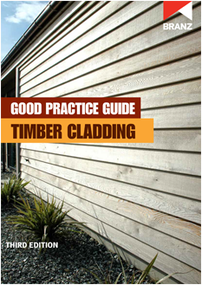
Good Practice Guide: Timber cladding (3rd edition)
Timber cladding materials and skills needed for building and installation of traditional claddings have changed over the years. The conditions for building new timber-clad buildings have also changed over the years. Sites that would have earlier been avoided are now being built on, and buildings are also larger and more complex.
Other factors, such as weathertightness issues, have become more relevant. Designers have to consider carefully how they will achieve weathertight cladding solutions when traditional materials are being employed to satisfy homeowners' demands for complex buildings on more exposed sites.
This guide gives a comprehensive overview of the issues to be addressed by designers and installers of timber weatherboard and plywood sheet claddings.
Disclaimer: Please note that our publications reflect the regulations and best practices on the date of release, which is shown on the publication. As regulations and industry standards evolve, we always recommend that our publications be read in conjunction with the latest building code clauses and standards.
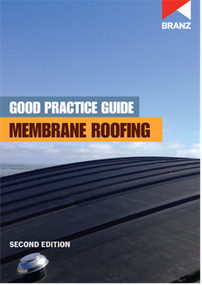
Good Practice Guide: Membrane roofing (2nd edition)
Membrane roofing systems come in a wide variety of types, each with their own substrate and installation requirements. Achieving a durable membrane roofing system depends on using the correct approach to the design of the substrate supporting the membrane and the membrane roofing itself. Using the correct membrane roofing system for the substrate, the slope, the use the roof will be put to and the aesthetic requirements of the building owner are also key requirements.
Written specifically for the New Zealand building industry, this guide covers the issues that need to be considered when selecting, designing, detailing and installing membrane roofing systems. Following the procedures outlined should significantly reduce the risk of problems occurring with membrane roofing.
This is an essential reference tool for all those involved in the selection, design or installation of a membrane roofing system.
Disclaimer: Please note that our publications reflect the regulations and best practices on the date of release, which is shown on the publication. As regulations and industry standards evolve, we always recommend that our publications be read in conjunction with the latest building code clauses and standards.
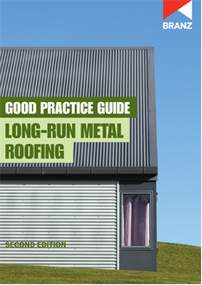
Good Practice Guide: Long-run metal roofing (2nd edition)
Long-run profiled metal roofing is commonly used on a wide range of buildings, from houses to large warehouses and industrial buildings.
When correctly selected for the in-use environment, well detailed, well installed and well maintained, long-run metal roofing can provide years of trouble-free service. When poorly selected, detailed and constructed, metal roofs can cause major problems and require extensive maintenance during the life of the building.
This guide covers good roofing practice, detailing and materials and is aimed at designers and specifiers, roofing contractors, building contractors, building owners, building officials, and tutors and students in construction-related disciplines.
Disclaimer: Please note that our publications reflect the regulations and best practices on the date of release, which is shown on the publication. As regulations and industry standards evolve, we always recommend that our publications be read in conjunction with the latest building code clauses and standards.
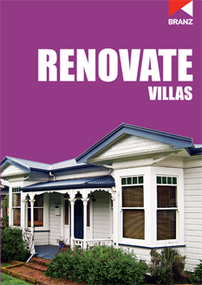
Renovate: Villas
Many of the country's 85,000 villas, built before World War 1, have already been upgraded and renovated to some extent. In their original state, they are typically cold in winter and draughty, their spaces have a poor relationship to sun and site and their service areas such as bathrooms are not well related to other rooms.
This book is well illustrated with crystal clear drawings showing typical construction methods for framing, roofing, windows and interior building elements. The workings of double hung sash windows alone are shown in six drawings and two photographs.
Typical building materials and construction methods, including match lining, lath and plaster, pressed metal and moulded timbers are explained.
Common problems are outlined, with options given on the appropriate repair or renovation.
Disclaimer: Please note that our publications reflect the regulations and best practices on the date of release, which is shown on the publication. As regulations and industry standards evolve, we always recommend that our publications be read in conjunction with the latest building code clauses and standards.
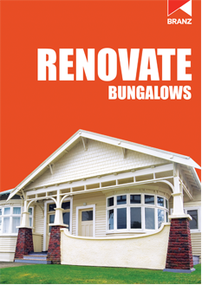
Renovate: Bungalows
Bungalows are the archetypal house of 1920s New Zealand. Builders and architects took ideas from the United States, Canada, India and even Japan and added their own features to create this popular and enduring style. The style is distinctive, with a deep porch, exposed rafter eaves, extended bargeboards and oriel windows. Many bungalows remain largely in their original form, and they are frequently subjects for renovation.
This technical resource looks at:
- what defines a bungalow style
- how they were constructed and with what materials
- the typical modifications they have had in the years since they were built
- typical problems and suggested remedies
- how to get a consent for renovation work, looking at compliance paths and Alternative Solutions
- project and construction planning.
Disclaimer: Please note that our publications reflect the regulations and best practices on the date of release, which is shown on the publication. As regulations and industry standards evolve, we always recommend that our publications be read in conjunction with the latest building code clauses and standards.
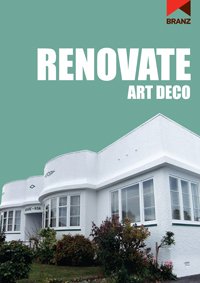
Renovate: Art deco
The art deco house of the 1930s was a dramatic change to the earlier villa and bungalow. A flat roof, stucco cladding, rounded corners and reduced decoration all contributed to art deco's distinctive style.
These houses are often bought for their style rather than performance. Their stucco cladding and very low-pitched roofs often had weathertightness problems, and without renovation, art deco houses can be cold to live in. Careful renovation can retain the popular style while improving performance and comfort.
This book covers:
- what defines art deco style
- how these houses were constructed, and with what materials
- typical modifications they have had in the decades since they were built
- problems that may be encountered and suggested remedies
- how to get a consent for renovation work, looking at compliance paths and Alternative Solutions
- project and construction planning.
Disclaimer: Please note that our publications reflect the regulations and best practices on the date of release, which is shown on the publication. As regulations and industry standards evolve, we always recommend that our publications be read in conjunction with the latest building code clauses and standards.
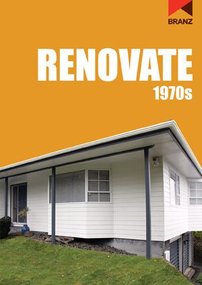
Renovate: 1970s
Over 279,000 houses were built in New Zealand in the 1970s, a time of expanding suburban development. Architectural styles developed during the 1950s and 1960s influenced mass housing, and a wide range of new materials was used. Split-level homes became common on sloping sites, and many houses included garaging for two cars, with internal access. Architect-designed houses introduced different window styles and rooflines as well as new linings and claddings.
Many houses from this era are little changed since construction. Typical renovation work includes updating kitchens and bathrooms and making improvements to energy efficiency through retrofitting thermal insulation and installing modern space heating systems.
This technical resource covers:
- exactly what defines 1970s style
- how these houses were constructed and with what materials
- modifications they may have had in the decades since they were built
- typical problems and suggested remedies.
This book also takes you through the issue of getting a consent for renovation work, looking at compliance paths and Alternative Solutions.
Disclaimer: Please note that our publications reflect the regulations and best practices on the date of release, which is shown on the publication. As regulations and industry standards evolve, we always recommend that our publications be read in conjunction with the latest building code clauses and standards.