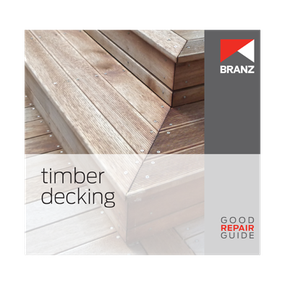
Good Repair Guide: Timber decking
Regular wetting and drying of timber decking results in timber swelling and shrinking. In combination with exposure to UV light and temperature changes, this can result in timber deterioration.
Timber slat decks are usually fully exposed to the weather. To deal with water dispersal, these decks have 3-6 mm gaps between the timber boards. Although villas and bungalows may have a roofed veranda or porch, the timber decking is still exposed to the weather. The decking in these houses is typically tongue and groove (T&G) boards, and they are laid with a fall to the exterior of the building to shed water.
This Good Repair Guide describes some of the common problems that can occur and how timber decking can be repaired and maintained.
Disclaimer: Please note that our publications reflect the regulations and best practices on the date of release, which is shown on the publication. As regulations and industry standards evolve, we always recommend that our publications be read in conjunction with the latest building code clauses and standards.
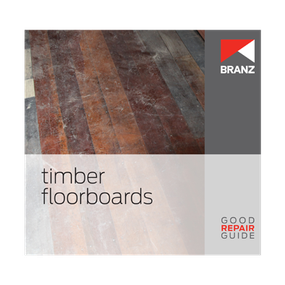
Good Repair Guide: Timber floorboards
Tongue and groove (T&G) timber floors laid over joists are a typical feature of older New Zealand homes. From the earliest houses until 1970s, all houses had timber floorboards.
Moisture changes in the timber can cause floorboards to expand and contract, and timber flooring is also susceptible to minor damage such as scuffs and scratches.
This Good Repair Guide describes the types of repairs that can be made where damage to floorboards is minor or localised. It does not cover major repairs or where the floor may need to be replaced as a result of subfloor or foundation failure.
Disclaimer: Please note that our publications reflect the regulations and best practices on the date of release, which is shown on the publication. As regulations and industry standards evolve, we always recommend that our publications be read in conjunction with the latest building code clauses and standards.
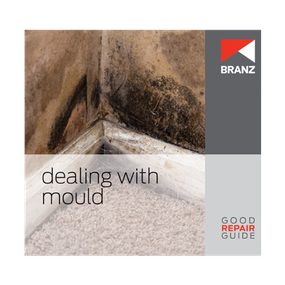
Good Repair Guide: Dealing with mould
As well as causing damage to building materials, internal mould growth in homes is unhealthy for many building occupants. While some moulds are harmless, others can cause health problems such as allergies, asthma and hay fever in some people, and a few moulds can cause more serious illness.
This Good Repair Guide outlines strategies for removing internal mould, controlling moisture and raising temperatures in order to minimise its reccurrence. It looks at what mould is, the problems and health consequences, cleaning methods for mould and improving ventilation.
Disclaimer: Please note that our publications reflect the regulations and best practices on the date of release, which is shown on the publication. As regulations and industry standards evolve, we always recommend that our publications be read in conjunction with the latest building code clauses and standards.
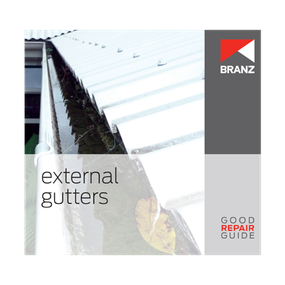
Good Repair Guide: External gutters
Roof gutters are an important component of the building envelope, designed to control the disposal of rainwater from the roof. The most important functions of gutters are to help protect against:
- excessive or concentrated wetting of external wall surfaces
- water getting inside the building roof space or wall framing
- increased wetness of soils around the building and subsequent increased moisture loads on basement waterproofing
- undermining of areas around the building where there is controlled spillage onto the ground.
Leaking or overflowing gutters may cause problems with dampness in subfloor areas or basements or elevated moisture levels in cladding and within wall framing.
This Good Repair Guide covers the repair or replacement of fully accessible metal and plastic external gutters around the outside perimeter of the building that are fixed to a fascia board or rafter ends. It does not cover gutters that are concealed behind a proprietary metal fascia or internal or within-roof gutters.
Disclaimer: Please note that our publications reflect the regulations and best practices on the date of release, which is shown on the publication. As regulations and industry standards evolve, we always recommend that our publications be read in conjunction with the latest building code clauses and standards.
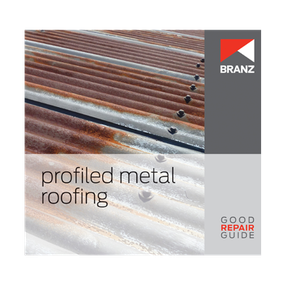
Good Repair Guide: Profiled metal roofing
Profiled metal roofs may need replacing for a variety of reasons, including cladding failure due to corrosion, leaks due to poor initial design or installation, damage caused by wind or falling trees, the need to match an older roof to a newer addition or imply a desire to change the appearance of the roof.
This Good Repair Guide covers:
- why a roof may need replacing
- the steps to take when removing an existing profiled metal roof and replacing it with new longrun profiled metal roof cladding.
It does not cover the replacement of the profiled metal roof cladding with another roofing type.
Disclaimer: Please note that our publications reflect the regulations and best practices on the date of release, which is shown on the publication. As regulations and industry standards evolve, we always recommend that our publications be read in conjunction with the latest building code clauses and standards.
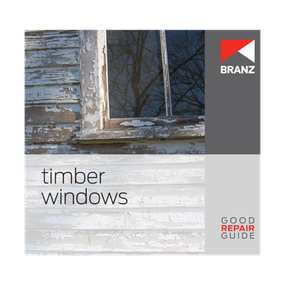
Good Repair Guide: Timber windows
Until the 1970s, the main material used for window frames and sashes in New Zealand houses was timber. A large proportion of houses still have timber windows, and these can last for a very long time if well maintained and repaired when necessary.
This Good Repair Guide covers the repair of timber windows using materials and styles to match the existing. It looks at common problems, how to repair and replace windows, rules and regulations and health and safety.
Disclaimer: Please note that our publications reflect the regulations and best practices on the date of release, which is shown on the publication. As regulations and industry standards evolve, we always recommend that our publications be read in conjunction with the latest building code clauses and standards.
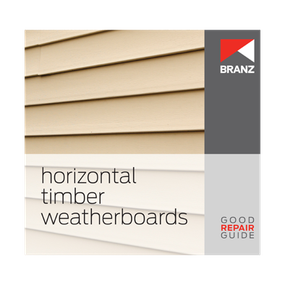
Good Repair Guide: Horizontal timber weatherboards
Over time, water entry through poorly installed or maintained weatherboard cladding may cause significant structural damage and other problems long before any symptoms become apparent on the exterior or interior of a building. Regular checks and proper maintenance are critical to ensuring weathertightness.
If a leak or any associated damage becomes obvious, it is advisable to consult a registered building surveyor in order to determine the extent of the problem and necessary repair options.
This Good Repair Guide highlights common problems and causes, types and extent of damage, rules and regulations, health and safety, tools, repairing and replacing weatherboards as well as related documents and standards.
Disclaimer: Please note that our publications reflect the regulations and best practices on the date of release, which is shown on the publication. As regulations and industry standards evolve, we always recommend that our publications be read in conjunction with the latest building code clauses and standards.
Good Repair Guide: Interior painting
All interior painted finishes within a domestic building deteriorate slowly over time and will require repainting to clean and freshen the surfaces or to continue protecting the substrate. The frequency of repainting depends on the amount of fading caused by UV exposure, damage or wear, and internal humidity levels - high levels of internal moisture that cause condensation to form on surfaces can result in mould growth, staining and paint deterioration.
Painted interior surfaces include ceilings, walls, window frames, doors and door frames, kitchen joinery and trims such as cornices (or scotias), architraves and skirtings. Materials that are likely to have a paint finish include timber, plasterboard, fibrous plaster, softboard, hardboard, fibre-cement, particleboard, MDF and pressed metal ceiling and wall panelling.
This Good Repair Guide highlights common problems, rules and regulations, health and safety, preparation, selecting paint, how to paint, brushes, roller and other applications, spray painting and cleaning up.
Disclaimer: Please note that our publications reflect the regulations and best practices on the date of release, which is shown on the publication. As regulations and industry standards evolve, we always recommend that our publications be read in conjunction with the latest building code clauses and standards.