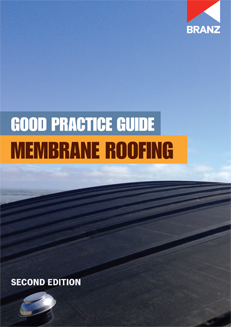
Good Practice Guide: Membrane roofing (2nd edition)

From $45.00

Product Description

Membrane roofing systems come in a wide variety of types, each with their own substrate and installation requirements. Achieving a durable membrane roofing system depends on using the correct approach to the design of the substrate supporting the membrane and the membrane roofing itself. Using the correct membrane roofing system for the substrate, the slope, the use the roof will be put to and the aesthetic requirements of the building owner are also key requirements.

Written specifically for the New Zealand building industry, this guide covers the issues that need to be considered when selecting, designing, detailing and installing membrane roofing systems. Following the procedures outlined should significantly reduce the risk of problems occurring with membrane roofing.

This is an essential reference tool for all those involved in the selection, design or installation of a membrane roofing system. 


Disclaimer: Please note that our publications reflect the regulations and best practices on the date of release, which is shown on the publication. As regulations and industry standards evolve, we always recommend that our publications be read in conjunction with the latest building code clauses and standards.

Product Information
Publication date 1 October 2015
Author John Wierenga
Product type Book
Availability Available
Product code BK169

Products you recently viewed

Level: Passive design (2nd edition)

A critical aspect of a house's energy use and sustainability is the overall design of a building - its orientation on site, careful sizing and location of windows, specification of above-minimum insulation and making the best use of sun and wind for heating, cooling and ventilation.

This guide explains the technical background to good passive design, the choices and compromises that need to be made and Building Code and standards requirements that must be met.

The thermal performance requirements of building elements given in this book are from the 4th edition Building Code acceptable solution H1/AS1 and verification method H1/VM1. Note that 5th editions of H1/AS1 and H1/VM1 replaced the 4th edition from 3 November 2022.


Disclaimer: Please note that our publications reflect the regulations and best practices on the date of release, which is shown on the publication. As regulations and industry standards evolve, we always recommend that our publications be read in conjunction with the latest building code clauses and standards.

From $30.00
Learn more

Seminar: The building envelope

This seminar provides an overview of roof and wall assemblies with a focus on walls and the installation requirements and performance of the current commonly used wall cladding systems.

Stairs Module: Stair Landings

This module covers design and construction requirements for landings, including quarter and half landings.

Good Repair Guide: Subfloor timber

A bouncy or springy floor or a floor that is noticeably uneven is often the first indication that there may be a problem with the subfloor framing.

Subfloor timbers include joists, bearers, wall plates, jack studs, braces and stringers. They are structural components of a building, and any damaged or understrength subfloor timbers must be repaired or replaced regardless of the cause.

This Good Repair Guide looks at the causes of common problems with subfloor timber and outlines the repair options.


Disclaimer: Please note that our publications reflect the regulations and best practices on the date of release, which is shown on the publication. As regulations and industry standards evolve, we always recommend that our publications be read in conjunction with the latest building code clauses and standards.

From $9.00
Learn more

Webinar: The Carbon Challenge - Carbon challenges

We explore some of the challenges we face in reducing carbon emissions.

Please note: that access to this webstream will expire after 1 month.


Webinar: Towards sustainable materials

This BRANZ/Edge Environment webinar explores the need to move to a circular economy – one that also addresses climate change and modern-day slavery.