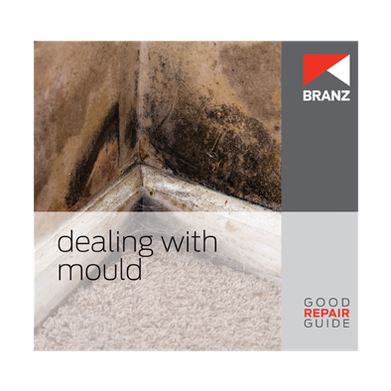
Good Repair Guide: Dealing with mould

From $9.00

Product Description

As well as causing damage to building materials, internal mould growth in homes is unhealthy for many building occupants. While some moulds are harmless, others can cause health problems such as allergies, asthma and hay fever in some people, and a few moulds can cause more serious illness.

This Good Repair Guide outlines strategies for removing internal mould, controlling moisture and raising temperatures in order to minimise its reccurrence. It looks at what mould is, the problems and health consequences, cleaning methods for mould and improving ventilation. 


Disclaimer: Please note that our publications reflect the regulations and best practices on the date of release, which is shown on the publication. As regulations and industry standards evolve, we always recommend that our publications be read in conjunction with the latest building code clauses and standards.

Product Information
Publication date 1 December 2013
Author Alide Elkink
Product type Book
Availability Available
Product code BK110

Products you recently viewed

Good Repair Guide: Subfloor timber

A bouncy or springy floor or a floor that is noticeably uneven is often the first indication that there may be a problem with the subfloor framing.

Subfloor timbers include joists, bearers, wall plates, jack studs, braces and stringers. They are structural components of a building, and any damaged or understrength subfloor timbers must be repaired or replaced regardless of the cause.

This Good Repair Guide looks at the causes of common problems with subfloor timber and outlines the repair options.


Disclaimer: Please note that our publications reflect the regulations and best practices on the date of release, which is shown on the publication. As regulations and industry standards evolve, we always recommend that our publications be read in conjunction with the latest building code clauses and standards.

From $9.00
Learn more

REBRI Resource Recovery All waste: Centralised Sorting and Storage (PDF)

This guide provides good practice advice to maximise recovery rates for all types of construction and demolition (C&D) waste from designated sorting facilities and resource recovery centres.

The aim is to assist the resource recovery industry to provide systems that:

  • maximise the amount of C&D waste material diverted from landfill and cleanfill
  • minimise contamination and damage of the material
  • avoid or minimise environmental and nuisance effects from sorting and storage.

This guideline covers:

  • finding good markets for C&D waste
  • setting up a waste-sorting and storage facility
  • operating a waste-sorting and storage facility
  • sorting procedures
  • storage
  • residual waste disposal
  • environmental, health and safety hurdles
  • a word on licensing
  • resources and contacts
  • other guidelines in this series.


Disclaimer: Please note that our publications reflect the regulations and best practices on the date of release, which is shown on the publication. As regulations and industry standards evolve, we always recommend that our publications be read in conjunction with the latest building code clauses and standards.


Good Repair Guide: Timber floorboards

Tongue and groove (T&G) timber floors laid over joists are a typical feature of older New Zealand homes. From the earliest houses until 1970s, all houses had timber floorboards.

Moisture changes in the timber can cause floorboards to expand and contract, and timber flooring is also susceptible to minor damage such as scuffs and scratches.

This Good Repair Guide describes the types of repairs that can be made where damage to floorboards is minor or localised. It does not cover major repairs or where the floor may need to be replaced as a result of subfloor or foundation failure.


Disclaimer: Please note that our publications reflect the regulations and best practices on the date of release, which is shown on the publication. As regulations and industry standards evolve, we always recommend that our publications be read in conjunction with the latest building code clauses and standards.

From $9.00
Learn more