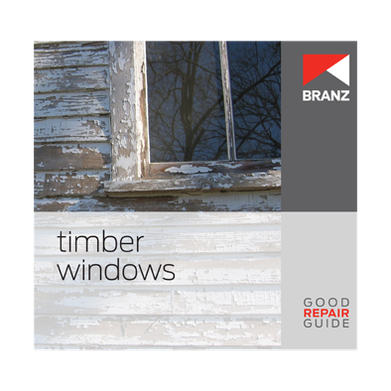
Good Repair Guide: Timber windows
Product Description
Until the 1970s, the main material used for window frames and sashes in New Zealand houses was timber. A large proportion of houses still have timber windows, and these can last for a very long time if well maintained and repaired when necessary.
This Good Repair Guide covers the repair of timber windows using materials and styles to match the existing. It looks at common problems, how to repair and replace windows, rules and regulations and health and safety.
Disclaimer: Please note that our publications reflect the regulations and best practices on the date of release, which is shown on the publication. As regulations and industry standards evolve, we always recommend that our publications be read in conjunction with the latest building code clauses and standards.
| Publication date | 1 October 2013 |
|---|---|
| Author | Alide Elkink |
| Product type | Book |
| Availability | Available |
| Product code | BK107 |
Products you recently viewed
Good Repair Guide: Construction stains
Building and renovation work can result in spills and splashes causing undesirable staining on nearby surfaces. The most common substances likely to cause staining if not handled or used correctly include:
- paints, varishes and stains (waterborne and solventborne)
- oil, grease and wax
- adhesives
- sealants (silicone and latex)
- concrete and cement-based mortar and grout
- asphalt and tar.
This Good Repair Guide covers:
- the solvents and cleaners available for stain removal and the procedures for removing different types of construction-related stains without damaging the underlying material
- physical removal options such as abrading, rubbing, sanding, scraping, sandblasting, grinding, steam cleaning, brushing or scouring where appropriate
- dry materials that may be applied to a stain or spillage.
Disclaimer: Please note that our publications reflect the regulations and best practices on the date of release, which is shown on the publication. As regulations and industry standards evolve, we always recommend that our publications be read in conjunction with the latest building code clauses and standards.
CO2MPARE v2.0 (June 2023)
Provides mean carbon footprint calues for New Zealand case study residential and office buildings. Includes additional information, such as energy use intensity and top contributing materials from a greenhouse gas perspective.
Disclaimer: Please note that our publications reflect the regulations and best practices on the date of release, which is shown on the publication. As regulations and industry standards evolve, we always recommend that our publications be read in conjunction with the latest building code clauses and standards.
Webinar: LCAPlay
LCAPlay allows users to assess potential environmental impacts for commercial building design concepts.
Renovate: 1940-1960s
Through the 1940s, around 28% of new domestic building work was government-funded state housing. This figure fell to below 10% during the 1960s. This book covers both state and private housing in an era of considerable growth - 262,000 houses were built in the 1960s.
Early state houses may be plain, but they are regarded today as solidly constructed homes that are ideal for renovation. Architect-designed homes of the period introduced many lifestyle features still popular today, such as larger areas of glazing, good indoor/outdoor flow and open-plan layouts.
This technical resource covers:
- exactly what defines 1940-1960s style
- how these houses were constructed and with what materials
- typical modifications they have had in the decades since they were built
- typical problems and suggested remedies.
This book also works through the issue of getting a consent for renovation work, looking at compliance paths and Alternative Solutions. Very brief examples show compliance paths that could be used for renovations such as adding a first floor addition, adding a double-glazed window where there is currently no window and adding an extension to a stucco house.
Disclaimer: Please note that our publications reflect the regulations and best practices on the date of release, which is shown on the publication. As regulations and industry standards evolve, we always recommend that our publications be read in conjunction with the latest building code clauses and standards.
Good Repair Guide: Interior painting
All interior painted finishes within a domestic building deteriorate slowly over time and will require repainting to clean and freshen the surfaces or to continue protecting the substrate. The frequency of repainting depends on the amount of fading caused by UV exposure, damage or wear, and internal humidity levels - high levels of internal moisture that cause condensation to form on surfaces can result in mould growth, staining and paint deterioration.
Painted interior surfaces include ceilings, walls, window frames, doors and door frames, kitchen joinery and trims such as cornices (or scotias), architraves and skirtings. Materials that are likely to have a paint finish include timber, plasterboard, fibrous plaster, softboard, hardboard, fibre-cement, particleboard, MDF and pressed metal ceiling and wall panelling.
This Good Repair Guide highlights common problems, rules and regulations, health and safety, preparation, selecting paint, how to paint, brushes, roller and other applications, spray painting and cleaning up.
Disclaimer: Please note that our publications reflect the regulations and best practices on the date of release, which is shown on the publication. As regulations and industry standards evolve, we always recommend that our publications be read in conjunction with the latest building code clauses and standards.