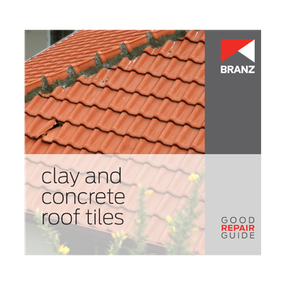
Good Repair Guide: Clay and concrete roof tiles
Clay and concrete tiles have long been popular choices of roofing material, particularly in severe coastal or thermal environments. As a general rule, clay and concrete tile roofs can be expected to last 50 or 60 years before needing replacement.
Regular checks and proper maintenance are critical to keep the roof in sound condition and to keep the water out. This Good Repair Guide focuses on the repair options for isolated areas of concern.
Disclaimer: Please note that our publications reflect the regulations and best practices on the date of release, which is shown on the publication. As regulations and industry standards evolve, we always recommend that our publications be read in conjunction with the latest building code clauses and standards.
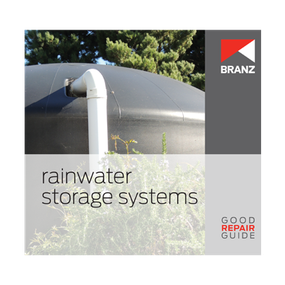
Good Repair Guide: Rainwater storage systems
Approximately 10% of New Zealand households rely on rainwater collected from roofs for their water supply. Typically, these are rural residential properties but may include country schools, camping grounds, marae and other community buildings. A number of fairly simple and relatively inexpensive measures can be introduced to existing systems to improve water quality
This Good Repair Guide looks at upgrading options and maintenance requirements for existing rainwater storage systems to ensure a quality potable roof water collection and storage system is maintained.
Disclaimer: Please note that our publications reflect the regulations and best practices on the date of release, which is shown on the publication. As regulations and industry standards evolve, we always recommend that our publications be read in conjunction with the latest building code clauses and standards.
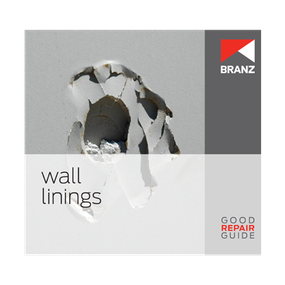
Good Repair Guide: Wall linings
General wear and tear in a house often results in damage to interior wall linings. Damage can range from repairable (a picture hook pulled out or a door handle through the wall) to the catastrophic (a major leak or structural failure).
This Good Repair Guide outlines some options for repairing existing wall linings and guidelines for when to replace a sheet or larger area of lining.
Prefinished linings (such as melamine-faced boards) are not included in this guide.
Disclaimer: Please note that our publications reflect the regulations and best practices on the date of release, which is shown on the publication. As regulations and industry standards evolve, we always recommend that our publications be read in conjunction with the latest building code clauses and standards.
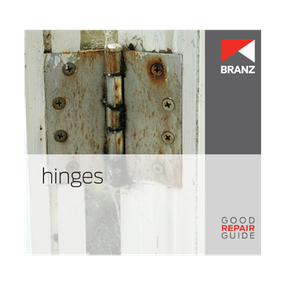
Good Repair Guide: Hinges
Hinges for timber doors and windows are frequently overlooked hardware items. It is not until they fail to operate properly that attention is paid to them. By the time this occurs, they are sometimes beyond refurbishment, and replacement is the only option. If problems are addressed before they become too serious, hinges can generally be refurbished and restored.
This Good Repair Guide looks at the types of hinges used with timber doors and windows, the problems that can occur and how they can be refurbished and, if necessary, replaced.
Disclaimer: Please note that our publications reflect the regulations and best practices on the date of release, which is shown on the publication. As regulations and industry standards evolve, we always recommend that our publications be read in conjunction with the latest building code clauses and standards.
Good Repair Guide: Construction stains
Building and renovation work can result in spills and splashes causing undesirable staining on nearby surfaces. The most common substances likely to cause staining if not handled or used correctly include:
- paints, varishes and stains (waterborne and solventborne)
- oil, grease and wax
- adhesives
- sealants (silicone and latex)
- concrete and cement-based mortar and grout
- asphalt and tar.
This Good Repair Guide covers:
- the solvents and cleaners available for stain removal and the procedures for removing different types of construction-related stains without damaging the underlying material
- physical removal options such as abrading, rubbing, sanding, scraping, sandblasting, grinding, steam cleaning, brushing or scouring where appropriate
- dry materials that may be applied to a stain or spillage.
Disclaimer: Please note that our publications reflect the regulations and best practices on the date of release, which is shown on the publication. As regulations and industry standards evolve, we always recommend that our publications be read in conjunction with the latest building code clauses and standards.
Good Repair Guide: Wet area sheet wall linings
Wet area sheet wall linings may be subjected to continual wetting, such as in showers and around baths with a shower over the bath, and splashing, such as the wall area immediately around the rim of a bath, outside an enclosed shower with a shower curtain only or behind basins, laundry tubs and sinks.
This Good Repair Guide looks at the options for repairing wet area sheet linings (factory-finished hardboard or fibre-cement panels, painted oil-tempered hardboard sheet and acrylic sheeting) and how to replace them if they cannot be repaired.
Disclaimer: Please note that our publications reflect the regulations and best practices on the date of release, which is shown on the publication. As regulations and industry standards evolve, we always recommend that our publications be read in conjunction with the latest building code clauses and standards.
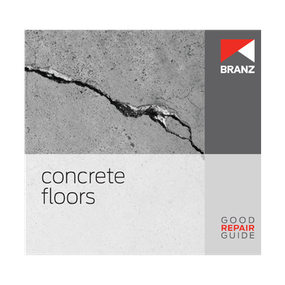
Good Repair Guide: Concrete floors
Although the many atttibutes of concrete such as compressive strength, excellent durability and versatility are well known, concrete floors are not completely immune from problems. This Good Repair Guide focuses on the restoration of the appearance of concrete floors.
Inconsistency of the original concrete mix, poor surface finishing and inadequate curing may result in a floor finish that is less than acceptable. Shrinkage cracking, staining, surface pitting and wear from vehicle or foot traffic can also be a problem.
Disclaimer: Please note that our publications reflect the regulations and best practices on the date of release, which is shown on the publication. As regulations and industry standards evolve, we always recommend that our publications be read in conjunction with the latest building code clauses and standards.
Good Repair Guide: Overlay flooring
Overlay flooring is a flooring system that is laid over timber tongue and groove (T&G) boards, particleboard, plywood or concrete. It includes solid timber boards, parquet flooring, timber composite flooring systems and bamboo flooring
This Good Repair Guide describes the repair options for existing overlay flooring. It describes how to:
- repair minor damage
- replace a section of floor
- replace an entire floor
- prepare an overlay floor for a new protective finish.
Floor coverings such as cork tiles, vinyl tiles or sheet vinyl are not covered by this guide.
Disclaimer: Please note that our publications reflect the regulations and best practices on the date of release, which is shown on the publication. As regulations and industry standards evolve, we always recommend that our publications be read in conjunction with the latest building code clauses and standards.