BRANZ House Insulation Guide 6th edition v2.7 PC (03 December 2025)
This Microsoft Excel (.xlxs) 25MB download of BRANZ House Insulation Guide 6th edition is for PC users.
Updates:
- Further fix to error where the R-value for slab floors were higher than they should have been when adding floor topper insulation
- New images for timber framed floors
- A worksheet added which provides simplifications to help with calculation and modelling for steel framed walls
The guide is now in two parts:
- The tables of construction R-values for common construction options for compliance under H1/AS1 and H1/VM1 5th edition
- The accompanying House Insulation Guide text [PDF] for guidance on insulation to meet or exceed H1 AS/1 and H1/VM1 5th edition.
Webinar: HECC
The Homestar Embodied Carbon Calculator (HECC) is a free tool that assesses the cradle-to-cradle life cycle embodied carbon of homes with traditional constructions (e.g. timber/steel framed homes).
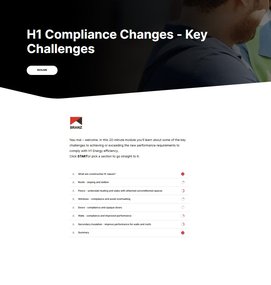
H1 compliance changes - key challenges
In this free 20-minute module, you’ll learn about some of the key challenges to achieving or exceeding the new performance requirements to comply with H1 Energy efficiency. The focus is on H1/AS1 and H1/VM1 5th edition amendment 1.
Topics include:
- What are construction R-values?
- Roofs – sloping and skillion
- Floors – underslab heating and slabs with attached unconditioned spaces
- Windows – compliance and avoid overheating
- Doors – compliance and opaque doors
- Walls – compliance and improved performance
- Secondary insulation – improve performance for walls and roofs
Site results
-
Seismic resilience
Seismic resilience is about constructing new buildings and strengthening those already built to keep occupants safe in an earthquake and to limit damage to the building itself.
-
Fire safety design
Fire safety design aims to reduce the impact of fires in Aotearoa New Zealand buildings.
-
CO₂RE
<p data-block-key="88ets">Provides calculated carbon footprints per square metre for residential roof, wall and floor constructions.</p>
-
ADESO® – Adesoguard, REOXTHENE TECHNOLOGY® Easy Lift, REOXTHENE TECHNOLOGY® Bitulight and REOXTHENE TECHNOLOGY® Polyflex Light Damp Proof (DPM) Membranes
<p data-block-key="bvhzc">ADESO® – Adesoguard, REOXTHENE TECHNOLOGY® Easy Lift, REOXTHENE TECHNOLOGY® Bitulight and REOXTHENE TECHNOLOGY® Polyflex Light Damp Proof (DPM) Membranes are self-adhesive and torch-applied bitumen-based damp-proof membranes for basement retaining walls and floors. They are applied under floor slabs and foundations and to the exterior face of basement retaining walls to prevent water vapour penetrating to the interior face in spaces where moisture may cause damage.</p><p data-block-key="fef48">The products are supplied as torch–applied modified bitumen sheets or self-adhering, cold-applied, polymer-rubber modified bitumen sheets in roll form and are applied as single or double layer systems.</p>
-
Structural and seismic engineering research
The structural and seismic engineering team investigates critical aspects of building structural integrity and serviceability. We also conduct applied research of building structures under loading conditions such as wind, vibration and fires.
-
Climate change and the built environment
<p data-block-key="u7adk">The construction industry has responsibilities around the mitigation of and adaptation to the impacts of climate change.</p>
-
Publications and presentations
<p>The BEES team worked hard to ensure the results of BEES were available to the widest possible range of stakeholders - including the public, special interest groups, government agencies, universities and other researchers.</p>
-
Building Energy End-use Study (BEES)
The original Building Energy End-use Study (BEES) ran 2007–2013 and monitored and analysed energy and water consumption of non-residential buildings. This research was the first of its kind to be done in New Zealand. A new project pilot study, BEES 2.0, is examining energy demand and flexibility in non-residential buildings, focusing on hospitals with the intention of subsequently developing into a larger multi-year project.