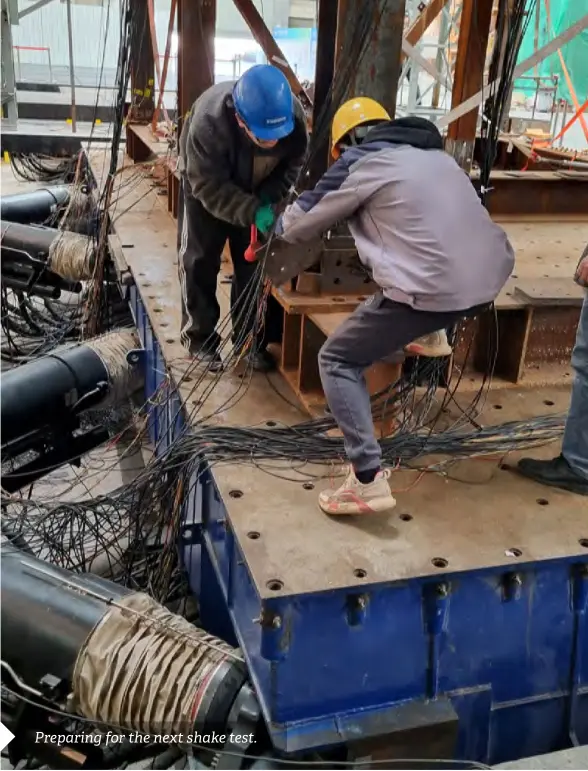
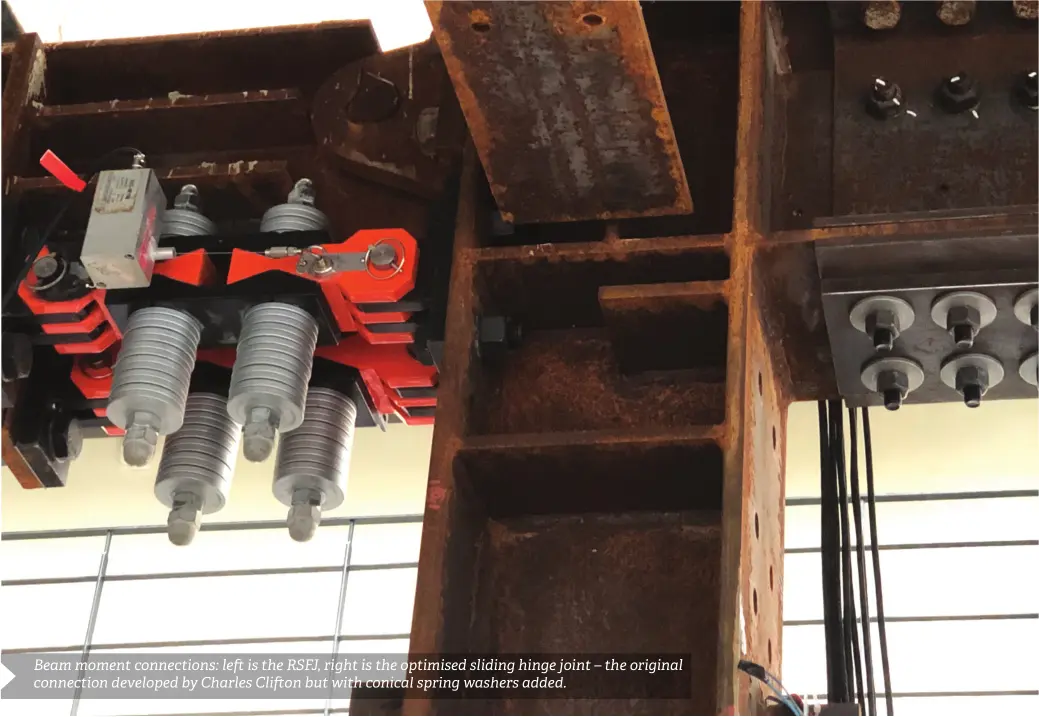
In Build 201, we reported on collaborative international research (dubbed ROBUST) under way at state-of-the-art facilities in China to test the seismic performance of sliding or friction connections in a building.
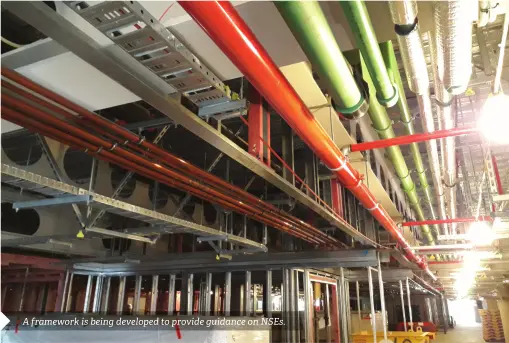
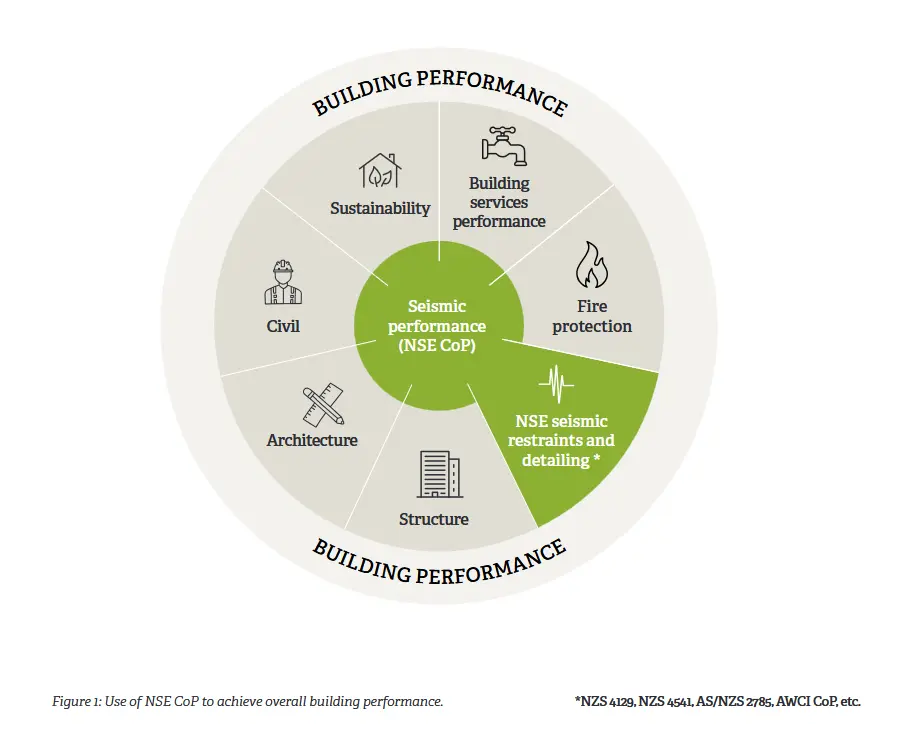
To solve inconsistencies in the design and specification of non-structural elements, the Building Innovation Partnership is developing a seismic guidance framework covering performance characteristics, classification and quality assurance.
A code of practice for the seismic performance of non-structural elements is being developed to help deliver buildings that better stand up to earthquakes.
BRANZ CEO Claire Falck says Aotearoa New Zealand can learn crucial lessons from life-saving advances in earthquake preparedness made in Taiwan between two significant earthquakes in the last 25 years. Science led the way in Taiwan and it must continue to do so here.
Aotearoa New Zealand’s built environment is under pressure to respond to modern needs and societal expectations, says Paul Campbell, National Technical Leader – Building Structures, WSP.
In conventional building designs, key skeletal elements such as beams and columns bear the brunt of seismic forces. If these elements need repairing after an earthquake, it’s typically costly and disruptive. Collaborative research is shifting the focus – and changing the game – for buildings in quake-prone areas worldwide.
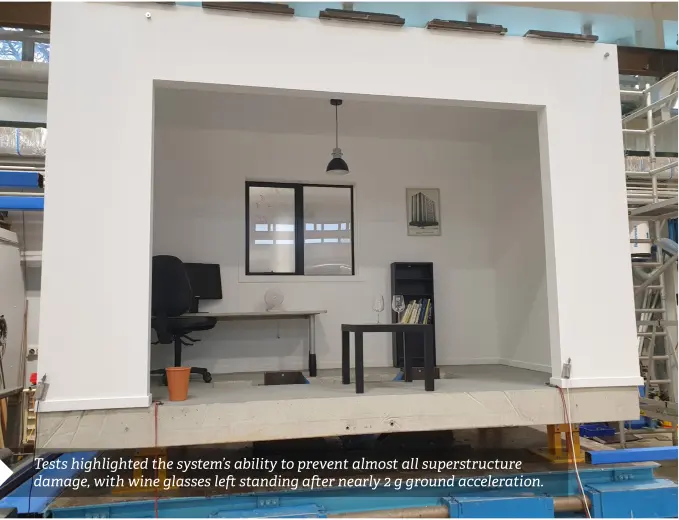
A low-cost base isolation system for houses prevented almost all damage when tested at the University of Canterbury. While the system will undergo further development, plans are to eventually take it to market.
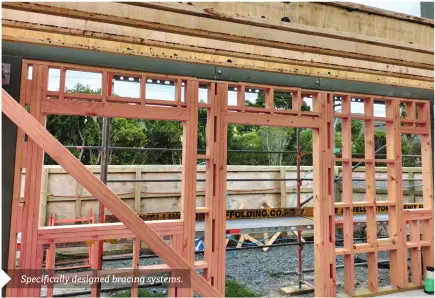
Why were many modern, high-end homes so badly damaged in the Christchurch earthquakes? By digging deep, a BRANZ engineer found the problem lay with incompatible bracing systems, with the resulting BRANZ guidance quickly embraced by the engineering community.
After the Canterbury earthquakes, regulations governing foundations changed. Initially only for the Canterbury region, they were later rolled out around New Zealand. What are the changes and what do they mean?
Poorly restrained or unrestrained building services can cause havoc during earthquakes, leaving buildings unusable afterwards. Prevent this by following the guidance on properly restraining building services.
A key part of resilience in housing is restraining storage water heaters to reduce the risk of damage in earthquakes. Acceptable Solution G12/AS1 has guidance about what is required for Building Code compliance in this area.
Earthquake damage observed in the 2010/11 Canterbury earthquake sequence demonstrated that simple regular light timber-framed (LTF) houses performed well while irregular houses often had significant damage that was uneconomical to...
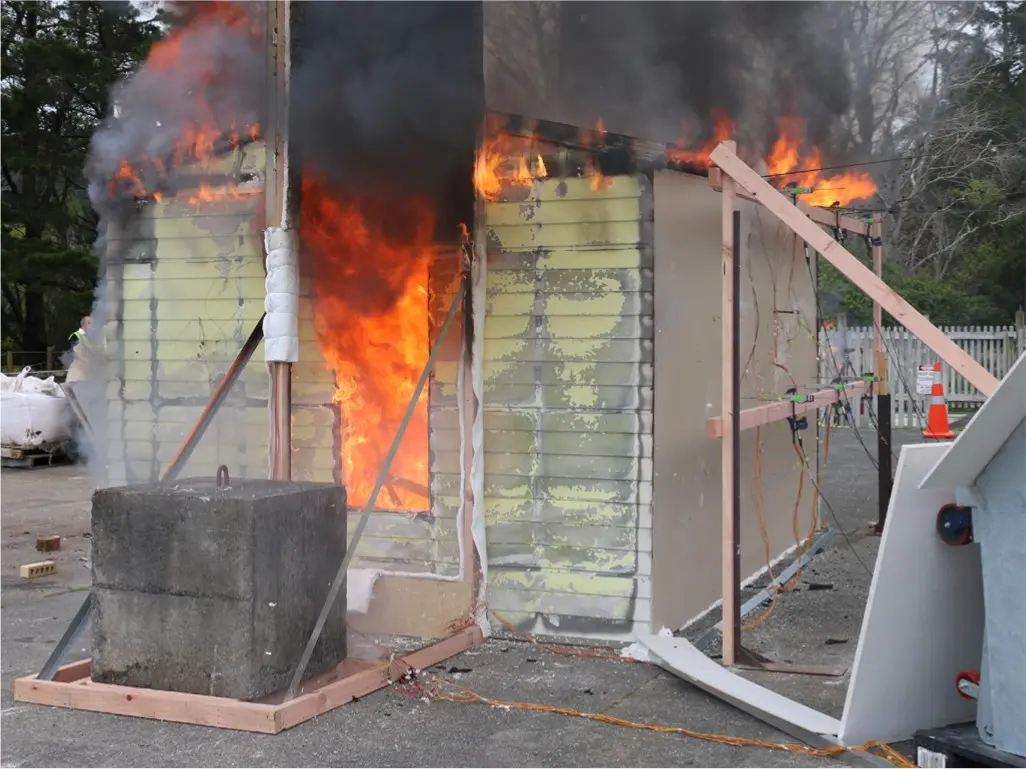
Non-structural elements (NSEs) are essential for building function and liveability – including, for instance, ducting, suspended ceilings and façades. However, there is insufficient knowledge about their seismic performance, which leads...
Following the devastating Christchurch earthquakes, some homeowners have reported that their houses are noisier when doors are slammed, people climb stairs, heavy vehicles drive by and during strong winds and...
The quality of brick veneer construction has improved markedly in recent years, with requirements for the ties to be screw-fixed to the timber framing and with the advent of lighter...
A visit was made by BRANZ to several houses in the Queenstown and Wanaka areas that had been surveyed by EQC damage assessors after the 15 July 2009 Fiordland earthquake.The...
This is the fourth BRANZ investigation of a series looking into the seismic performance of brick veneer. The first two investigations were slow cyclic tests of full-scale veneer specimens where...
This is the third BRANZ investigation of a series looking into the seismic performance of brick veneer. The first two investigations were slow cyclic tests of full-scale veneer specimens where...
This is the first full-scale investigation of the performance of clay brick veneer houses when subjected to simulated seismic loading.In the 1990s, an investigation was conducted of the out-of-plane performance...
Product Description This is the second of two volumes that combine to report on how wall bracing panels that develop slackness can rationally be used as a structural system to...
Product Description This study forms an investigation into the wind and earthquake racking resistance of timber-framed bracing panels in New Zealand. It includes a revision to the current test protocol...
The use of timber in the construction of multi-storey buildings in seismic regions has been gaining momentum around the world for several decades. As timber is a relatively new material...
Product Description This report describes the :first stage of an investigation into the performance of masonry veneer on framed backing walls under seismic loading. Both elemental tests on veneer ties...
This report describes the collection and analysis of survey data on a group of 314 randomly selected houses in Christchurch following the major earthquakes of the Canterbury earthquake series. The...
Product Description NZS 1170.5:2004 provides clear guidelines for the design of building parts and non-structural components but without giving designers or manufacturers a means to evaluate the dynamic properties of...
Product Description The in-plane behaviour of external curtain wall glazing systems when buildings respond to seismic loading is not understood. This is a cause of great concern for the safety...
Product Description For some years, the construction industry has been installing curtain wall glazing systems on multi-storey buildings. The New Zealand loadings code has requirements for the separation of non-structural...
A suite of building structures in both high and low seismicity regions of New Zealand was designed in accordance with the provisions of the draft joint loadings standard (DR00902-4). Earthquake...
NZS 3604:1999 stipulates the layout of bracing piles in a house piled foundation. This can still result in significantly non-symmetrical layouts. This paper describes a ‘pushover’ seismic analysis of the...
This report describes the development of procedures for the repair after earthquake of a selection of structural elements of domestic housing. Systems considered include an exterior wall clad with sheet...
Experimental investigations have been carried out to replicate the damage sustained in earthquakes and to derive cost-effective and practical repair procedures for stucco wall claddings, softboard ceiling linings, hardboard ceiling...
This is the first of a series of study reports prepared during research into base isolation of low-rise buildings. Reference is made to four BRANZ unpublished preliminary reports on this...
This research aimed to better understand how territorial authorities currently make occupancy decisions related to earthquake-prone buildings and how they could do this better. In doing so, we combined legal,...
There is growing evidence that the communication of seismic risk information and interpretation by end users (building owners and tenants) can be ineffective and can result in suboptimal outcomes. To...
This report set out to assess the need for multi-functional testing facilities in New Zealand to test the seismic performance of non-structural elements. Seismic performance covers more than strength or...
This is the fourth BRANZ investigation of a series looking into the seismic performance of brick veneer. The complete study is intended to improve the understanding of brick veneer construction...
Timber framed structures generally survive earthquakes well because of their intrinsically lighter mass. This survival occurs through load sharing between the large number of elements making up the structure, through...
This report covers research that investigates low-damage seismic design principles in low to medium-rise structures, with a focus on rocking structure demand prediction and energy dissipation devices.Experimental and analytical studies...
The main objectives of the reported research were to develop a background understanding of unreinforced masonry (URM) cavity wall type construction, to identify typically occurring failure modes and to establish...
This report presents the results of a computer simulation study to quantify the extent that torsion will increase wall deflections when New Zealand houses with plan irregularity experience earthquakes. Vertical...
This report presents the results of a preliminary investigation into the practicality of base isolating low-rise buildings by placing synthetic liners beneath the foundation slab. The slip coefficients as a...