

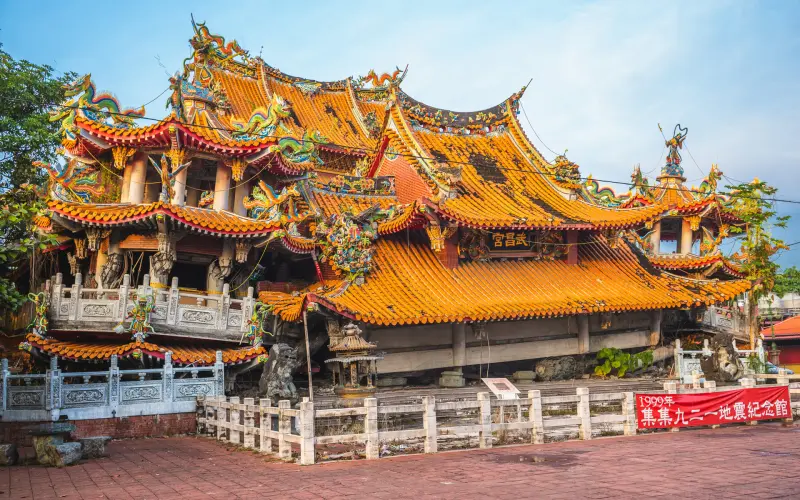


Still haunted by the devastating 1999 Chi-Chi earthquake that killed more than 2,400 people, Taiwan was struck once more on 3 April 2024. Taiwan seismologists described this tremor as having an energy equivalent of 32 of the atomic bombs dropped on Hiroshima.
As the nation mourned the tragic loss of 13 people and the clean-up began, in Taiwan and around the world, three questions were being asked. What had happened in Taiwan in the intervening 25 years to account for a remarkably lower death toll? Why were those tragic deaths largely attributable to rock falls and landslides rather than building collapses? And, importantly, what lessons are there for other earthquake-prone nations to learn?
Learning lessons
In the aftermath of the 1999 tragedy, Taiwan was heavily criticised for being unprepared, inadequately coordinating rescue efforts and the lack of building regulations. Since then, its government has embraced scientific research, collaboration and innovation to significantly improve building resilience and overall disaster preparedness.
The government established the National Center for Research on Earthquake Engineering (NCREE) and invested heavily in earthquake engineering and hazard mitigation research. NCREE’s work underpinned major changes to the regulatory environment, including moving from prescriptive building codes to performance-based design.
Collaboration between research organisations – both domestic and international – has also played a crucial role in advancing Taiwan’s disaster preparedness, including sophisticated early earthquake warning systems and search and rescue techniques.
A focus on public education, training and drills has ensured citizens have the knowledge and skills necessary to respond effectively to seismic events.
Enhanced building resilience
Researchers have made strides in understanding the complex interactions between soil and building foundations, leading to improved building codes that consider the effects of local soil conditions on building performance.
Geotechnical mapping has been used to identify areas at greater risk of earthquake damage. Building designs in these areas are required to meet even higher seismic safety standards.
Innovation in seismic-resistant technologies has also been actively encouraged. For example, since 2009, tall buildings – including the iconic Taipei 101 – have featured seismic damping elements to limit floor vibrations and swaying during earthquakes.
The concept of building design has changed to ensure buildings are able to:
- remain intact during a small earthquake
- be repairable after a moderate earthquake
- withstand a major earthquake without collapsing.
A 25-year focus on earthquake preparedness by Taiwan coalesced to lower the death toll on 3 April, and the improvements made demonstrate just how essential science is to public safety.
Back at home
Aotearoa New Zealand’s own seismic risks and tragic earthquake history make the lessons from Taiwan crucial. While many of the initiatives the Taiwanese Government has undertaken since 1999 are already in place in Aotearoa, there is always more to learn. Science must lead the way.
That’s why BRANZ continues to invest in seismic research and facilities that provide the building and construction sector with enhanced testing capabilities.
Our new structural engineering laboratory can now test buildings up to 3 storeys high, simulating the impacts of stronger seismic events. Testing of nonstructural building parts like suspended ceilings, partitions and cladding can also be performed.
On the face of it, the lab helps ensure buildings can withstand the big one. But the recent Taiwan earthquake is a timely reminder that seismic testing is ultimately not about buildings and materials – it’s about reducing loss of life. That’s the true power of science.