There are some common misconceptions about the use of fire sprinklers and how effective they are at mitigating fire risk in residential buildings in Aotearoa New Zealand.
This is one in a series of reports produces as part of an overarching project to consider the structural building safety aspects of fire safety.This report contains a summary of...
This report describes a project that investigated the design of a sprinkler system for community buildings that would otherwise not require a sprinkler system to be installed as part of...
BRANZ, sponsored by Fire and Emergency New Zealand (FENZ), recently researched the toxic smoke inhalation hazards of building contents in building fires – a primary cause of death and injury.
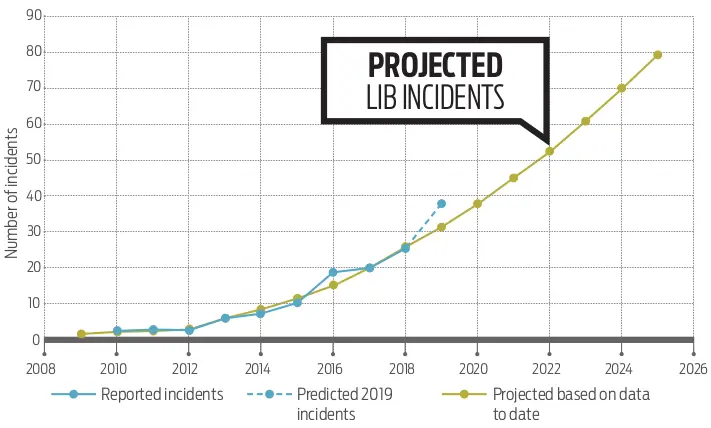
With few restrictions in the Building Code limiting the use of lithium-ion batteries for energy storage systems or charging electric vehicles, the question is are they safe? BRANZ looked at incidents reported over 10 years to find out.
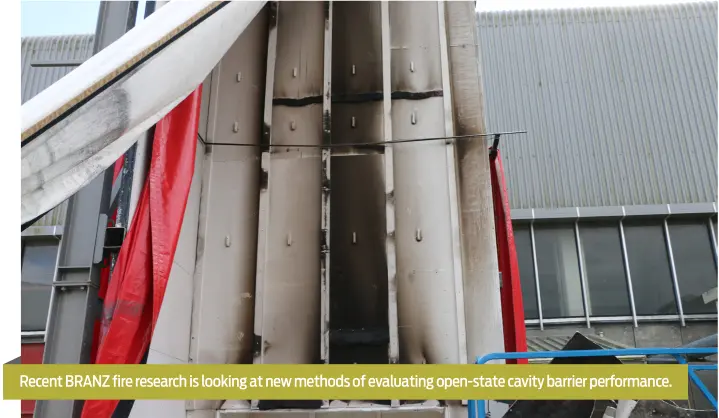
Cavity barriers are not well understood and have been causing some controversy. Here, we clear up some of the confusion around these building elements and their role in fire spread.
There are many benefits from a focus on quality in construction. At the practical level, there are fewer call-backs and more satisfied clients. Beyond that, higher-quality buildings deliver healthier environments for living and working. At the top level, they can be inspirational.
Technical Recommendation 13 describes a method for determining safe separation distances for adjacent buildings. A fire in one building carries the risk of spreading to an adjacent building.The method proposed...
Technical Recommendation 9 describes two extrapolation methods that apply to the design of light timber framed walls and floor respectively.Using the results from a floor or wall prototype test, these...
The purpose of the guide is to enable the effective use of passive fire protection including providing the right product and installing it correctly in the right situation. It describes...
This report makes up a package of work OFR Consultants has been contracted to complete for BRANZ Ltd. to provide publishable guidance on methods for the passive fire protection of...
Passive fire protection (PFP) systems that are damaged by earthquakes may suffer significant reductions in fire resistance, resulting in increased risks to life safety in the event of an outbreak...
The thicknesses of concrete elements required to achieve various fire resistance ratings (FRR) in New Zealand are notional and based on overseas building codes and test results. Because of variation...
Advances in knowledge relating to fire engineering design of concrete structures have led to the development of rational design methods as an alternative for time-consuming and expensive full-scale fire testing...
This project shows that the post-earthquake performance of passive fire protection systems is definitely reduced when subjected to a design level earthquake. The amount of reduction in fire resistance of...
This literature survey of fire resistance of joint details in loadbearing timber construction presents a summary of work done on the behaviour of joints and joint details in West Germany,...
This report covers the second part of a research programme undertaken by BRANZ to develop a design method for loadbearing light timber framed wall for fire resistance. The first part...
Product Description The fire performance of heavy glued laminated (glulam) timber members based on the sacrificial method of char is widely accepted. The performance of their mechanical connectors, possibly the...
This report describes an investigation into parameters that influence charring rate of timber.Firstly, from an international perspective, the investigation sought to determine how internal properties of different timber products (solid...
This report describes a full-scale experiment to investigate the potential for fire to spread in a downward direction through timber floors. The full-scale experimental work verifies earlier reduced-scale furnace-based experiments.The...
Construction using structural insulated panels (SIPs) has been suggested as one possible solution to New Zealand’s urgent need for fast, affordable and quality homes. SIPs for residential construction have a...
Passive fire protection (PFP) quality has been identified as an issue that must be addressed in buildings undergoing alterations in order to meet the New Zealand Building Code means of...
An investigation into fire resistance requirements applied to external walls located near a property boundary in single-storey industrial and warehouse buildings in New Zealand has been carried out. Currently specified...
Fires in large industrial buildings can be very difficult for the NZ Fire Service to control and extinguish. To assist Fire Service operations, the Building Code Compliance Document C/AS1 (NZBC...