A variety of New Zealand made Pinus radiata engineered wood products were tested in a cone calorimeter to determine key combustion properties, including time to ignition and heat release rate...
Construction using structural insulated panels (SIPs) has been suggested as one possible solution to New Zealand’s urgent need for fast, affordable and quality homes. SIPs for residential construction have a...
While escape route pressurisation systems have been used for some time in New Zealand buildings as part of the fire safety strategy, there is little data and many questions about...
An investigation into fire resistance requirements applied to external walls located near a property boundary in single-storey industrial and warehouse buildings in New Zealand has been carried out. Currently specified...
Passive fire protection (PFP) quality has been identified as an issue that must be addressed in buildings undergoing alterations in order to meet the New Zealand Building Code means of...
This is the final report of research into fire spread from lower roofs. This project is part of the larger BRANZ medium-density housing (MDH) research programme. As New Zealand building...
This report provides B-RISK users with guidance on the use and application of the fire modelling software as well as describing the assumptions and underlying physics upon which the computer...
A series of reduced-scale fire experiments have been conducted to better understand the phenomena of flames projected from a single compartment opening, which can lead to vertical fire spread up...
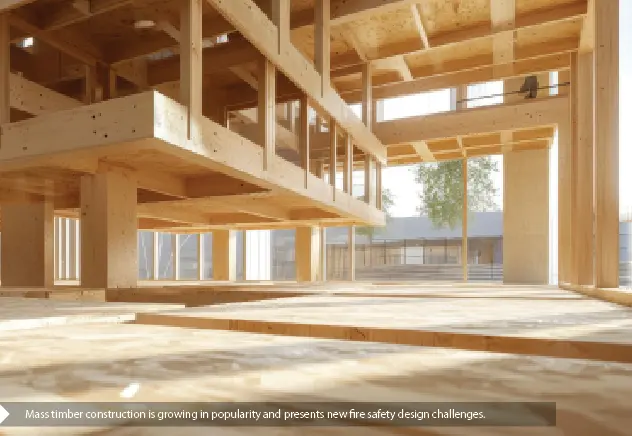
The growing prevalence of mass timber construction in buildings, allowing larger compartments with larger openings, presents new challenges for fire safety designers.
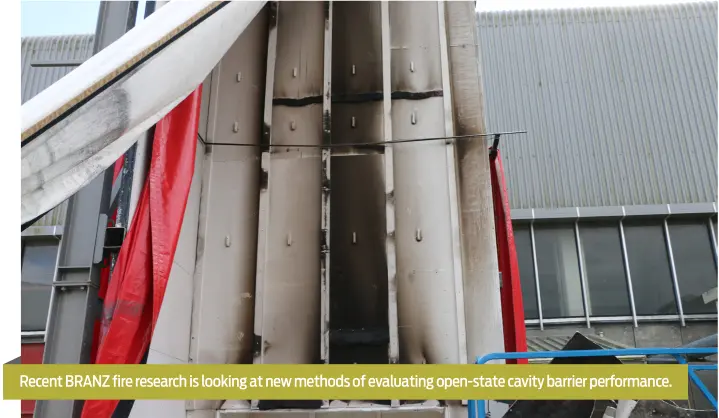
Cavity barriers are not well understood and have been causing some controversy. Here, we clear up some of the confusion around these building elements and their role in fire spread.