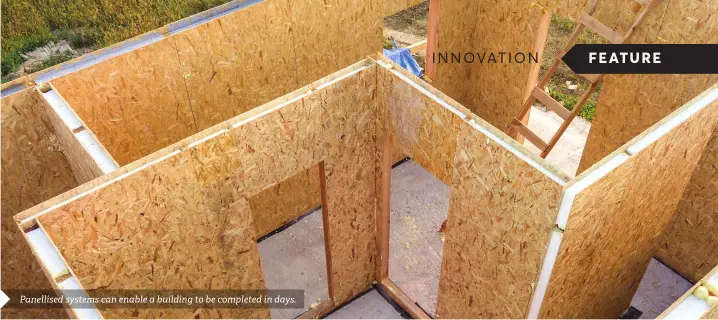
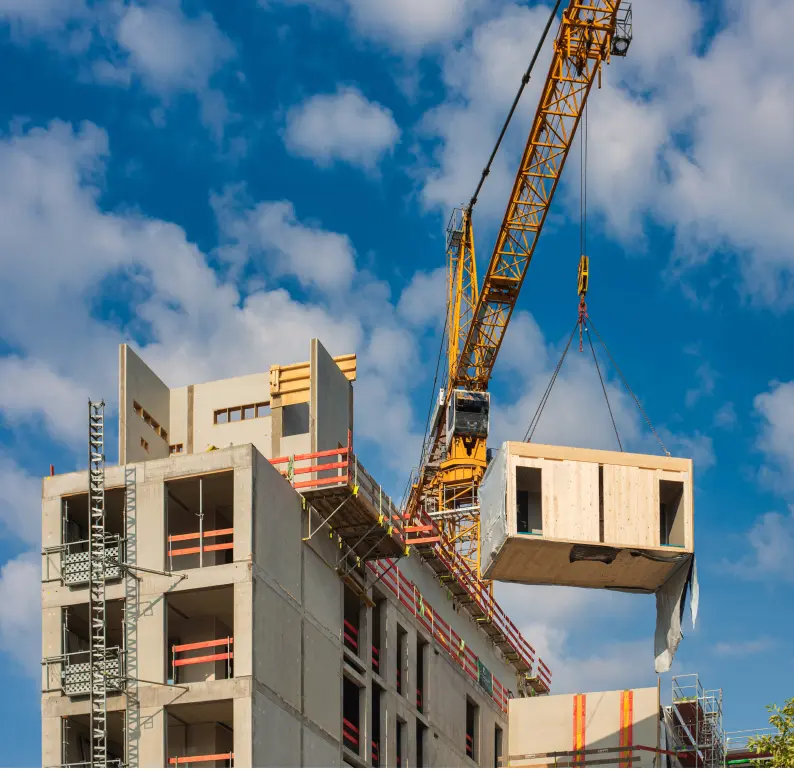
BRANZ researchers are looking at how new construction and design methods that save time and money while also meeting zero-carbon targets could be best used in the Aotearoa New Zealand building sector.
Our construction sector faces persistent challenges – from skilled labour shortages and fluctuating material costs to inefficient building methods. Off-site manufacturing offers a compelling alternative, but do the benefits add up?
Product Description The extent of existing use of prefabrication in New Zealand buildings is discussed. Prefabrication and standardisation (S&P) are both generally thought to have benefits in building construction, but...
This report assesses the impact of prefabricated building systems in the New Zealand construction industry, in particular, determining whether there are discernible differences in economic and environmental outcomes between prefabricated...
With many local and international products and systems in the building materials market, a BRANZ Appraisal assures customers they can trust what they’re buying.
Technical Recommendation 17 addresses the general applicability of a zone model’s uniform property assumption within the smoke layer for different enclosure sizes.It suggests criteria intended to help the model user...
Technical Recommendation 10 is published as a supplement to the 1988 edition of BRANZ P21 A wall bracing test and evaluation procedure. It provides a method of determining the bracing rating...
This research aimed to determine which method of ageing and mechanical testing offered the most practical measure of durability for SIPs having timber-based face layers to support the future assessment...
In an earthquake, curtain wall glazing systems may be a hazard to both building occupants and nearby pedestrians. This is the third phase of a BRANZ research programme to study...
The safety of building occupants when glass fails under accidental human impact is of great concern. This report investigates the effects of glass thickness, pane geometry and size and the...
Paint coatings on common building substrates were considered to assess the potential for simplified reaction to fire solutions for standard paint systems. Combinations of substrate (concrete, plasterboard, plywood and medium-density...
The focus for the overall project was to investigate the possibility of providing simplified ‘deemed to comply’ solutions to demonstrate Code compliance for fire properties of surface coatings and other...
This study has shown that the present fire test requirements for the reaction to fire properties for flexible fabrics based on flammability testing do not adequately evaluate the actual fire...
This project trialled the current reaction-to-fire test requirements for flooring and compared this with two alternative test methods on a range of flooring products. The findings indicated that current test...