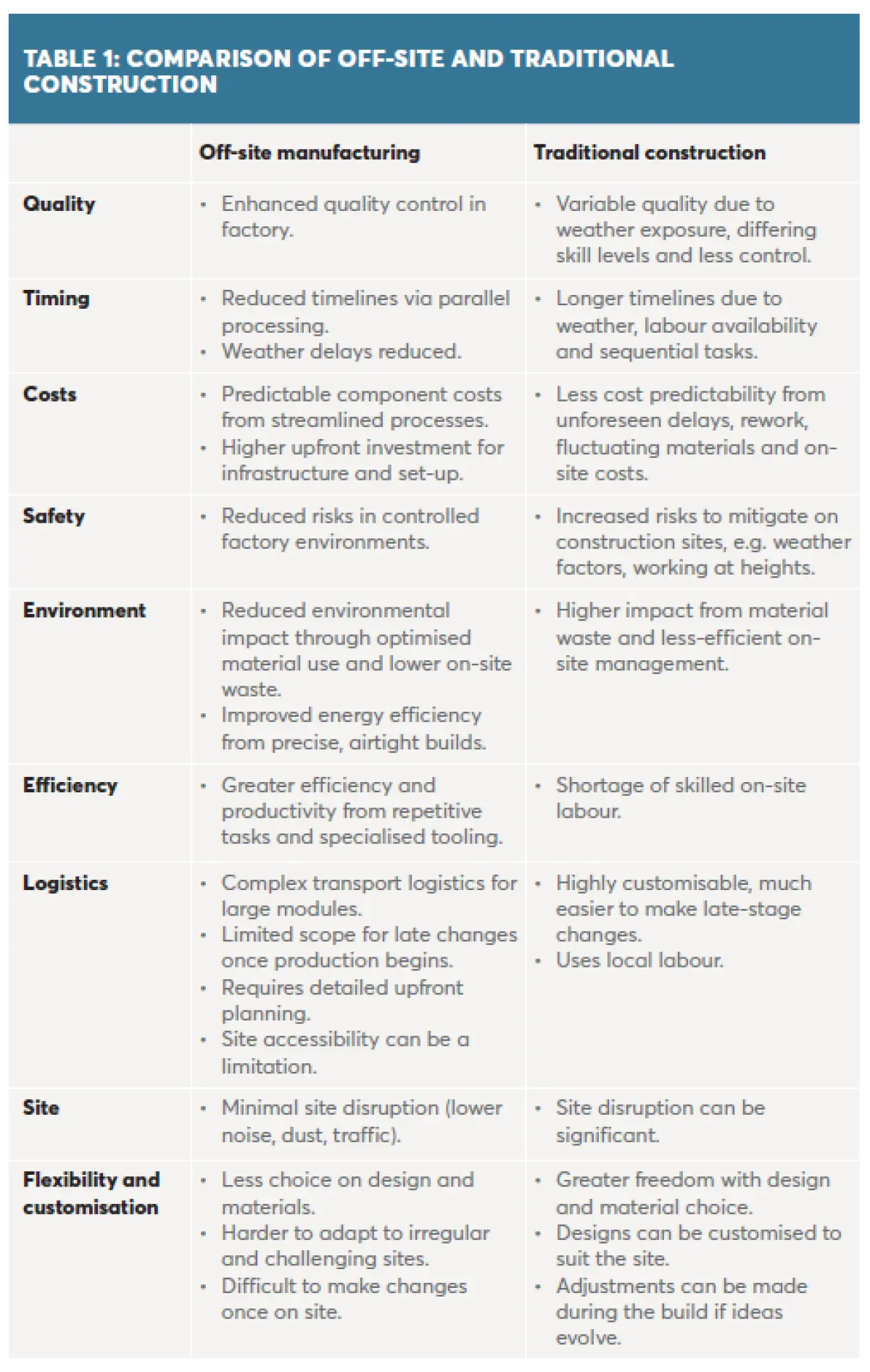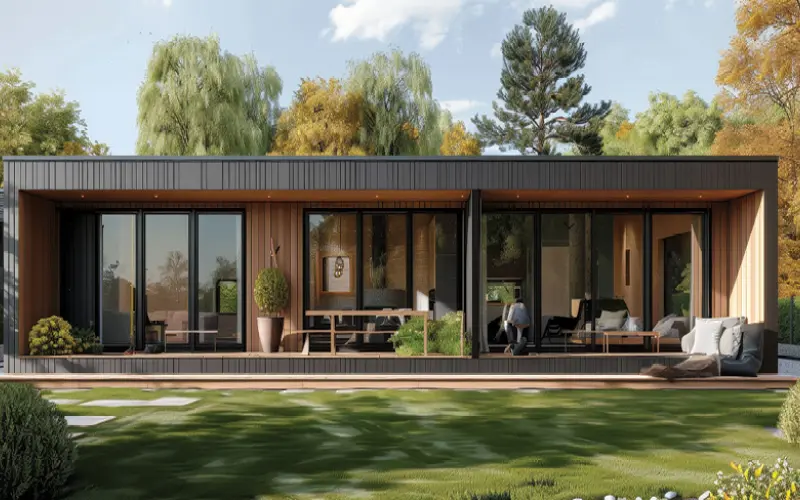


Prefabrication and modular construction, collectively known as off-site manufacturing, involves manufacturing building elements and then transporting and assembling them on site. Off-site manufacturing itself is one of several modern methods of construction – an umbrella term used to describe innovative construction techniques that deliver quality, cost-effective and sustainable buildings.
Proven concept
Off-site construction is nothing new. It’s been part of New Zealand’s construction industry in varying forms since as early as the 1950s – prenailed wall frames and panels, volumetric 3D components like bathrooms or kitchens and fully transportable homes. For many years, windows, doors and fittings have been routinely manufactured and assembled elsewhere, and seeing the ‘wide load’ sign followed by a complete building on the road is becoming increasingly common.
Research by OffsiteNZ looking at reported consents found that, in 2013, no more than 3% of all building work in Aotearoa relied on some degree of prefabrication. By 2021, that had tripled to 9% and prefabricated components had expanded to encompass wall panels, slab panels, roof trusses and complete buildings.
Higher quality and consistency
The tangible benefits of off-site construction are well recognised here and internationally. When it comes to cost savings and convenience, manufacturing building components in controlled factory environments ensures precise, repeatable and consistent construction and delivers concrete productivity gains – reducing the overall time, cost and on-site labour of a project.
Looking ahead, fewer defects in a home lowers maintenance and whole-life asset costs for homeowners. The consistency of off-site construction can also deliver more energy-efficient buildings and additional cost savings through lower power bills.
Reduced environmental impact
Cost savings are matched by the sustainability benefits of homes with off-site construction components, including a reduction in building waste and embodied and operational carbon. Specifically, off-site construction offers opportunities to improve on traditional construction methods in environmental sustainability due to factors such as readily reduced greenhouse gas emissions through better material control, waste reduction and reduced transport needs.
Consenting reforms to benefit smaller dwellings
Off-site manufacturing may also significantly reduce construction delays by speeding up consenting processes.
BuiltReady was set up in 2023 as a voluntary modular component manufacturing scheme to create consenting efficiencies for off-site manufacturers to support fast delivery of affordable housing at scale.
The government has since introduced several significant reforms to the wider consenting system. Off-site manufacturers will soon be able to benefit from consent exemptions for stand-alone homes up to 70 m² and may be able to benefit from the proposed new self-certification scheme for simple residential dwellings.
Challenge of scale
In 2020, a Commerce Commission study into the residential building supply market found that off-site construction has the potential to greatly enhance construction efficiency and could increasingly compete with traditional building but noted that manufacturers may lack the ability to scale.
Indeed, the long-term viability and cost-effectiveness of off-site construction are intrinsically linked to economies of scale. Unlike one-off traditional builds, off-site manufacturing relies on the repetitive production of standardised components, which make bulk material procurement and optimised production lines possible.
While Aotearoa’s market size may present scaling challenges, increasing commitment by the government, such as Kāinga Ora’s expanded use of off-site manufacturing, provides manufacturers with the consistent demand they need to justify investing in the technology and workforce to drive down per-unit costs.
Skills shortfall
Critics argue that Aotearoa lacks the skilled workforce required to scale up. Off-site construction requires a fundamental shift in the typical tradie’s skill set – a transition from traditional on-site craftsperson to industrialised factory worker.
This means acquiring new skills in areas like design for manufacture and assembly, digital modelling (BIM), automation and integrated factory operations. Rather than presenting a challenge, a 2025 report by EBOSS says the need to retrain or upskill may provide a means to mitigate the shortage of skilled labour in Aotearoa’s traditional construction sector.
OffsiteNZ agrees, saying that, by offering consistent, often less physically demanding roles within a controlled environment, off-site manufacturing can attract a more diverse workforce, including a greater representation of women.
Barriers to uptake
The New Zealand construction sector is notoriously slow to innovate – a persistent trait that 2023 research by BRANZ put down to the ‘inability to efficiently implement new systems or approaches’. Nevertheless, progress is happening, as indicated by the growing percentage of builds that rely on off-site construction and other modern methods of construction.
The government is progressing an ambitious programme of reforms to make it easier and more affordable to build in Aotearoa. As well as getting more Kiwis into affordable, safe and durable homes faster, many of these work programmes will create efficiencies for off-site manufacturers.
For instance, upcoming changes to exempt small stand-alone homes (granny flats) up to 70 m² from requiring a building consent will deliver further time and consenting costs savings for off-site manufacturers.
Combined, these initiatives could help kickstart the future of off-site construction as an alternative to traditional building as more New Zealanders look to smaller, simpler housing options.