Structural Testing Team Leader
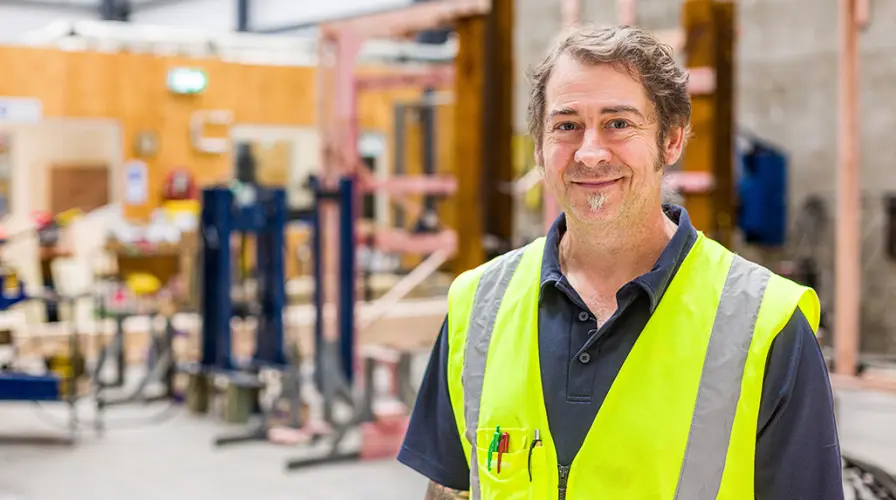
From two storeys to six: Dr David Carradine helped extend light timber frame design in Aotearoa New Zealand.
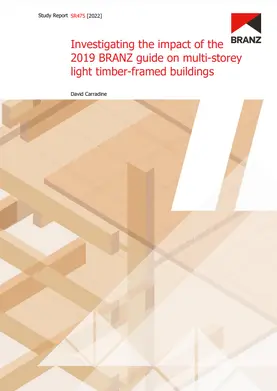
Dr David Carradine is a structural engineer specialising in low- and mid-rise building systems, with a focus on how light timber frame and hybrid structures perform under extreme conditions, such as earthquakes and high winds. At BRANZ, David leads the structural testing team, supporting engineers and technicians to deliver complex testing programmes for clients. He also authored BRANZ guidance for the design of light timber frame buildings up to six storeys, helping designers move beyond typical two-storey construction.
David's current research focuses on non-traditional building systems, including prefabrication, off-site construction, and 3D-printed concrete. This work evaluates these emerging technologies against their claims – testing whether they deliver on cost, sustainability, and long-term performance.
His experience – spanning universities, manufacturing, and accredited laboratories – gives him what he calls a “helicopter view” of building design and performance.
Before joining BRANZ, David was a Timber Research Engineer at the University of Canterbury, working on the Structural Timber Innovation Company (STIC) project, where the team developed post-tensioned timber technology, a seismic innovation now used in the new six-storey Parliamentary building.
His career began in the United States as a Technical Manager at Washington State University's Wood Materials and Engineering Laboratory (now the Composite Materials and Engineering Centre), an IAS-accredited facility that shaped his expertise in laboratory testing. Prior to this, he studied at Virginia Tech, completing a PhD in Biological Systems Engineering that combined structural engineering with wood science.
David serves on joint Australia–New Zealand standards committees, as both a member and as a subject matter expert.
"You can model it, you can calculate it, but testing is still the best way to know if a building will do what it’s supposed to do."
Dr David Carradine
Structural Testing Team Leader
Qualifications
- PhD in Biological Systems Engineering, Virginia Tech
- Masters in Civil Engineering and Structures, Virginia Tech
- Bachelor of Architecture, Virginia Tech
Industry participation
- Standards committees: TM-011: Engineered Timber Products and TM-012: Timber Grading and Preservation, member
- Bracing Elements working group, revision of NZS 3604:2011, member
- Academic adviser for master's and doctoral students in New Zealand and the United States