This sensitivity assessment is undertaken to identify priorities for further study or data improvements in order to support the transformation of the New Zealand built environment to one that is...
BRANZ, with industry and research partners, has developed the New Zealand whole-building whole-of-life framework, which aims to provide resources to facilitate more consistent use of life cycle assessment (LCA) applied...
This report sets out the underlying basis for the modelling and data behind LCAQuick v3.4 and the reference residential buildings that it contains. Reports by the Intergovernmental Panel on Climate...
While greenhouse gas emissions from combustion of fossil fuels (fossil carbon) are a significant contributor to climate change, there is another type – biogenic carbon – that is attracting growing interest.
In this study, both static and dynamic climate change impact analyses were undertaken of two alternative assemblies each for wall, ground floor and roof elements used in NZ residential dwellings,...
Based on the importance of environmental profiling recognised by the New Zealand building sector, BRANZ has been conducting research in the interests of the industry.This report is an executive summary...
This study focuses on the embodied carbon contribution that building services can make to the carbon footprint of New Zealand residential and office buildings.
Product Description Climate change presents one of the greatest challenges facing the world today. The built environment has a core part to play in how, as a society, we adapt...
In April 2013, BRANZ commenced research into development of a New Zealand whole-building whole-of-life framework. The purpose of the framework is to establish a level playing field for evaluation and...
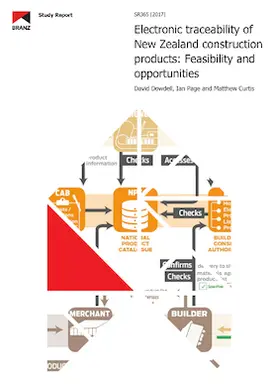
This report sets out the findings of a research project that looked at the feasibility of establishing an electronic traceability system in New Zealand for construction products. Electronic traceability of...