

The Canterbury earthquakes of 2010 and 2011 and the research that was conducted after them led to some changes in how concrete slabs-on-ground are constructed.
- B1/AS1 2nd edition makes a number of modifications to cited standards:
- In Subsection 2.1.3 there are amendments around concrete slab reinforcement requirements in NZS 4229:2013 Concrete masonry buildings not requiring specific design
- In Subsection 2.3.7, there are modifications to the requirements given in NZS 3604:2011 Timber-framed buildings. These modifications remove the unreinforced and untied slab to footing single storey option In NZ 3604, as well as making other changes.
The updated edition of NZS 3604 that is now available in draft form has a number of modifications that result from the Canterbury earthquakes.
Tying correctly
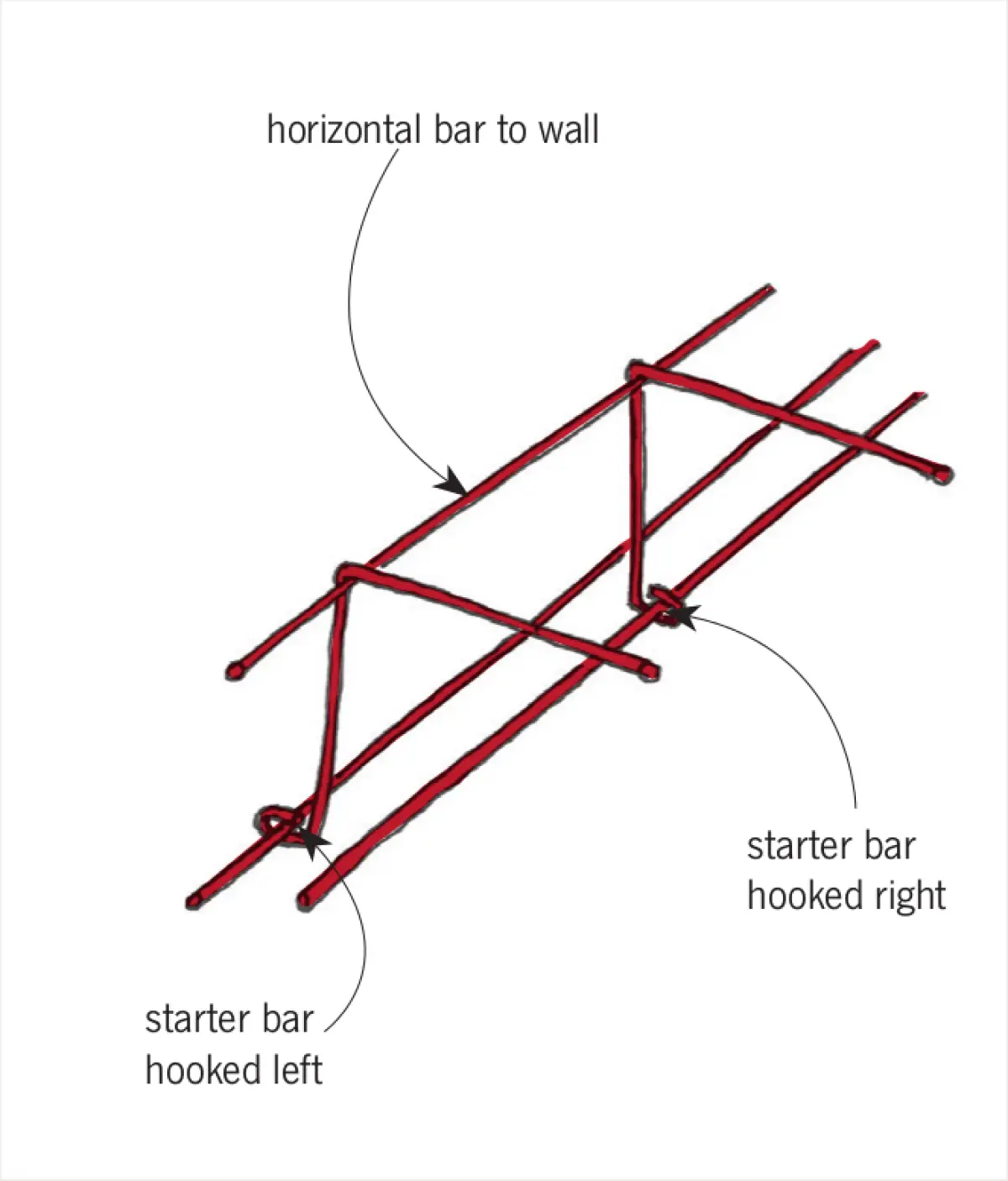
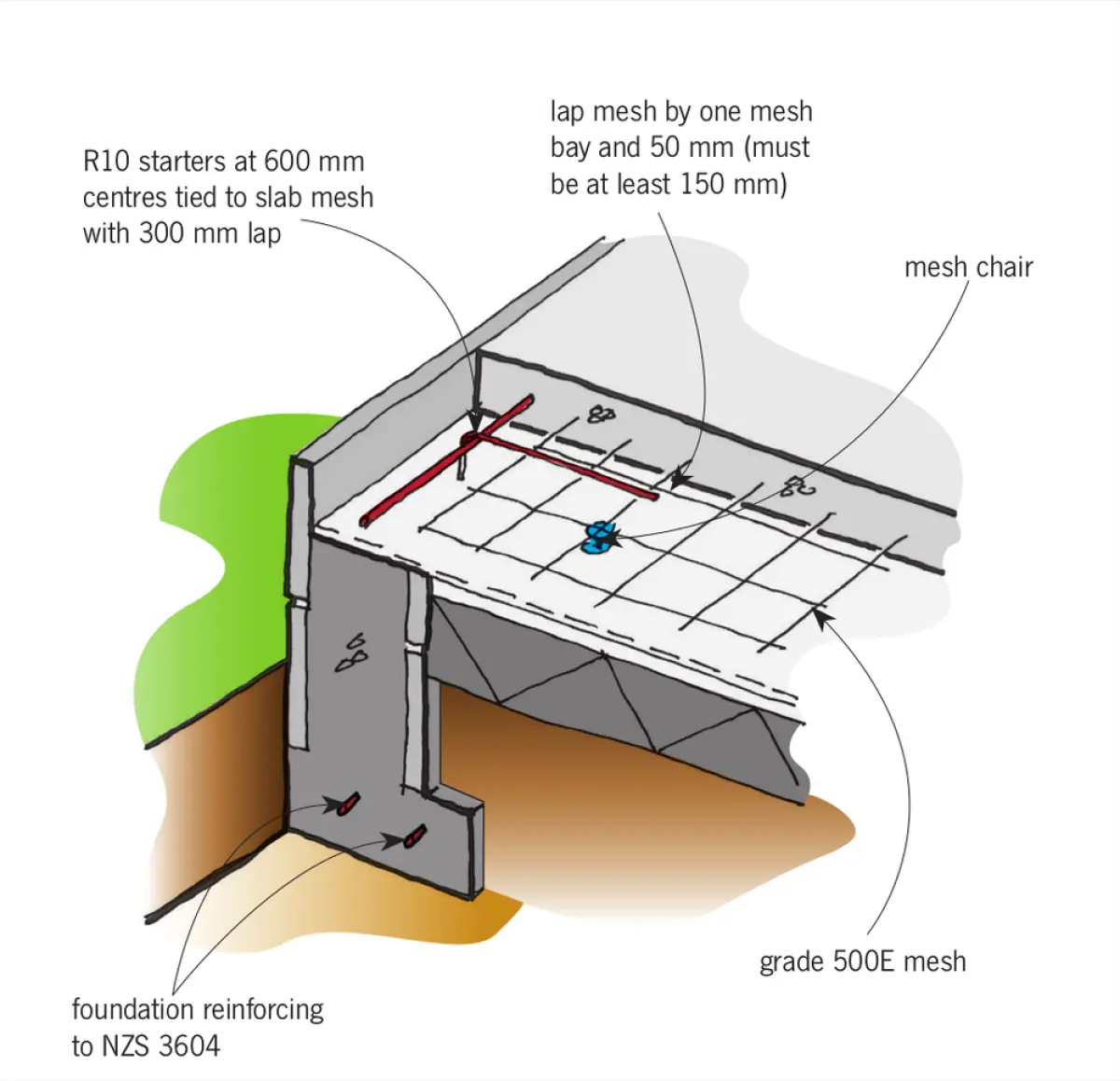
To tie the slab to the foundation, R10 starters at 600 mm centres are required. Starters should lap the mesh by 300 mm (see Figure 1). When installing the starters, the end embedded within the wall must be hooked around the bottom bars (see Figure 2).
Alternative to 500E mesh
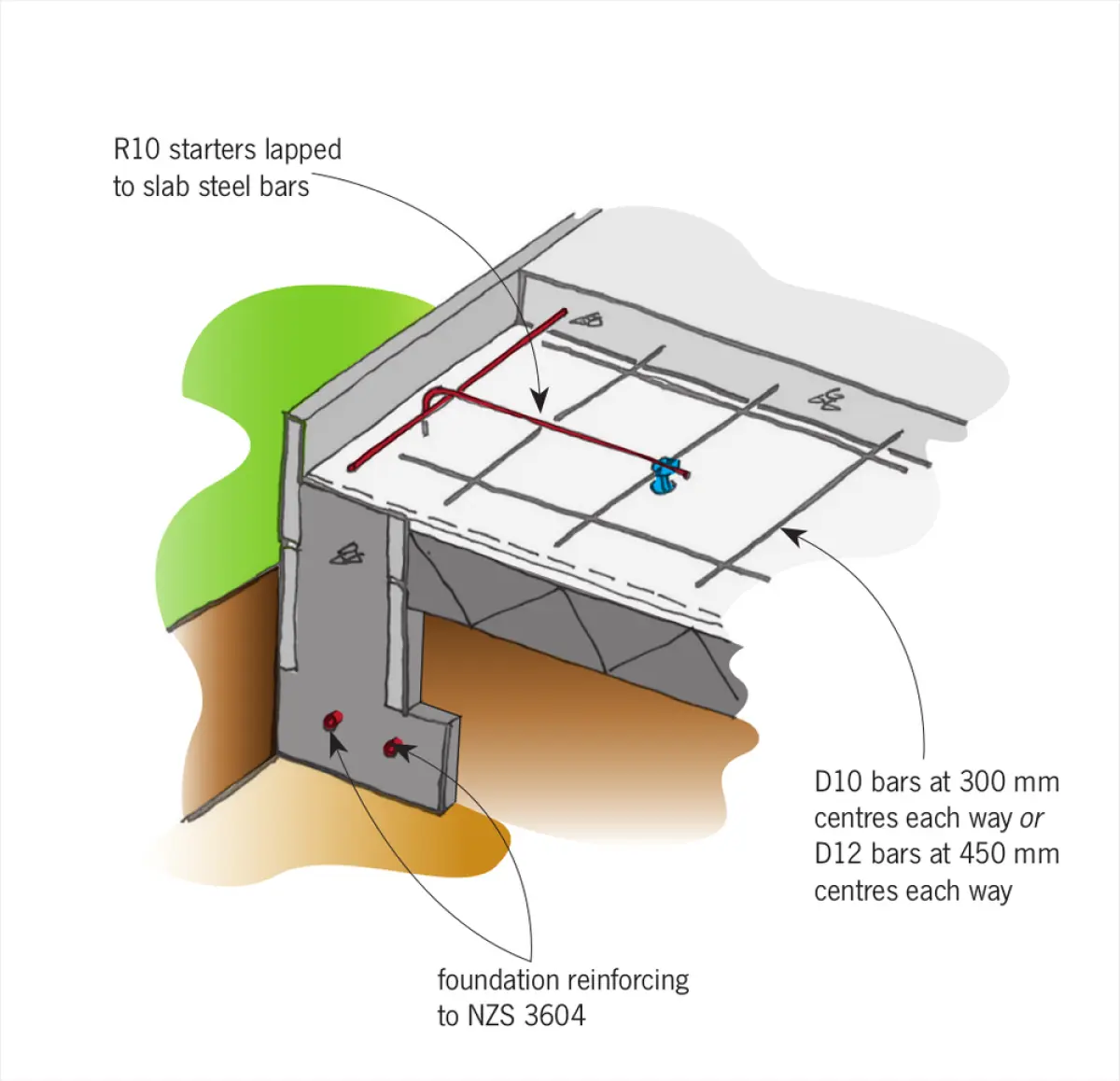
While grade 500E mesh is now available in limited quantities, Figure 3 details a slab reinforcing option using bars.