




Our homes have a critical role to play in providing healthy, comfortable environments all year round. As the climate changes, it’s essential we design to manage the hot periods as well as the cool. Last summer was one of the warmest on record for Aotearoa New Zealand, and 2024 broke the 1.5°C global temperature rise threshold for the first time. These trends are important considerations when designing new homes and running existing ones as they imply an increased need for energy-hungry cooling – and higher electricity bills.
But it doesn’t have to be that way. The good news is there are several design considerations that can be taken to enable householders to live comfortably and minimise the need for active cooling.
Homes uncomfortably warm in summer
HEEP2 is a national study of energy use and conditions in New Zealand homes. It involves surveying and monitoring hundreds of households throughout the country. As part of the study, householders were asked if they ever found their home warmer than they would like in summer.
Over 1 in 5 (22%) said their home was often or always warmer than they would like and an additional 48% said their home was sometimes warmer (see Figure 1).
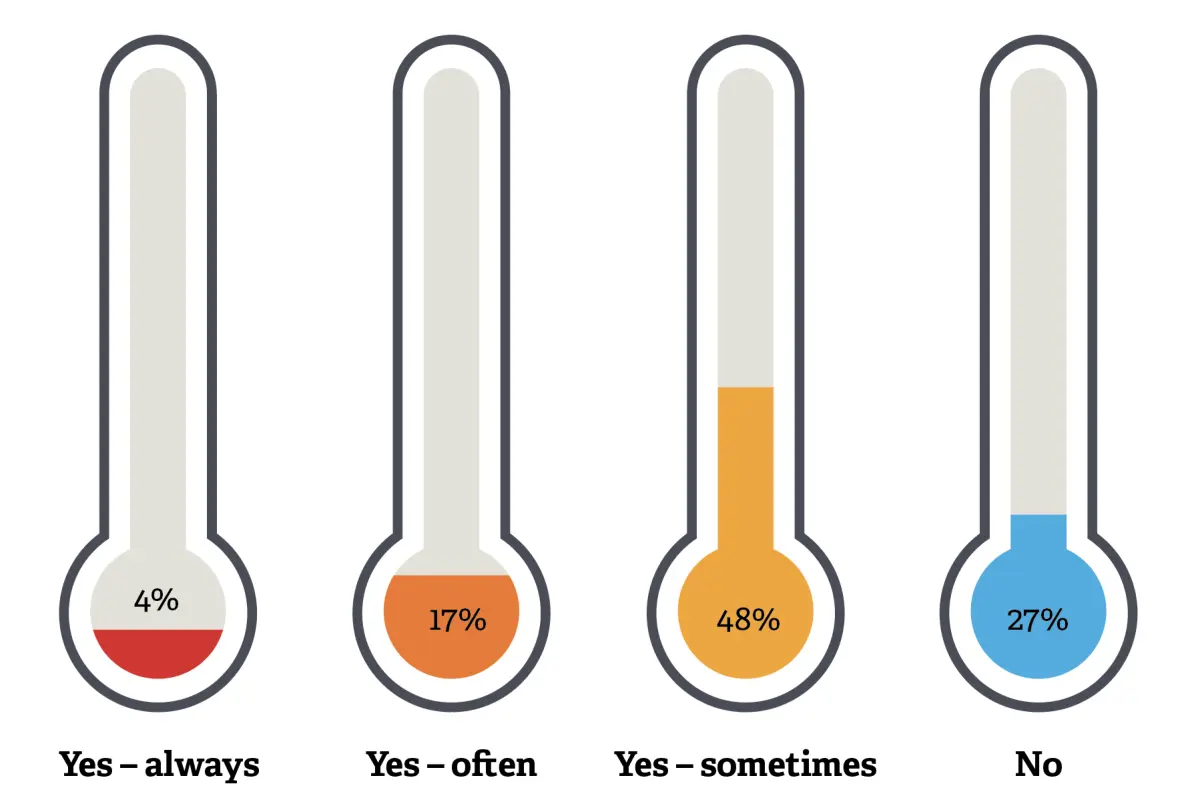
This means 70% of households experienced temperatures warmer than they would like at least some time in summer. Interestingly, this is higher than the proportion that said their home was colder than they would like at least some time in winter (48%) – see Affordable comfort in Build 204.
A preliminary look at data from a sample of the sensors that monitored temperatures in living rooms and bedrooms over summer 2023/24 shows temperatures were averaging over 24°C in the evening, with little difference between the two rooms. Around half of living areas were over 25°C at 6pm. Overnight temperatures in bedrooms were only around 2°C lower than during the day, at 22°C, with a quarter of bedrooms over 24°C at 2am (see Figure 2).
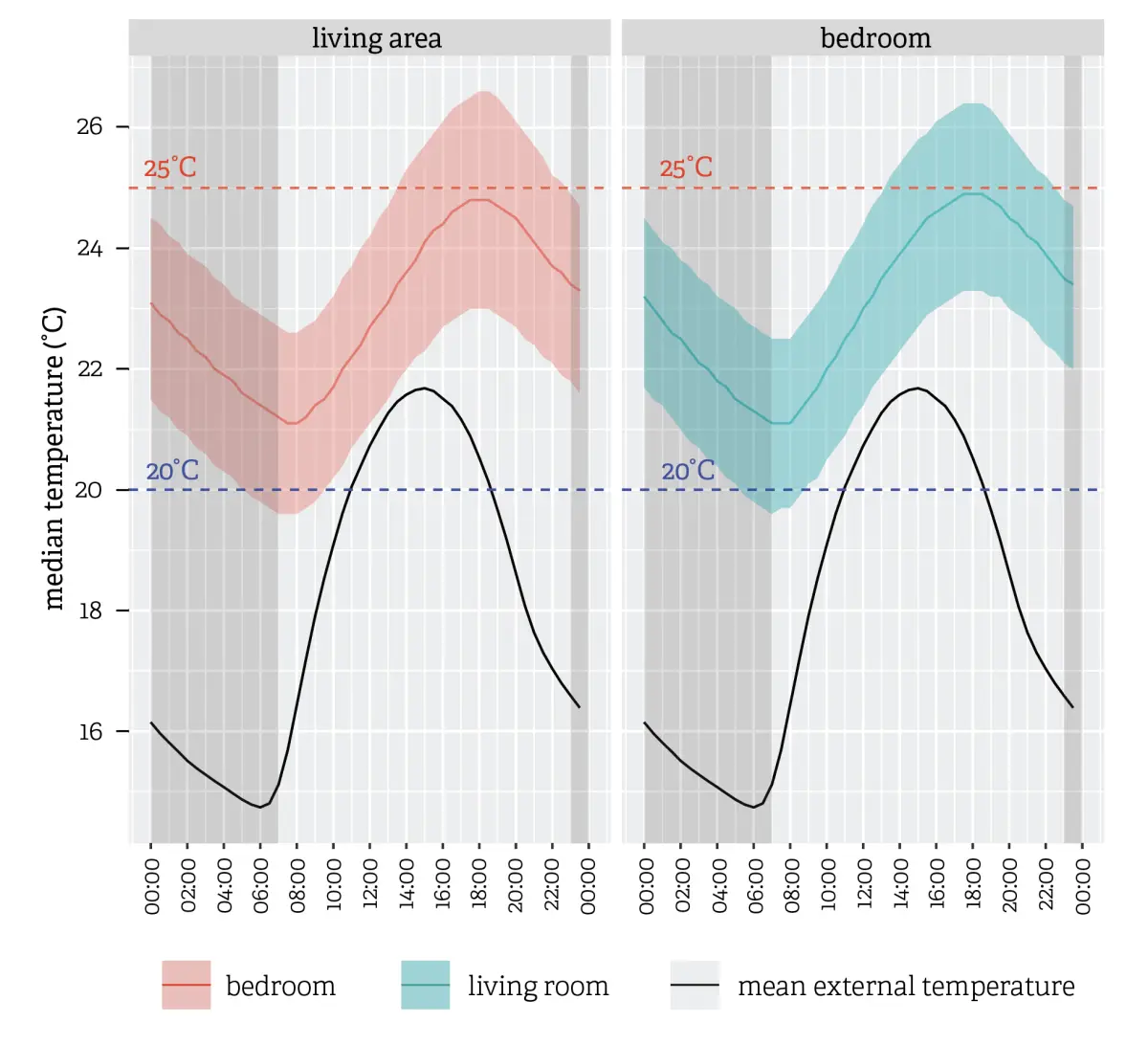
Of the 111 bedrooms monitored, 36% could be classed as overheating according to the Chartered Institution of Building Services Engineers (CIBSE) 1b industry criteria. Of the 45 monitored in Auckland, 58% met the CIBSE criteria whereas only one house did in Wellington. Exposure to high indoor temperatures can affect occupant health and wellbeing – for example, impacting sleep and exacerbating some health issues.
Designing for summer comfort
Considered design is critical in providing healthy, low-energy homes. Good passive design will ensure the building responds to the local climate and site conditions, maximising occupant comfort and health while minimising the need to use energy for heating and cooling.
Energy modelling can play a crucial role by evaluating a home’s performance before finalising major design decisions. This approach helps predict outcomes for occupants and allows for minimising the size of airconditioning (AC) systems. It also enables designers to analyse trade-offs such as window size and orientation throughout the year.
Window size and orientation and the inclusion of external shading elements such as eaves are vital for managing solar gain, maximising warmth in winter and preventing overheating in summer. Suitable window placement is also key to achieving effective passive ventilation, especially in medium-density constructions where cross-ventilation can be challenging.
If effective passive ventilation cannot be achieved, a mechanical system should be considered. Design considerations should include window location, orientation and form to optimise exposure to cooling breezes and ensure good airflow paths and selecting windows that enhance ventilation while minimising unwanted heat gain. Horizontal openings near the floor are particularly effective for ventilation compared to vertical ones.
To design effective shading, it is important to have a good understanding of sun paths at the site at different times of the year. See Optimising summer shade in Build 201 and BRANZ Bulletin 656 Designing to avoid houses overheating for how to calculate depth of eaves and more fundamentals on design to avoid overheating.
Keeping cool at no or low cost
In existing homes, retrofitting external shading and strategic planting of vegetation will provide shade in summer to help keep the heat out, but allow the sun in during winter. Insulation can also help. Research has dispelled the common misconception that insulation causes overheating in homes, especially in summer.
Insulation reduces the transfer of heat between the inside and outside of a building, keeping the indoor temperature more stable and comfortable throughout the year. In winter, insulation prevents heat loss and keeps the home warmer. In summer, insulation prevents heat gain and keeps the home cooler.
While most New Zealand homes now have a heat pump that can be used for cooling, many householders will be keen to avoid the additional costs on their energy bills. Increasing use of heat pumps in summer for cooling also has implications for the electricity grid.
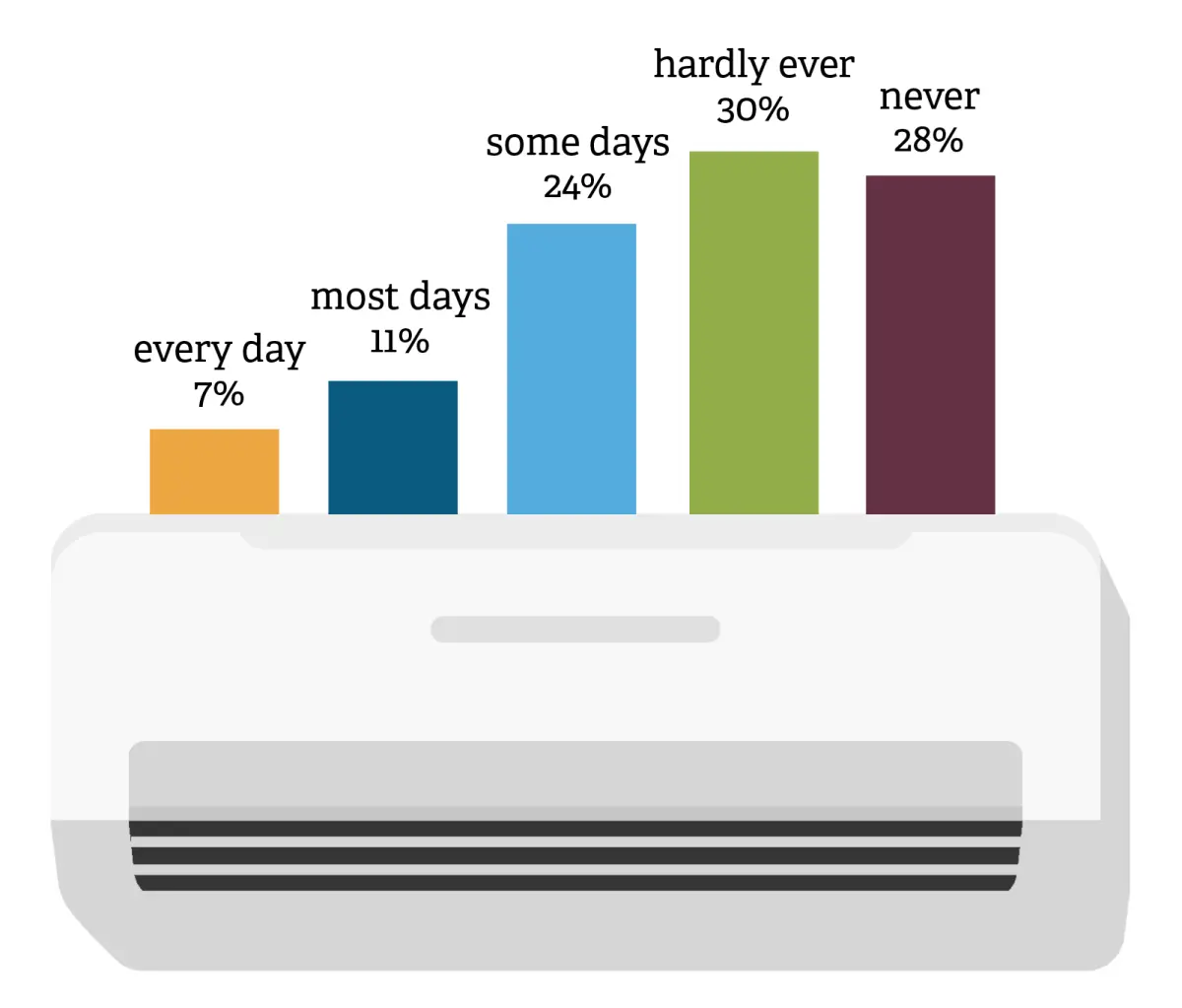
The HEEP2 survey showed that daily use of these appliances for cooling in summer is relatively low, but sporadic use is not uncommon. Of those that had a heat pump or air conditioner, 18% reported using it to cool their living areas every or most days in summer and an additional 24% reported use on some days. Overall, 72% reported active cooling at least some time in summer, but for 30% of these, it was hardly ever (see Figure 3).
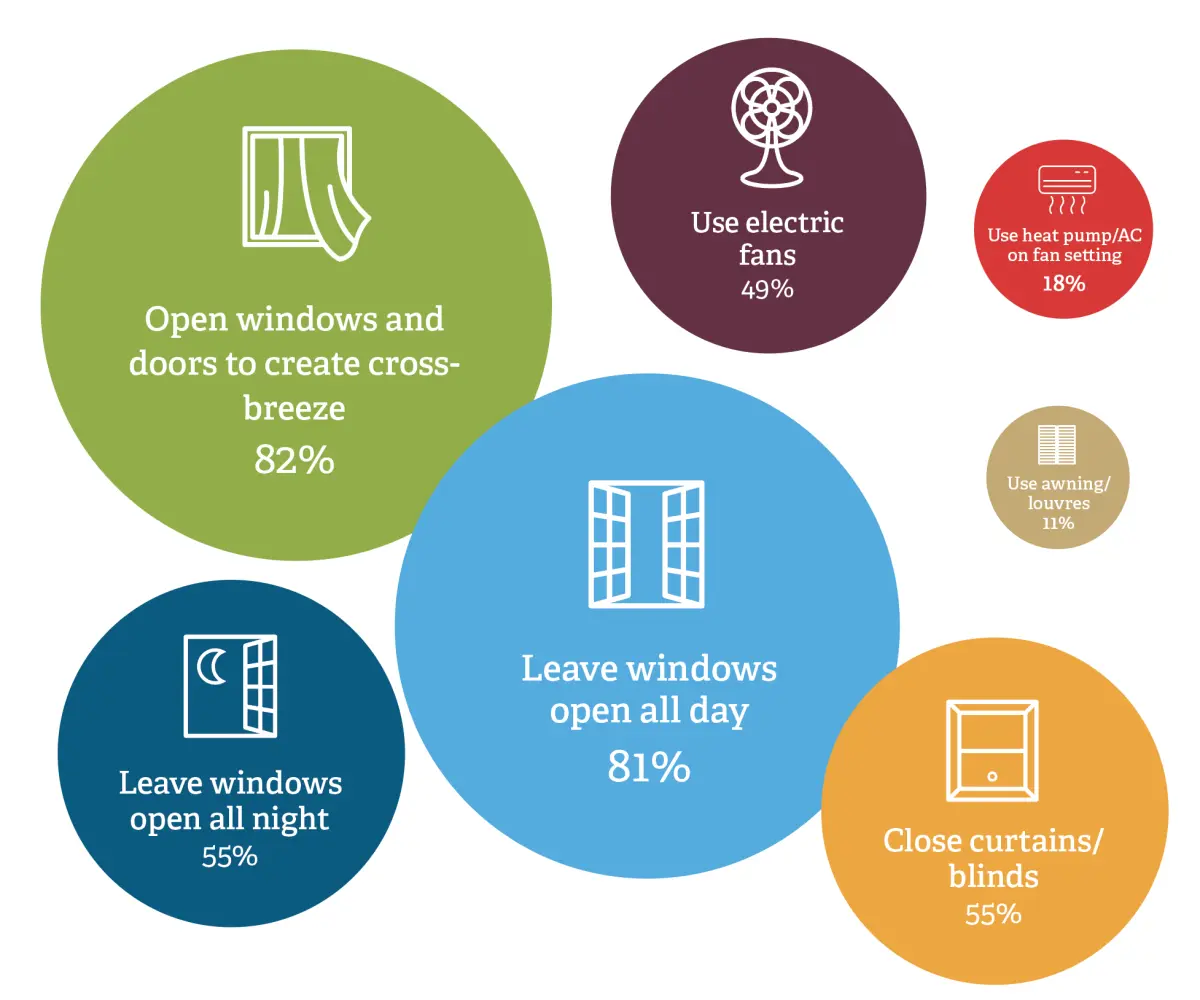
Passive cooling techniques were much more common, with 82% of householders reporting opening doors and windows to create a cross-breeze (see Figure 4). Using windows and doors effectively in this way for ventilation and temperature control can go a long way to keeping the home comfortable in warmer months.
While closing curtains/blinds can help – and was reported by 55% of respondents in HEEP2 – it is far more effective to use external shading such as awnings, louvres or shutters. These are commonly used in Mediterranean countries to prevent the sun from reaching the inside of the house. Internal shading (curtains/blinds) is less effective at reducing solar heat gain because the solar radiation has already come through the glass and the shading itself absorbs the radiation. While some heat is radiated back to the outside, most remains within the interior space.
The HEEP2 survey also showed that use of electric fans was relatively common, used by 48% of survey respondents. However, using a heat pump on fan-only mode was relatively rare. Creating air movement through the use of fans can help make you feel more comfortable (as it helps the body to evaporate sweat), but using ventilation for cooling is far better as it can bring colder air into the house. Combining ventilation (bringing cooler air in) with a fan (to create air movement) can be an effective solution.
Summary
Results from HEEP2 suggest homes that are too warm in summer is a common problem for many New Zealanders. This article offers a few insights into a complex topic of growing importance