

The external walls of all buildings should be designed and built following the basic philosophy for managing water known as the 4Ds – deflection, drainage, drying and durability.
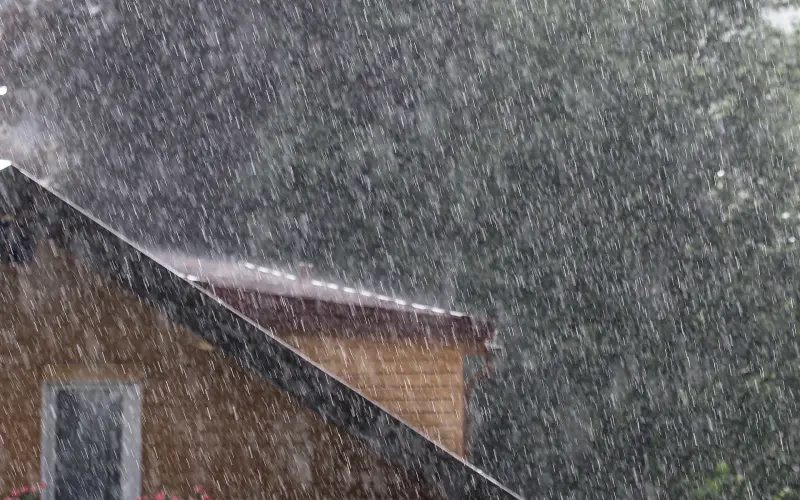
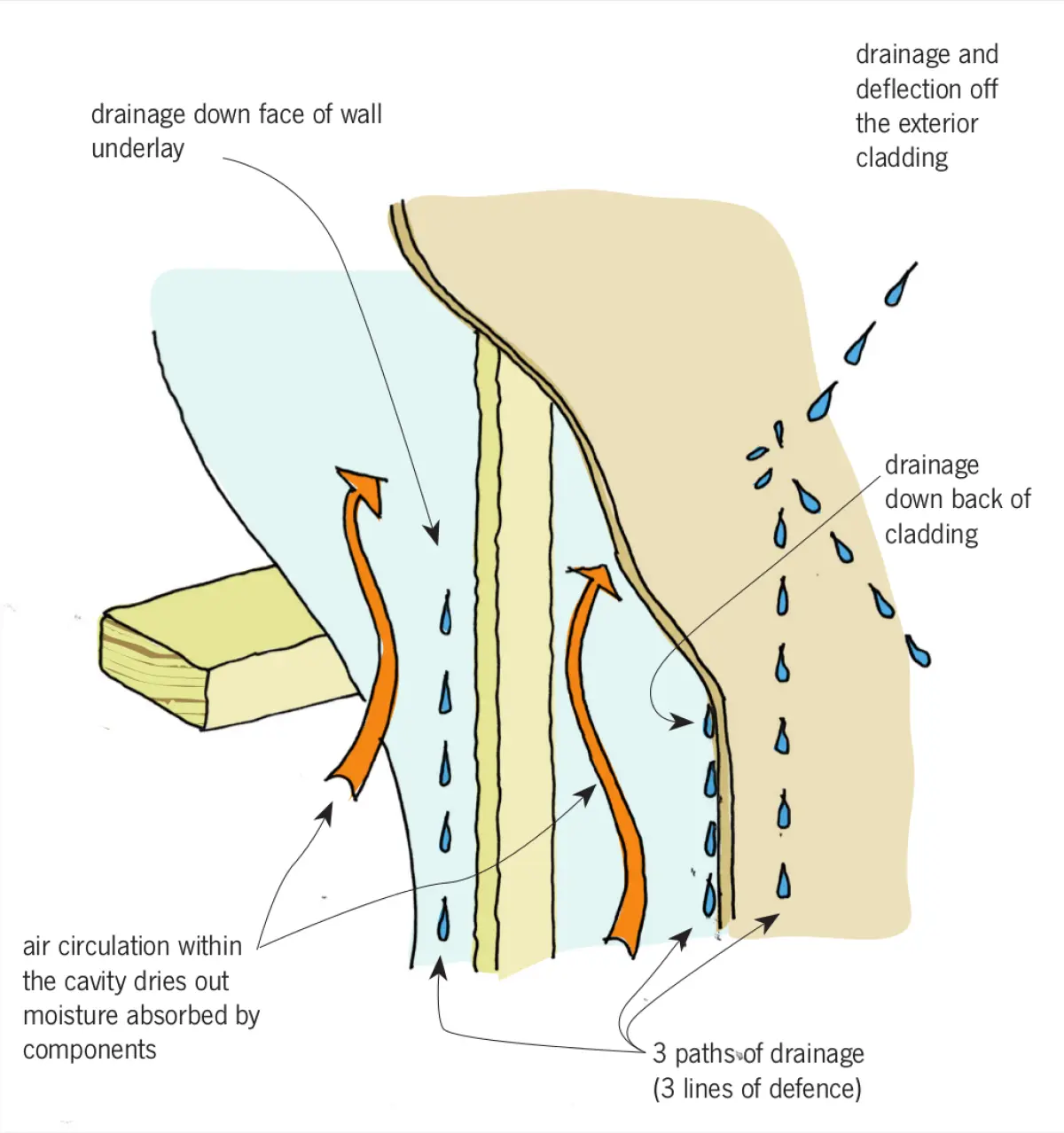
Deflection – water impacting on the building exterior deflects off the face of the cladding. Water is deflected away from critical junctions in the cladding by specific deflection devices on the exterior of the building (such as a window head flashing). The style of the building can also aid deflection of rain away from building walls.
Drainage – any water that penetrates the exterior cladding must be drained back out from within the cladding assembly, down drainage paths that are specifically designed into the wall assembly. Water must be able to drain off the face of the building.
Drying – not all water will drain within a wall assembly – some will be absorbed by building components. Air needs to be able to circulate within wall assemblies to dry water absorbed by components. Wind and sun will dry water off the cladding exterior.
Durability – all components of a cladding and wall assembly need to be appropriately durable for the conditions and New Zealand Building Code durability requirements.
Deflection
The more a wall is exposed to water, the higher the risk of water penetration. Deflection devices protect the building exterior and critical junctions in the exterior, the primary one being the cladding.
Macro deflection devices are larger building features, like roof eaves and verandas, that shelter areas of wall and restrict the amount of water that impacts on these walls. Buildings with macro deflection devices, like wide eaves, have a lower risk of weathertightness failure than buildings with no eaves where the entire wall area is fully exposed – eaves deflect water and prevent it reaching the walls.
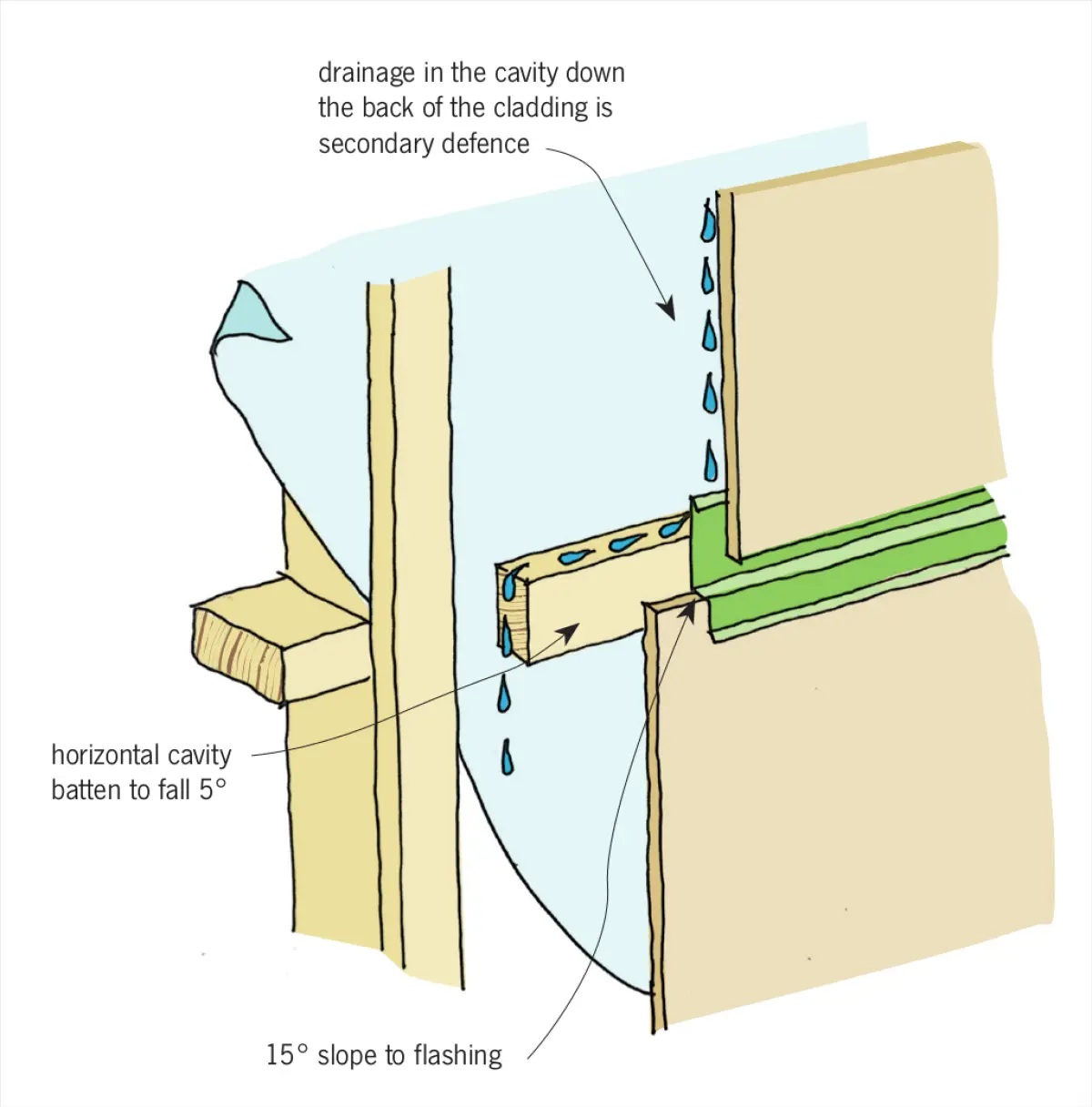
Micro deflection devices are smaller items such as window head flashings, window facings and inter-storey cladding flashings. These provide protection by deflecting water at a specific junction in the cladding (generally where water may penetrate if the junction is not protected).
Drainage
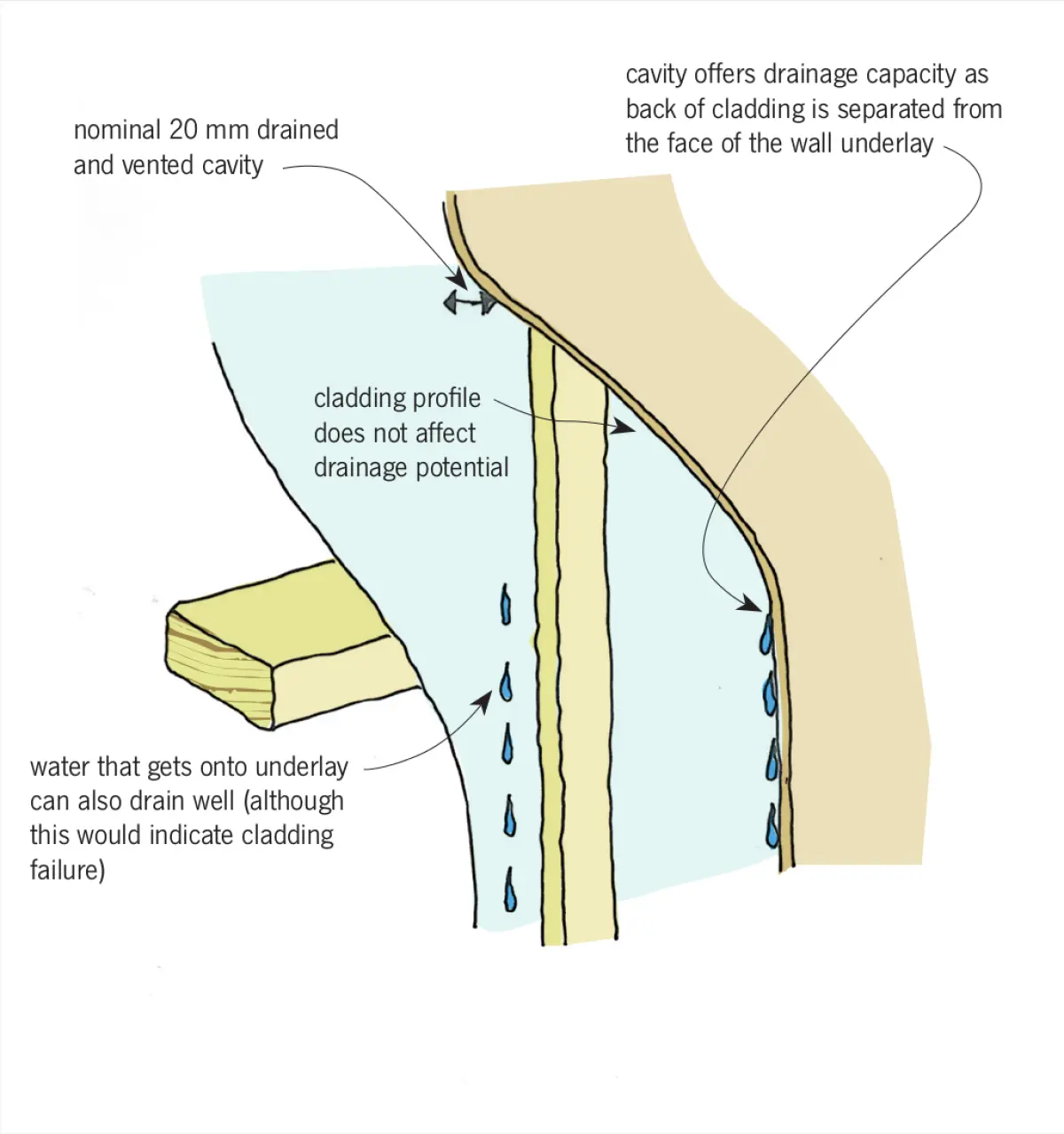
Drainage occurs down drainage paths assisted by gravity. Wall assemblies need to be designed and built to incorporate drainage paths that allow water that may have penetrated the exterior cladding to drain down and out of the wall assembly, ideally down the back of the cladding. Drainage paths lead to specifically designed gaps in the cladding that allow water to drain to the building exterior.
The exterior cladding and its finish coating also create drainage paths on the exterior surface that facilitate surface water drainage.
In direct-fixed cladding, the back of the cladding is in contact with the wall underlay so the wall assembly needs to be installed to ensure that water has the opportunity to allow limited drainage down the back of the cladding and face of the underlay.
In extreme conditions, water may also bridge the cavity in drained cavity cladding construction. Again, the wall underlay needs to be installed to facilitate gravity drainage on the face of the underlay.
Drying
Wall assemblies should be designed and built to allow air circulation within the assembly to dry out any water that has leaked in and been absorbed by building components, rather than drained. Wind and sun dries water from building exteriors.
Durability
The exterior cladding and components within the wall assembly require certain levels of durability and must meet the durability requirements of the Building Code. Claddings like brick veneer are very durable in their basic form – other cladding types may need an exterior finish to make them durable. For example, EIFS cladding is made up of a non-durable extruded polystyrene substrate that will deteriorate if it remains wet. (It would also transfer moisture to the timber frame, which would decay if kept wet.) These systems rely on the face seal exterior paint or texture coating to keep water out and to be durable and weathertight.
Other components in the assembly require varying levels of durability. Treated timber framing will be durable if it remains dry, but it may rot if it is kept wet for long periods of time. Kraft-based wall underlays are durable but will deteriorate if they are kept wet, while synthetic-based wall underlays have greater durability.