

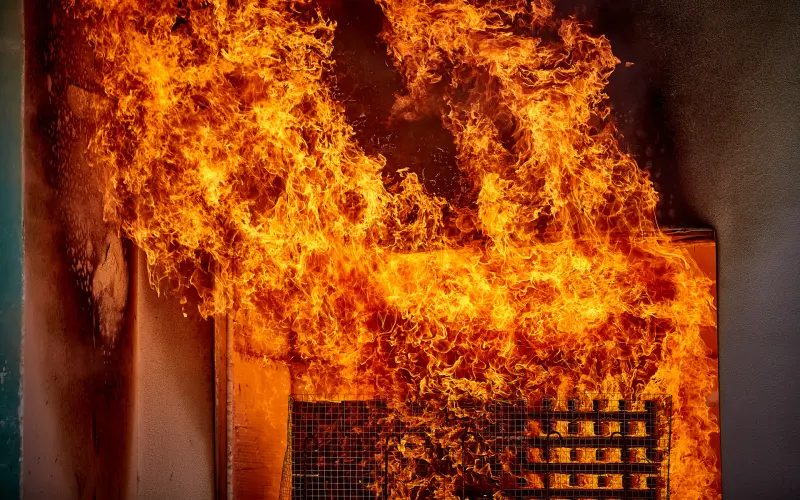


Worldwide, the perception of risk associated with fire spread over building façades is changing due to many high-profile fires in recent years. This shift is forcing changes in how façade materials and systems are tested and controlled to manage the risk.
Basic principles of façade fire testing
Façade fire spread risk depends on many different factors, including:
- how easily the façade materials ignite
- how much heat façade materials generate when burned
- the configuration of combustible façade materials in the system or assembly – how the combustible materials are incorporated into the façade.
Fire tests of different sizes and intent have been developed to determine how materials and façade systems contribute to the spread of flames and fire growth. The first two factors above are material properties and can be evaluated using small-scale tests. Currently, combustible material configurations can only be confidently evaluated at larger scale.
Key measured quantities in façade fire testing include heat energy and temperature. Heat energy can be measured as a total (joules) or as a rate (watts or joules per second). Heat energy and temperature measures can be used for both the conditions the test specimen is exposed to and as the test output that is used to evaluate the façade material or system.
What are non-combustible (A1) and limited-combustible (A2)?
One way to manage external façade fire spread is to ensure that all the materials used can be considered non-combustible or of limited combustibility. Limited combustibility represents only a slight relaxation of the non-combustibility requirements.
Materials meeting either of these classifications contribute very little to fire spread in nearly all realistic fire scenarios. However, even if they do not burn, they may be negatively affected and may melt or fracture. This could affect fire risk in other ways, for example, if they are intended to protect other more combustible materials from fire spread.
One standard used to classify materials as non-combustible is NZS/AS 1530.1:1994 (R2016) Methods for fire tests on building materials, components and structures – Part 1: Combustibility test for materials.
A European standard, EN 13501-1:2018, has classification criteria for both non-combustibility and limited combustibility – A1 and A2.
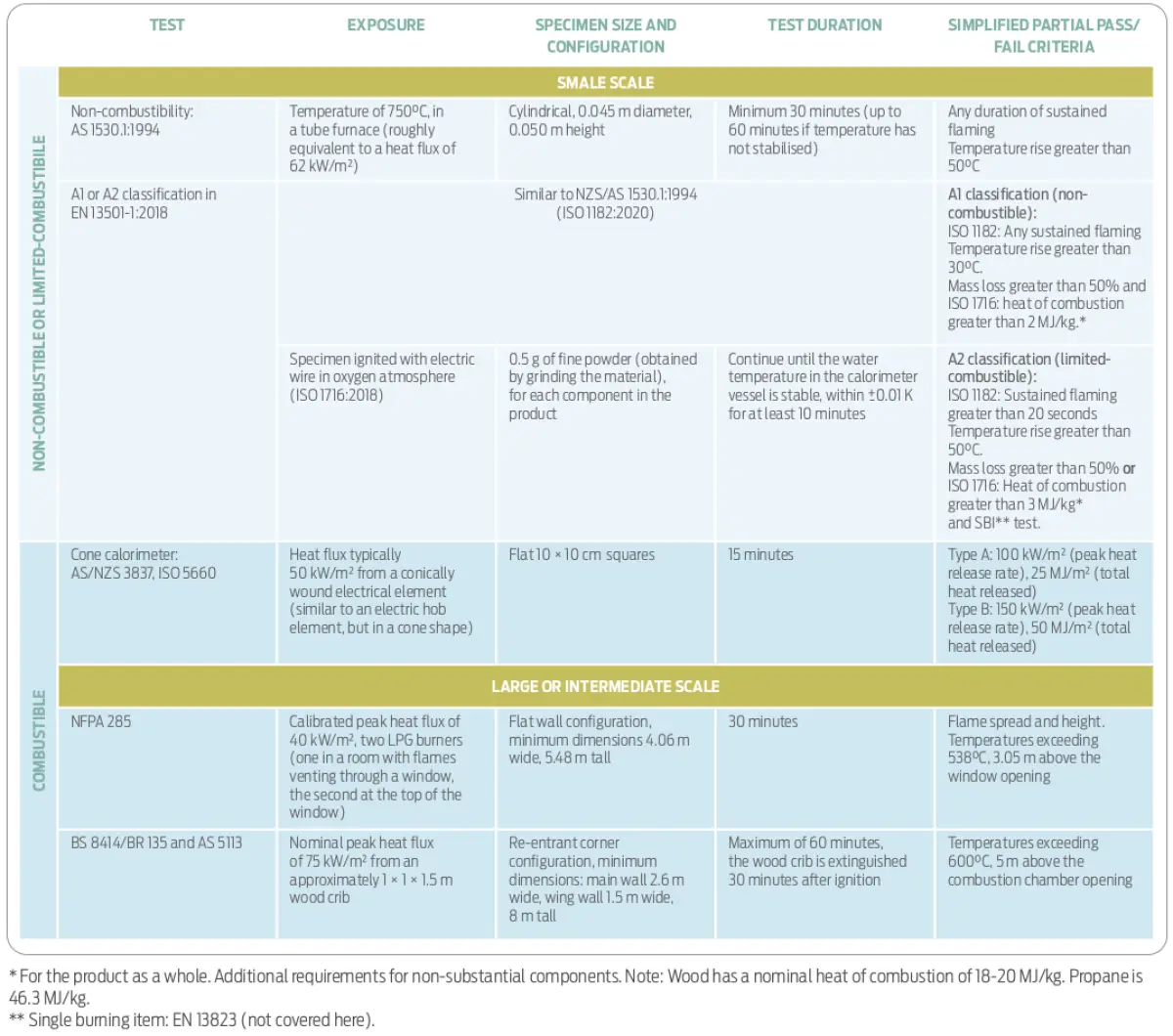
A test used for both NZS/AS 1530.1 and EN 13501-1 involves putting a small cylinder of the material into a 750°C furnace. If there is any sustained flaming or more than a small temperature rise (see Table 1), the material will not meet the NZS/AS 1530.1 non-combustibility or EN 13501-1 A1 classification criteria.
For EN 13501-1 classifications, another test (ISO 1716) measures the total amount of combustion energy that could be released from the material. For an A1 or A2 classification, this needs to be less than approximately 10% or 15% respectively of the total combustion energy that could be released from the same mass of wood.
What about combustible materials?
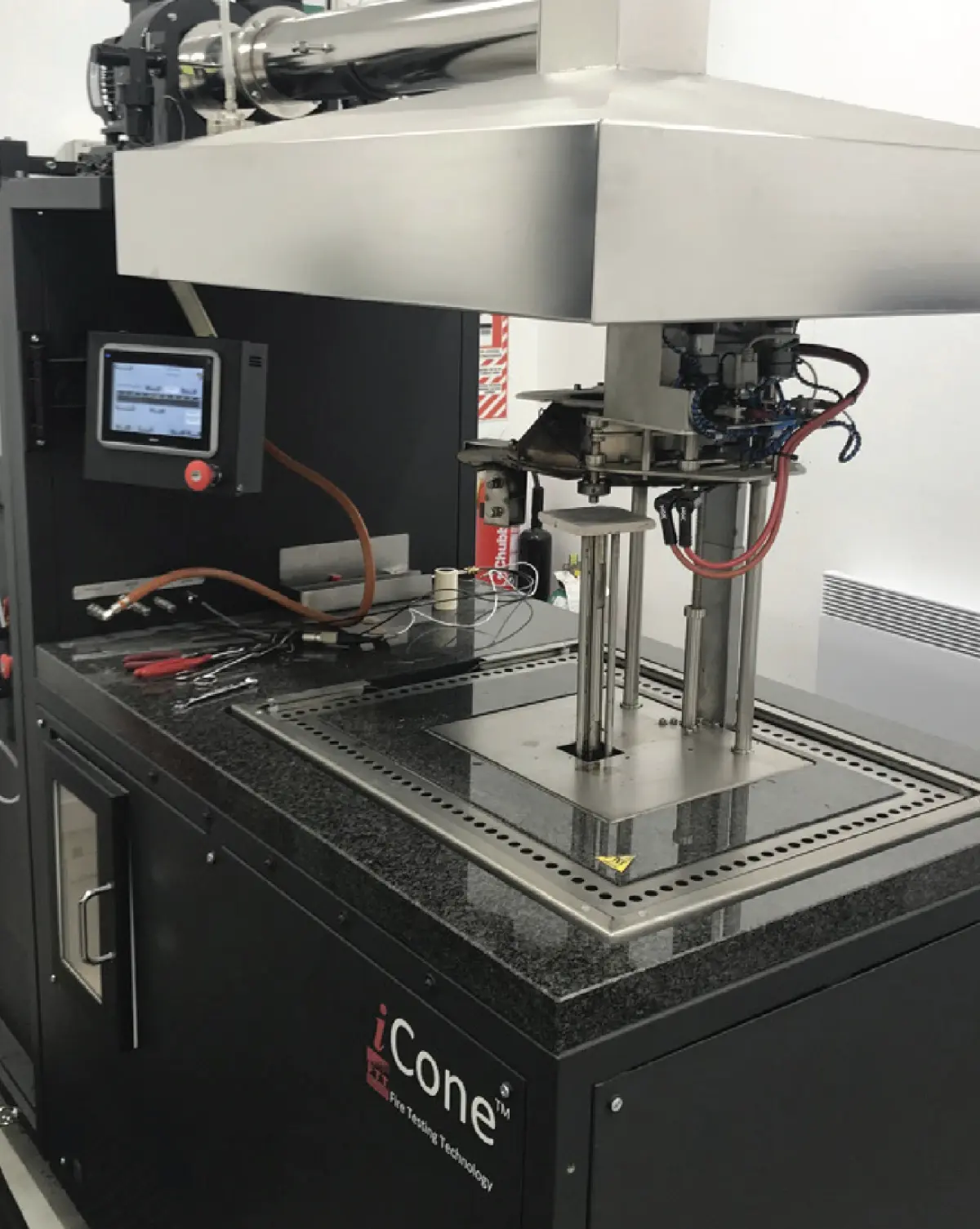
The small-scale cone calorimeter test apparatus can be used to test the relevant properties of combustible materials. A cone calorimeter heats a small 10 × 10 cm sample of a material using an electrical element similar to a hob.
In New Zealand, testing in the cone calorimeter is the basis of the Type A and Type B classification system of combustible cladding materials. For these classifications, materials are subjected to a heat flux of 50 kW/m² for 15 minutes. The peak heat release and total heat released are measured. Type A classification has stricter requirements than Type B.
Some issues with classifications
This classification system was developed in the 1990s and based on research conducted at BRANZ (Fire performance of external wall claddings under a performance-based Building Code, report 133) and the National Research Council of Canada.
There are several key points to consider:
- A heat flux of 50 kW/m² is not indicative of the most severe fire exposure to be expected but was selected in Canada based on historical limitations of the testing apparatus used for testing materials at the time. In comparison, the tube furnace temperature of 750°C used to test for non-combustibility generally corresponds to a heat intensity of 62 kW/m². A higher heat flux would result in a more severe test.
- The test duration of 15 minutes was selected based on requirements within the Canadian standard CAN/ULC-S114. This test for non-combustibility used 15 minutes as a practical limit for testing to allow for quick repeatability. Some combustible materials may not ignite in the 15-minute timeframe but may start to burn eventually if continued to be heated.
- A Type A or Type B classification does not indicate that a material will not burn.
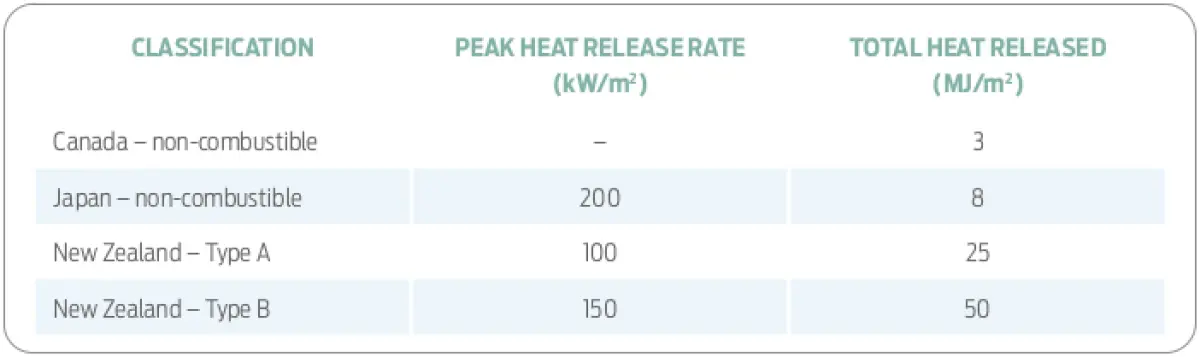
Internationally, non-combustible classifications using the cone calorimeter have been proposed. Table 2 compares the New Zealand classifications to examples of non-combustible criteria. The more stringent Type A New Zealand classification permits eight times more heat than the Canadian criteria. It should be noted that the non-combustibility classification values used in Canada and Japan are low enough that the ability of the cone calorimeter to accurately measure these values becomes questionable.
Larger-scale test for façade systems
The effect of the configuration of combustible materials in façade systems can only be evaluated using larger-scale testing. Larger-scale methods include NFPA 285 or BS 8414.
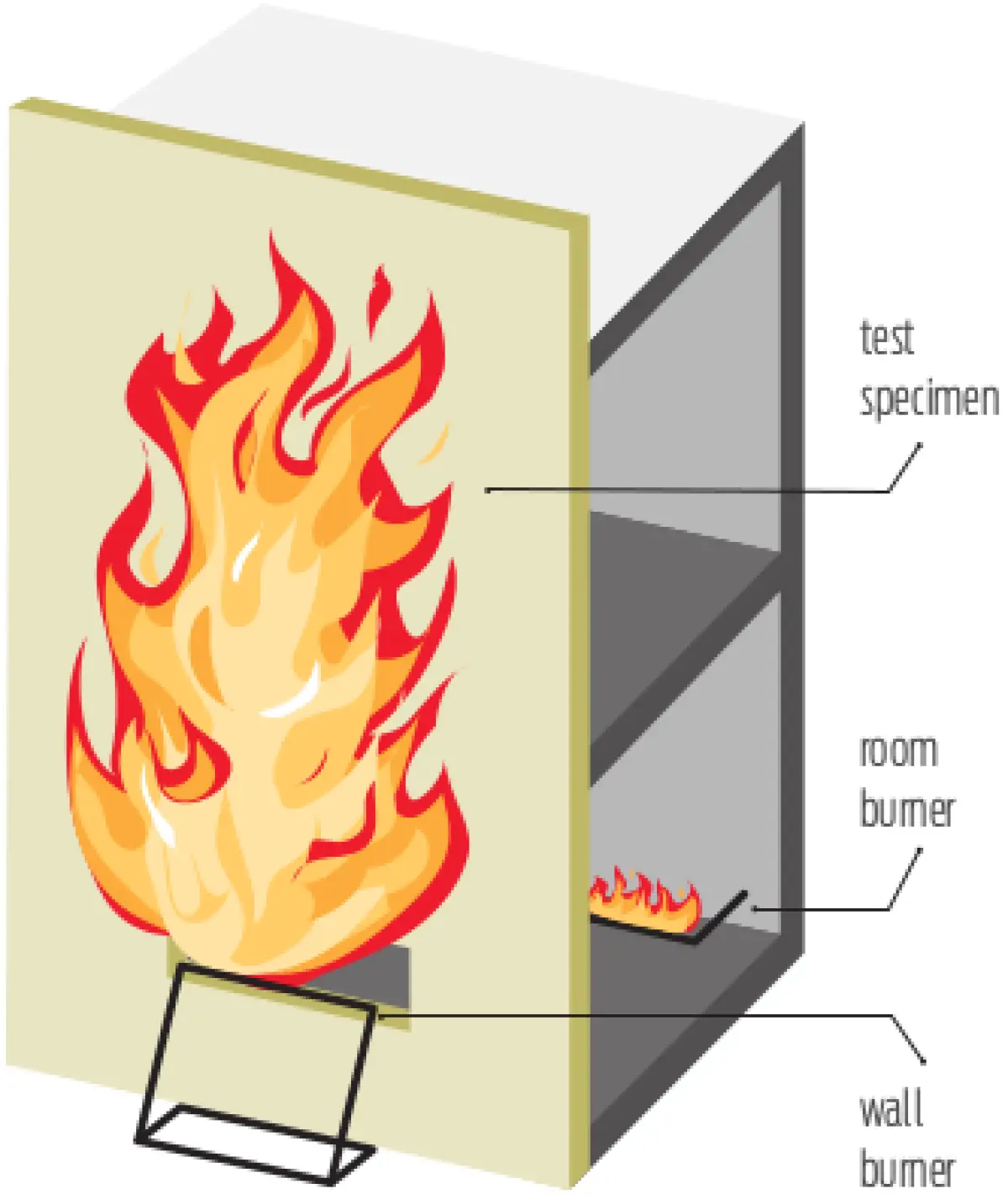
The NFPA 285 test uses LPG burners to produce a 40 kW/m² peak heat intensity on the exterior, while the BS 8414 test uses a wood crib and is intended to produce a 75 kW/m² peak heat intensity. The NFPA 285 intermediate-scale multi-storey apparatus is smaller than the BS 8414 apparatus, which also incorporates a re-entrant corner. This allows corner details to be tested and results in heat feedback between the two surfaces, creating a more severe heat exposure.
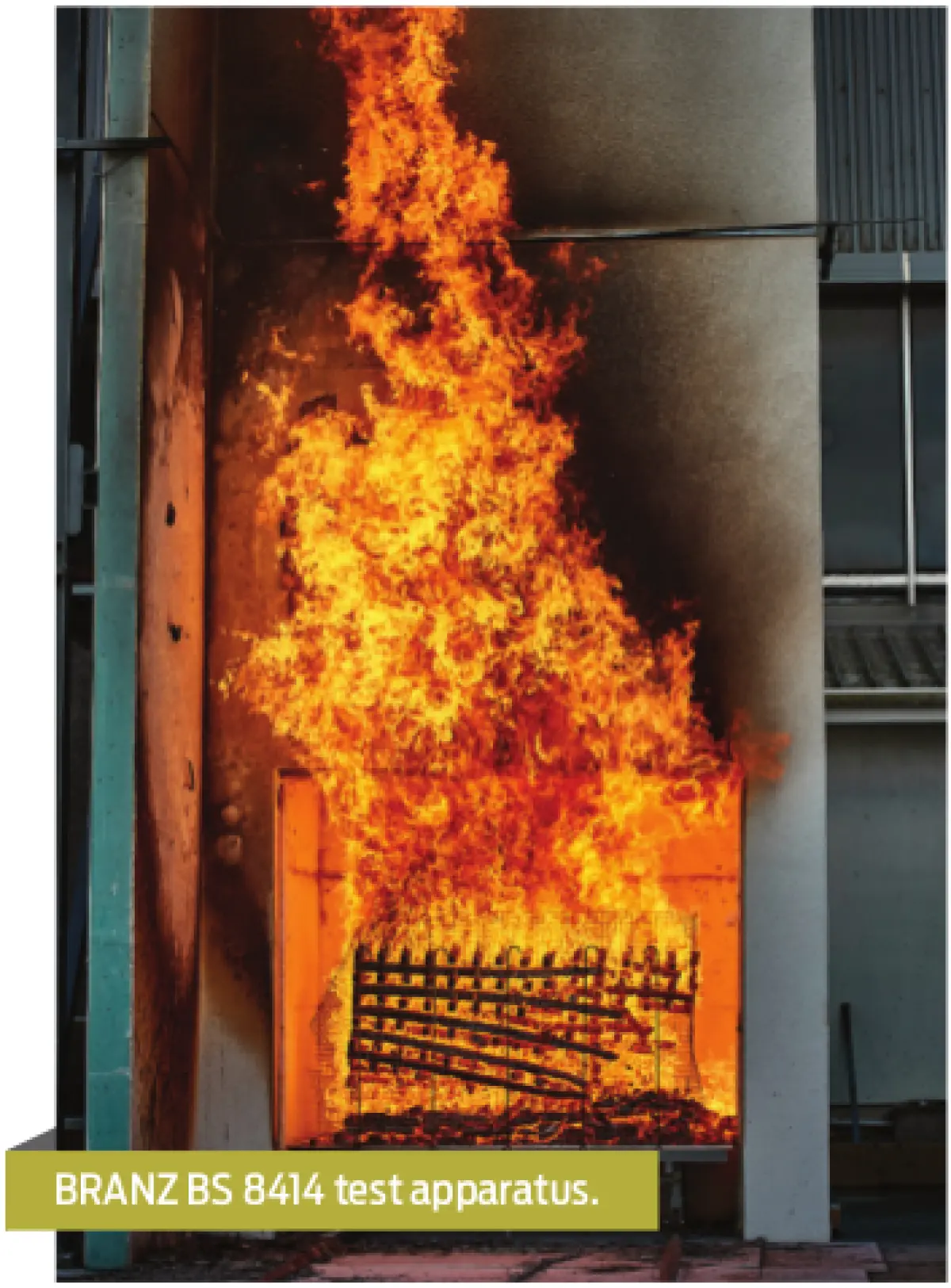
There are concerns that, if the test heat exposure is not severe enough, it may not represent realistic fire scenarios. Peak heat fluxes measured experimentally from flames coming out of windows range from 50–100 kW/m² but have been measured up to 200 kW/m².
Wood cribs have more variability than the electrical heaters or LPG fires in the other test methods. The BS 8414 test can also be done outside, making it less repeatable than the smaller-scale tests or NFPA 285.
Better façade fire spread management
This simplified overview of some façade fire testing options points out their unique features and limitations. BRANZ is currently exploring these test limitations to improve our understanding and ability to manage the risk of façade fire spread.