

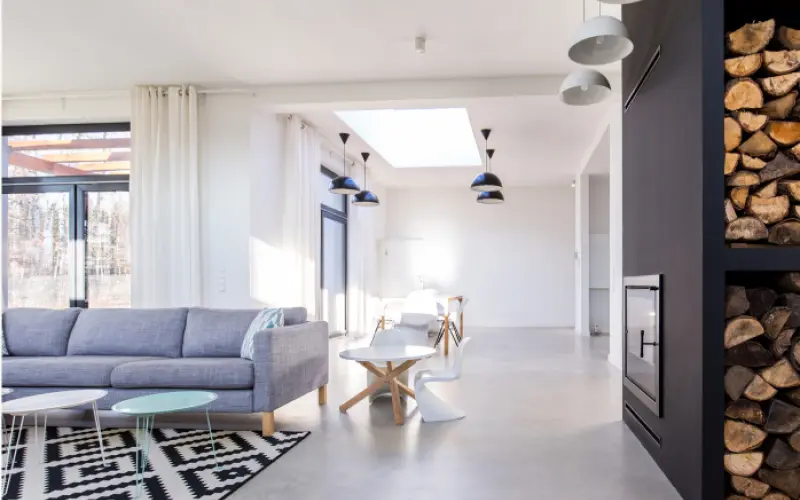


BRANZ recently carried out modelling on a 156 m² slab-on-ground, single-level, 4-bedroom reference house (see Rules of thumb to cut carbon).
The modelling applied six design rules of thumb that altered the design and construction of the reference house and calculated the impact of these changes on its carbon footprint.
Here we look at rule of thumb 2 Expose the concrete floor slab and what designers need to consider when applying this rule.
Potential for reduced emissions
An exposed concrete floor slab provides two potential areas for reduced greenhouse gas emissions:
- It eliminates the embodied carbon emissions associated with the initial floor covering manufacture and installation as well as ongoing replacement. The reference house assumed carpet was used throughout the living areas and bedrooms and that this would be replaced every 12 years. Floor coverings have a shorter service life than the house (a 90-year service life was used for calculating the building’s carbon footprint) so they are regularly replaced, adding to embodied emissions.
- The thermal mass of the concrete slab is utilised. No floor coverings and exposure to sunlight can help moderate internal temperatures. Properly managed solar gain from direct sunlight on the exposed slab can reduce the amount of heating and cooling required, which reduces operational carbon emissions.
Different slab construction and finish
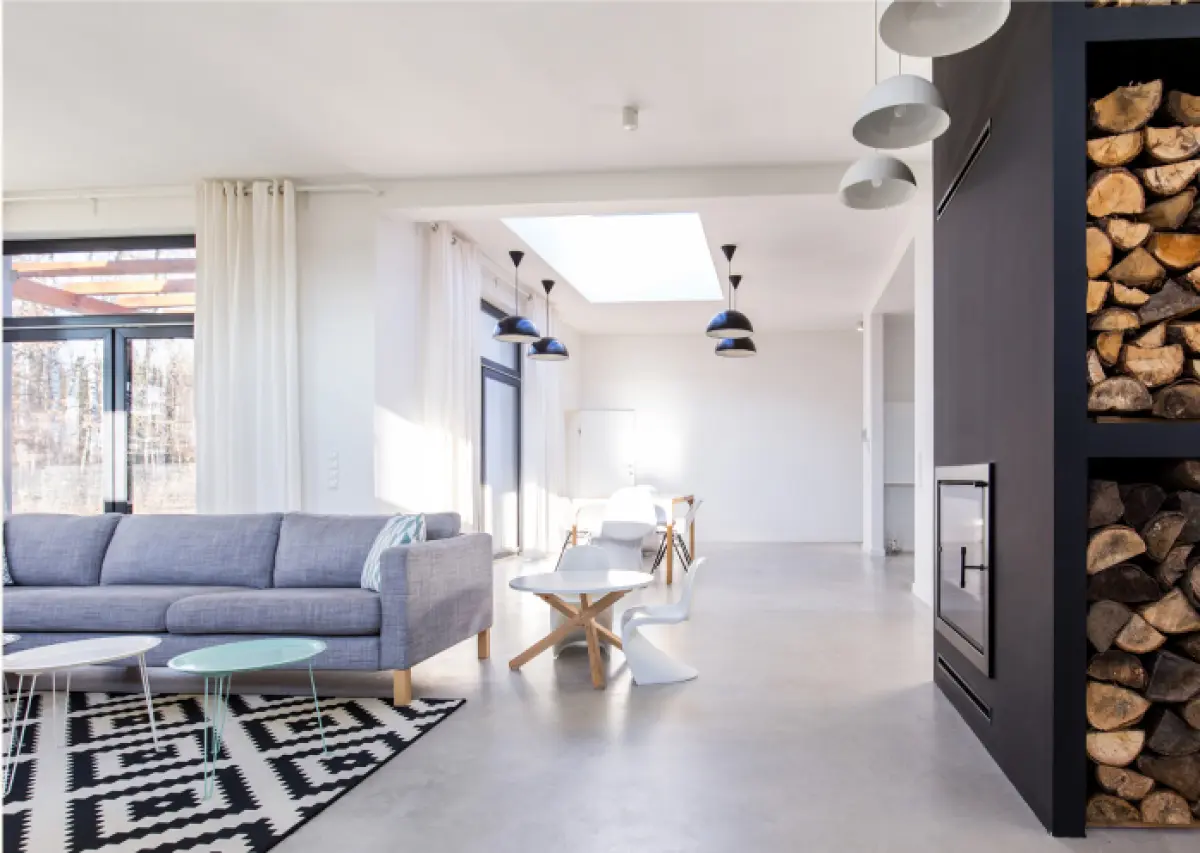
Exposed concrete slab floors generally require selected aggregate for the required aesthetic and more attention to installation, finishing and curing.
Concrete shrinks as it cures, which can result in unsightly cracking. Construction cuts that are ultimately filled with a non-shrink grout or sealant are required to manage the potential for cracks to occur.
The finished floor will also need to be polished or suitably coated to ensure a hard-wearing, dust-free finish.
Position for exposure to sunlight
Exposed concrete slabs are a very good form of thermal mass – absorbing and storing heat gained through exposure to sunlight during the day. This heat is then released as the interior air cools at night.
Correct orientation, sizing and positioning of the exterior windows and doors is critical to ensure the slab gets maximum sunlight exposure in cooler months.
Positioning rooms that require the most heating where they will get sufficient exposure is also critical.
Avoiding overheating on warmer days
During warmer months, managing exterior glazing becomes critical. Overexposure of the slab to sunlight can contribute to overheating of the house interior.
External shade structures, roof overhangs and suitable window coverings can be used to manage potential overexposure.
An exposed concrete slab that receives less solar gain during warm days ultimately absorbs heat from the house interior at night, keeping it cooler.
Improve concrete slab thermal efficiency
Simpler floor plans with higher slab area-to-perimeter ratios are more thermally efficient as they have less vertical slab edge through which most of the heat is lost – up to 80% according to BRANZ research.
While concrete has good thermal mass for heat storage, it is not so good as an insulator. To ensure heat gained by sunlight exposure is not lost outwards from the slab, consider insulating exposed vertical slab edges.
Insulating beneath the slab – either around the slab perimeter or the entire underslab – also improves thermal efficiency.
H1/AS1 (5th edition) Appendix F incorporates tables that provide construction R-values for a range of concrete slab-on-ground floors. Values are calculated using slab area-to-perimeter ratios, different effective thicknesses and typologies of exterior walls and options with the inclusion of vertical edge, underslab perimeter and full underslab insulation.
Remember liveability
There are situations where an exposed concrete slab will not be exposed to sunlight and therefore will not heat up. There will also be rooms in the house that cannot be oriented for solar gain. To maintain good indoor environment quality – meaning a warm, dry and healthy environment – some areas of the house may need to incorporate moveable or permanent floor coverings to cover a cool slab. Heating the slab may also be a consideration.