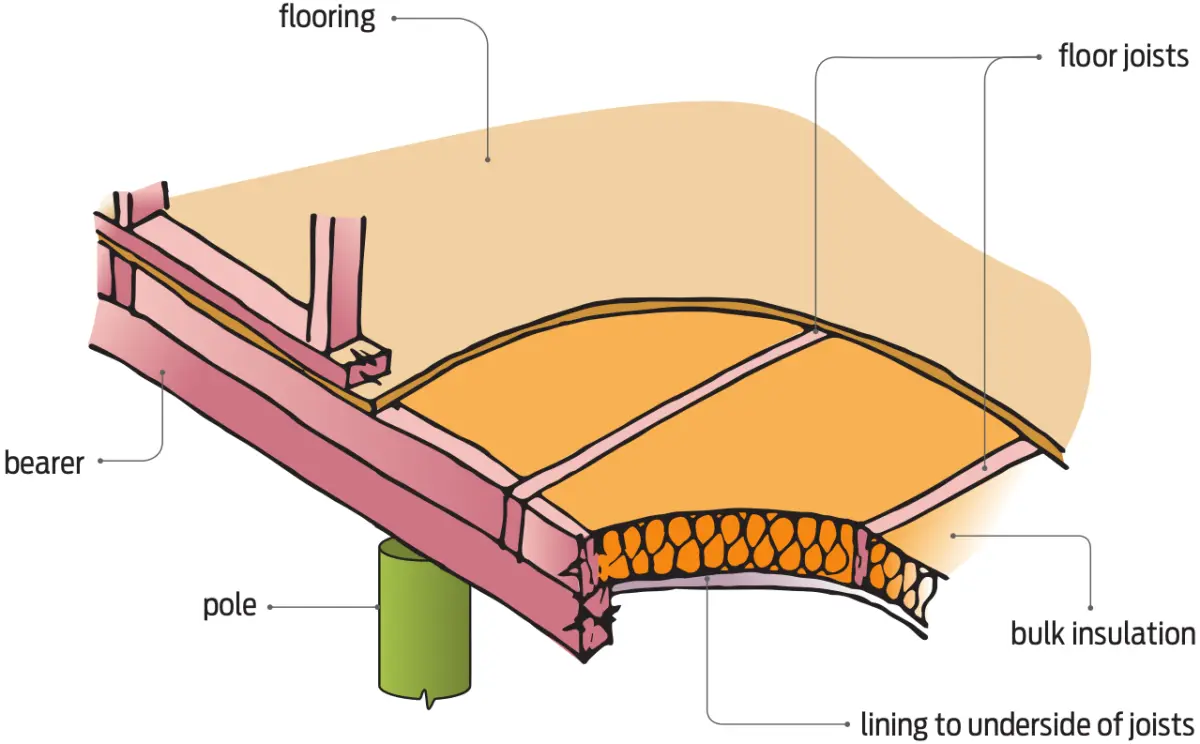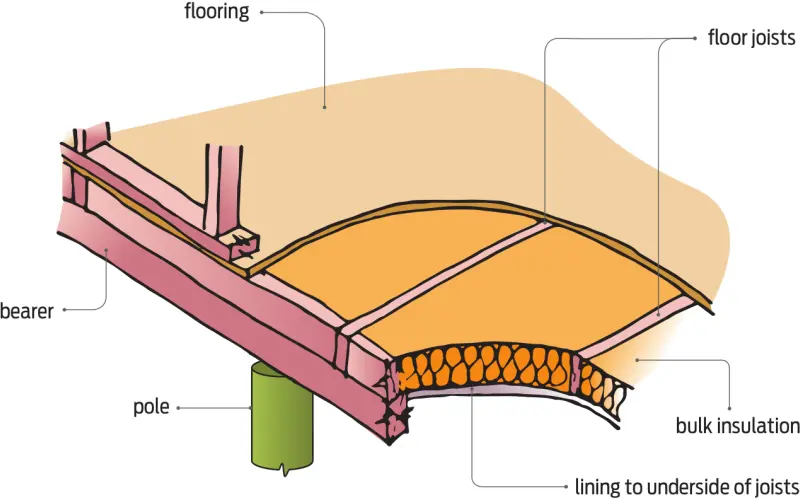


After roof space insulation, the next most effective place to install insulation in an existing home with a suspended floor is under the floor.
Widespread retrofitting expected
Changes to the Residential Tenancies Act will require rental properties to be insulated by 1 July 2019, so widespread retrofitting of underfloor insulation is anticipated.
Foil banned for retrofit
Foil used to be the most common material for underfloor insulation. However, from 1 July 2016 a change to legislation – section 26 of the Building Act 2004 – has resulted in a ban on retrofitting new foil or repairing existing foil insulation.
As it is metal-based, foil conducts electricity and will become live if the foil or fixing staples make contact with live wires. In the constricted space and low light of a typical subfloor, the risk of electrocution is high.
Before checking or removing existing foil insulation:
- turn off the power supply
- refer to Electrical Code of Practice ECP 55, which provides guidance for managing electrical safety risks of foil insulation
- consider engaging a registered electrician.
If the foil is well fitted with no air gaps and is not damaged, torn or excessively dusty, it may be left in place. Otherwise, it needs to be replaced with bulk insulation. Replacement will give better performance. The code of practice recommends engaging a professional insulation installer to remove existing foil insulation.
Lots of bulk insulation options
Bulk insulation includes rigid polystyrene sheets and products like polyester, wool and fibreglass. These products are usually friction fitted between the floor joists. Clips or other fixings such as staples and/or strapping may also be used.
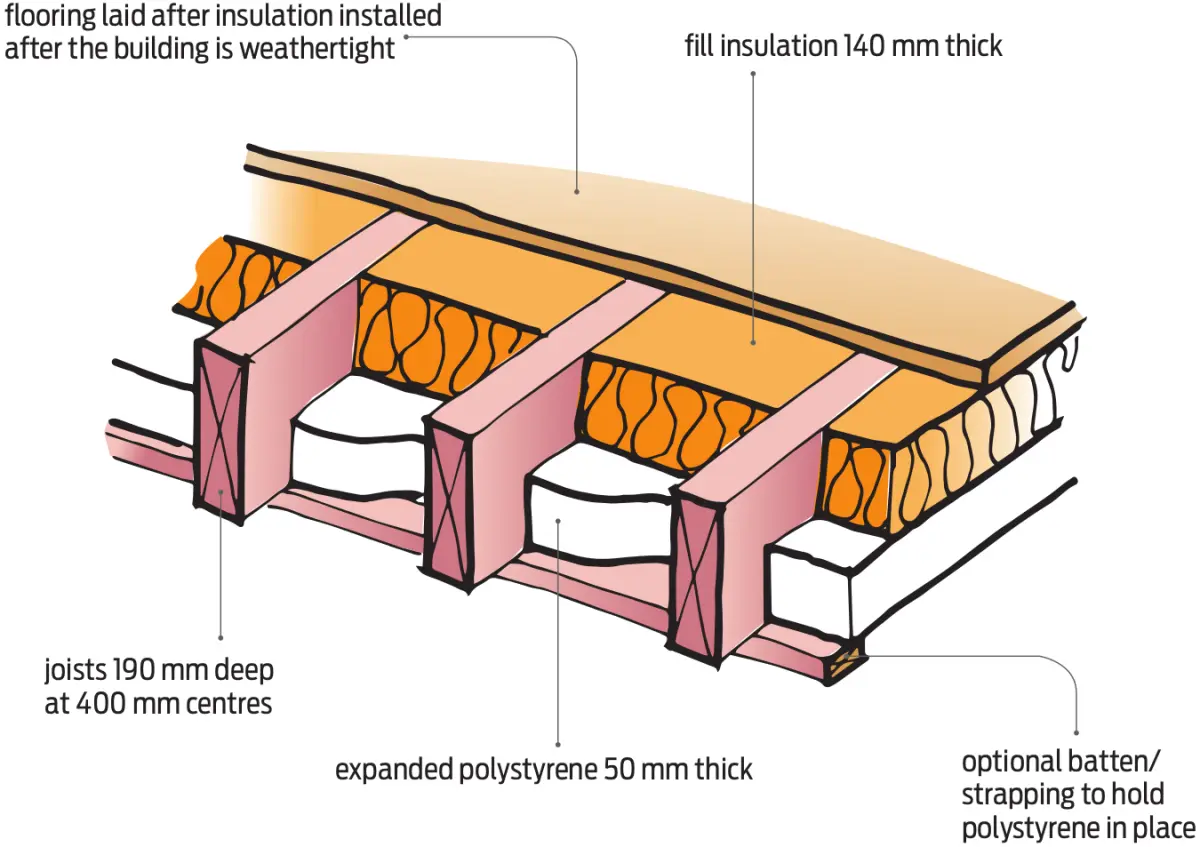
Unlike foil products, bulk insulation products have a measurable insulation value (R-value). New Zealand Building Code clause H1 Energy efficiency requires a minimum system R-value of 1.3 for new homes in all areas of New Zealand. Composite insulation can provide a significantly greater R-value (see Figure 1).
Selecting the right insulation
When selecting appropriate bulk insulation, choose a product that has an R-value of at least R1.3 (preferably higher) that:
- is for installation under suspended floors
- is the right width for the floor joist spacing – note that joist spacing in older houses can vary
- is compliant with AS/NZS 4859.1:2002 Materials for the thermal insulation of buildings – General criteria and technical provisions (look for the label on the packaging)
- gives a system R-value (including flooring etc.) of at least R1.3
- is suitable for the site conditions – for example, if the site is damp or windy, select an insulation product that has been tested for performance and durability in these conditions without a lining under joists.
You may also want to check:
- performance guarantees offered by the insulation manufacturer
- recycled content or source of materials
- manufacturers’ instructions for safe and correct handling and installation.
Checks before installation
Before installing the insulation, check that the underfloor is accessible as there needs to be enough space to manoeuvre under the joists and bearers, including handling the insulation. Also check whether any underfloor repairs are needed. Look for:
- borer and other pest infestations
- rotten piles or subfloor framing and any corroded fixings
- electrical wiring issues
- drainage, surface water or plumbing problems
- obstructions such as stored timber, rubbish, rocks and pipes
- dampness such as mould, mildew or dirt that stains like mud when rubbed in the hand.
All repair work should be completed before the insulation is installed.
Deal to any subfloor dampness
A subfloor that is damp or too open can reduce the effectiveness of any insulation. Scrape away the top 25 mm of the soil to check if it is damp. If dampness is present:
- check whether water is getting under the floor due to rainwater run-off or plumbing problems
- check subfloor vents are not blocked by soil, plants or landscaping
- check there are adequate subfloor vents – NZS 3604:2011 Timber-framed buildings requires at least 3500 mm²/1 m² of floor area, evenly distributed around the foundation perimeter
- clear the subfloor area of any obstructions and install a polythene vapour barrier on the ground, taped at joists and around piles and weighted down with rocks or bricks.
Installing insulation tips
Engage a professional installation installer to install the insulation if you’re not confident.
If you are installing the insulation yourself, here are a few pointers:
- Read and follow safety advice in Appendix B of NZS 4246:2016 Energy efficiency – Installing bulk thermal insulation in residential buildings.
- Install the insulation with no air gap between the underside of the floor and the top of the insulation.
- If the material is designed to be fixed by stapling to joists, take great care to avoid electrical cables.
- Keep polystyrene separated from PVC-sheathed electrical cables. Over time, the cable sheathing may interact chemically with the insulation and damage it.
- It is a good idea to also insulate any hot water pipes that run under the floor. Foam insulation tubes with a slit along one side can be pressed over the piping.
Think about extras if subfloor is open
After the insulation is installed and if the subfloor is not enclosed and accessible, consider:
- installing plywood or fibre-cement sheets to the underside of the floor (see Figure 2)
- enclosing the subfloor perimeter, including Building Code-compliant vents.
This can increase the effectiveness of the insulation and reduce the risk of damage by wind or animals.
Note: Installation of foil insulation in commercial and new residential buildings or additions to existing residential buildings are still permitted provided the insulation is installed before the electrical system.