

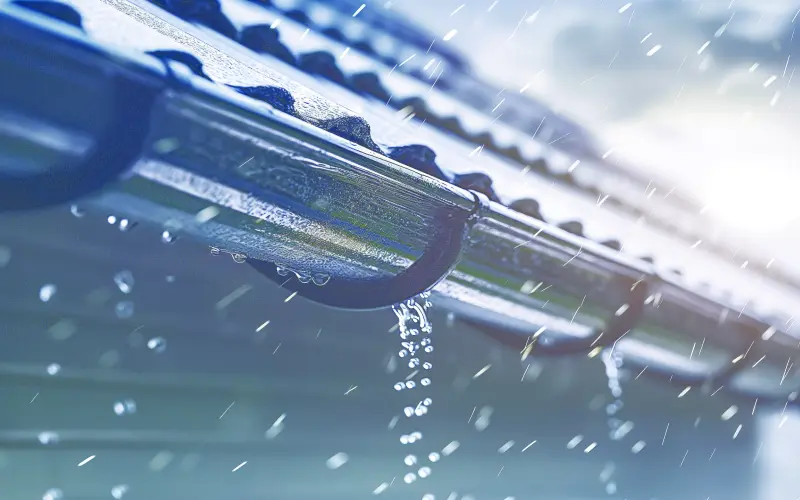


Aotearoa New Zealand has recently experienced several extreme weather events that have caused extensive damage to communities. Intense rainfall, over long periods and often accompanied by high winds, affected many homes so significantly they were left uninhabitable and unrepairable.
Climate change means that these events are likely to occur more frequently. We need to consider how to create buildings that are consistently resilient.
The BRANZ seminar Building for our changing climate looked at design and construction options for residential buildings that perform more effectively in extreme conditions. The seminar covered roof design and material selection to manage intense rainfall.
Designing for rainfall
High-volume, intense rainfall events are occurring more frequently. They are also often associated with high wind speeds, which significantly increases the weather load on a building’s exterior envelope – particularly the roof – with increased volumes of water needing to be managed.
Wind acting on water impacting the roof surface must also be considered, as this significantly increases the risk of water penetration and can dramatically affect how rainwater runs off the roof. For high-exposure sites, roofing needs to have robust details that ensure joins and laps remain watertight in extreme conditions, and the collection and disposal of rainwater is also a major consideration.
These events can occur anywhere so a building designed for typical conditions such as a low wind zone can often be exposed to conditions that far exceed its design parameters. This means designing to ensure weathertightness in extreme conditions for all building and roof typologies in all possible locations.
Managing intense rainfall impacts all aspects of roof design. Roof style and pitch, material, drainage, flashings and all detailing, particularly at roof junctions, need to be carefully considered for extreme conditions.
Roof style and complexity
Different roof styles present different levels of risk for managing rainwater. Complex designs and low-pitch roofs generally represent greater design and construction challenges. Roof design also needs to facilitate regular maintenance to ensure that roof integrity and performance are ongoing.
Simple gable
These roofs provide effective drainage off the roof surface and generally incorporate roof overhangs and eaves gutters that have the capacity to overflow in extreme events – clear of the exterior walls of the building. They also tend to be relatively straightforward to design and construct.
Monopitch
Generally simple in format, these roofs are low risk and provide effective drainage from simple roof planes. Eaves gutter capacity needs to be considered – single plane roofs can discharge large volumes of water that can overload drainage systems.
Hip
Hip roofs have more junctions and varied roof planes incorporating valley gutters and more flashings as they incorporate both ridges and hips. This adds complexity to the design and construction and represents a higher risk under intense rainfall.
Low slope
These roofs are usually simple in form although they are often constructed with membrane roofing, which requires accurate detailing and installation to perform well. They also have a higher dependence on roof drainage and associated drainage overflows to ensure high-intensity rainfall is drained effectively and does not pond.
Roof complexity
The complexity of the roof has an impact on overall performance. In general, increased design complexity leads to increased construction complexity and the potential for inaccurate installation. This is relevant to all roof styles. Complexity can also affect a roof’s ability to manage and drain high-intensity rainfall.
Roof penetrations are also an important consideration. Eliminating or reducing the number of penetrations reduces complexity.
Roof pitch
Roof pitch affects the overall roof and catchment area and the velocity at which water drains from the roof surface during high-intensity events.
Steeper-pitch roofs shed water at a faster rate than lower-pitch roofs. This has an impact on the design of roof flashings and junctions, particularly where a roof incorporates different materials and pitches. A steep roof draining onto a lower-pitch roof requires careful consideration.
Steep – 25° and greater
Steep roofs provide efficient run-off but the increased velocity of water has a greater impact on roof flashings and junctions that the water flows across. Gutters can also be easily overloaded.
Wind also has a greater impact on the surface of steep roofs. A high volume of water can be blown in different directions across the roof surface, having more of an impact on flashings and junctions.
Moderate – 10–25°
This style of roof is generally effective because water runs off at relatively low velocity.
Low – below 10°
Water drains off a low-pitch surface at a slower rate and remains on the roof surface longer so theses roofs are very detail dependent. High-intensity rainfall can also lead to significant roof ponding and overloaded drainage systems.
Roof material
There are several things to consider when selecting roof material:
- Ensure that the material is suitable for the style and pitch of the roof, particularly with respect to high wind and rainfall events. Consider the details associated with the roof installation and their performance relevant to high-volume events.
- Different roofing materials and profiles shed water at different rates so it is important to select a material that is suitable for the potential catchment – expected exposure, catchment area and run-off capacity.
- Accurate installation is fundamental to roof performance. Complex systems may suit simpler roof typologies to ensure correct installation.
- The design and construction of roof junctions is critical to performance. This is particularly relevant with junctions incorporating dissimilar materials such as a steep-pitch profiled metal roofing draining onto a low-pitch membrane roof. Ensuring that the junction manages high-volume run-off and the effects of wind on the two roof surfaces is fundamental.
- As roofs exposed to extreme rainfall may remain wet for longer, material durability is fundamental.