

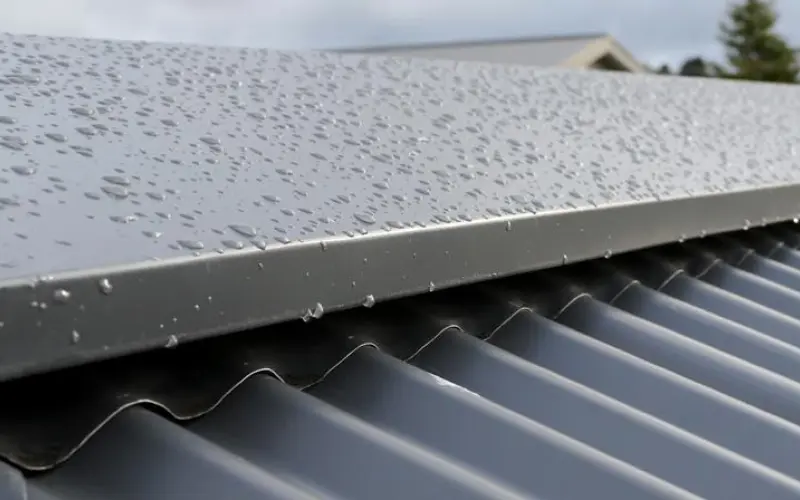


Questions around the need for passive ventilation elements to give New Zealand roof cavities a breath of fresh air have been investigated by BRANZ researchers since at least 1988.
Extra ventilation not favoured in past
Back then, a scientific article concluded that ‘additional roof ventilation has been found to be of no assistance’. BRANZ scientist Harry Trethowen argued that drawing in air from the outside into the roof cavity on a cold clear night would even aggravate the problem. The humidity of the outside air will be close to saturation and given that the roof cladding can be at temperatures below ambient due to a process called radiative cooling, condensation on the metal might be the consequence.
How does this align with increasing calls to add ventilation to roof cavities? Some building authorities elsewhere recommend or even demand passive vents to be part of the roof design.
Physics same but houses different
Did BRANZ get it wrong back in the 80s and 90s? I would like to argue no, we didn’t. The physics hasn’t changed, but the way we build and use our houses has.
Moisture is constantly being added to the inside of houses from cooking, taking showers and unflued gas heaters (these unflued gas heaters should be avoided wherever possible).
In the past, this excess water was often removed from the building by natural ventilation. Draughty windows, doors and floors provided a channel to constantly replace moist inside air with fresh outside air. The inside air that did find its way through the ceiling into the roof cavity – most commonly large volume gable-type roof spaces – didn’t generally cause any trouble.
More airtight, skillion roofs and downlights
These days, buildings are significantly more airtight, which is good to keep the warm air in. However, building occupants now need to provide the necessary air exchange by regularly opening windows.
Roof styles are changing as well. Skillion-type roofs are very popular, with a much reduced cavity volume.
An easy pathway for moist air to migrate into the roof cavity has also been provided through open downlight fittings in the ceiling. These factors have created a situation where moisture can cause a problem in the roof space.
Condensation in cold roof construction
Harry Trethowen found that, in New Zealand conditions, a cold roof construction will sometimes experience condensation. Cold roof construction is where the insulation layer is at the ceiling level and the roof cladding is cold on both the outside and the inside.
In a recent study, BRANZ looked at a completely ventilated roof cavity – the air in the roof space is always the same make-up as the ambient air.
Simulating this baseline case gives an idea of how often condensation occurs simply by looking at the temperature and humidity conditions over an average year at different locations in New Zealand.
A roof can generally handle such events. The underlay and timber elements can absorb some moisture, and as long as this is removed again later, no lasting damage is done.
Ventilation channels one strategy
BRANZ modelling has also shown that ventilation is beneficial in removing excess moisture that finds its way into the roof space. Does this mean every roof needs additional ventilation channels?
There are roofs in New Zealand that perform well without ventilation elements. Well managed indoor humidity along with an airtight ceiling is still a primary means of reducing the risk of condensation problems in roof cavities.
Therefore, additional ventilation channels should be viewed as just one element in a range of moisture control strategies.
Passive and mechanical measures
When installing additional openings, consider a few basics. Passive ventilation of roof cavities is driven by two mechanisms:
- Temperature differences – stack or chimney effect.
- Wind action.
These driving forces generally result in a negative pressure within the cavity. Air enters the cavity from below and is expelled at the top.
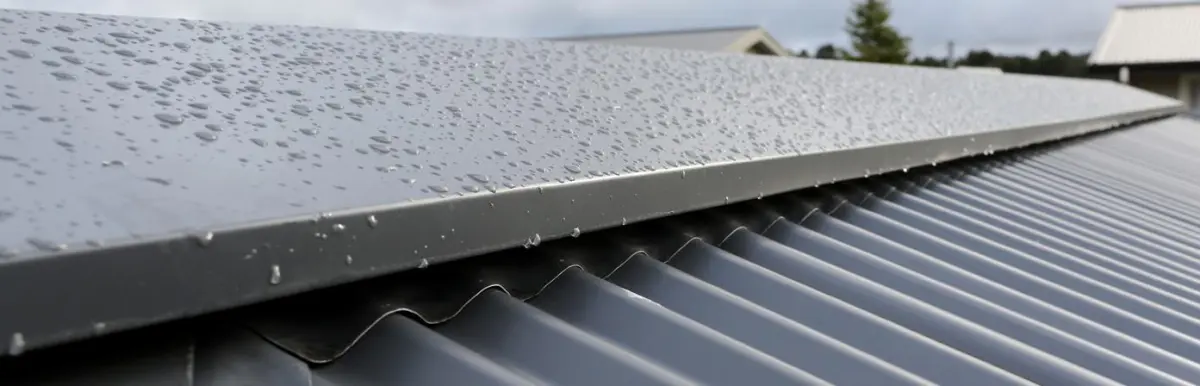
Bearing this in mind, avoid situations where exhaust air, for instance, exiting through a ridge vent, is sucking up moist air from the living quarters below. The replacement air needs to be fresh – outside air coming through vents around the eaves for instance.
Testing for weathertightness
Weathertightness is another important consideration. In the past, BRANZ has tested roofing elements to AS 4046.9-2002 Methods of testing roof tiles. However, this standard does not specifically address the issue of vent elements as part of the roof design. Work is required to establish its suitability in this context.
The same is true for cutting the roof underlay beneath the ridge. This is necessary for the vent to function properly, but condensation developing underneath the ridge cap must not be allowed to drip into the roof cavity.
These items will be addressed as part of the BRANZ research programme over the coming months.