




In November and December 2023, BRANZ ran several interactive educational workshops around the country, focusing on the revised requirements for Building Code clause H1 Energy efficiency.
The all-day workshops were a new initiative for BRANZ, and it was pleasing that attendance was high and feedback from participants was positive.
BRANZ subject matter experts assisted the presenters at each of the workshops. This was a real bonus as it allowed plenty of questions to be raised and answered during the presentations and interactive group sessions.
The clear message from the workshops is that the construction industry needs guidance on complying with the H1 requirements when using Acceptable Solution H1/AS1 and Verification Method H1/VM1. While it is not mandatory to follow these documents, it appears that this is the most common means of proving compliance.
While the workshops provided a lot of information, time constraints meant that several questions remained unanswered. Participants were also asked for feedback after the workshops, which has resulted in a broad range of additional questions.
The feedback and questions confirm that H1 compliance is relatively complex and there is a difference in interpretation relating to both the means of compliance and actual compliance. Several issues regarding the construction of compliant assemblies were also raised. An overview of some of the topics raised follows.
R-values
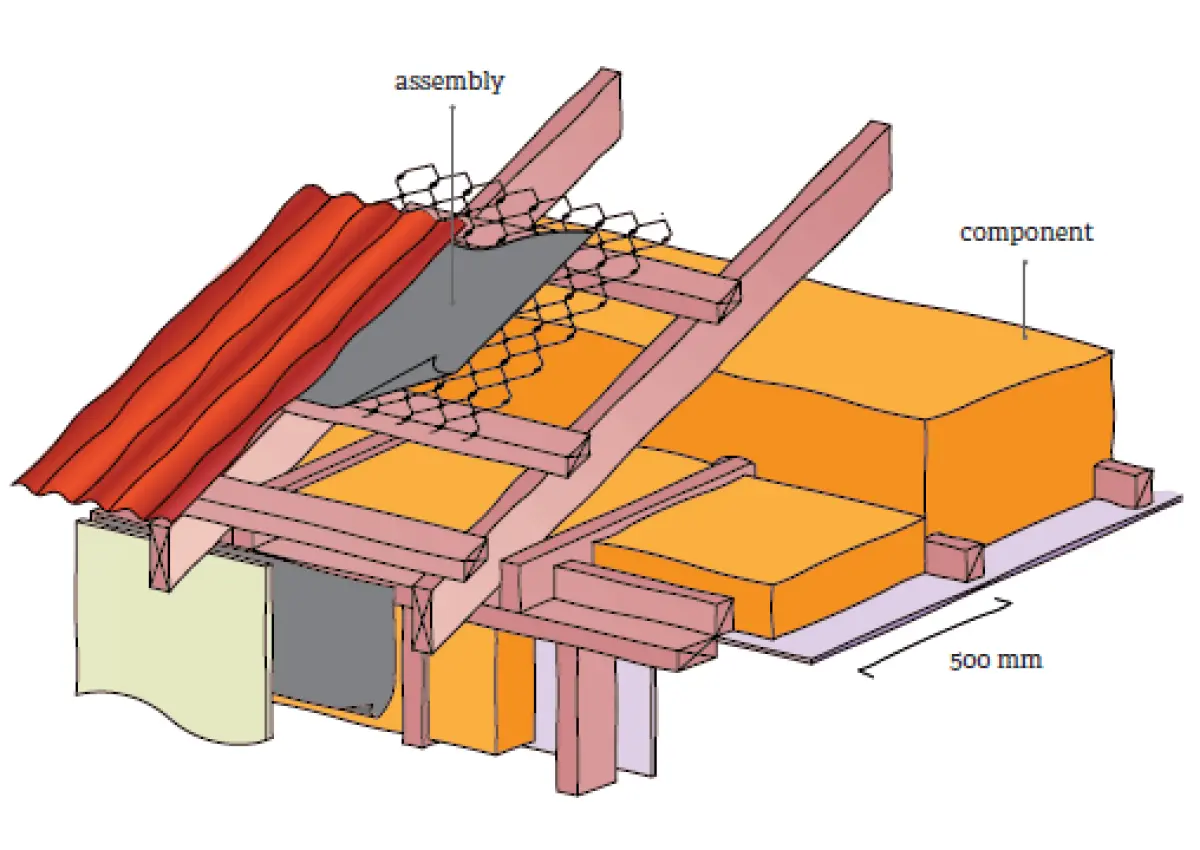
An R-value is a thermal resistance measurement. Component R-value is the thermal resistance of a specific component within a building assembly. Construction R-value is the thermal resistance of a built assembly that incorporates insulation – this considers the sum of the component R-values of each of the elements making up the total assembly (see Figure 1).
The construction R-value could be higher or lower than the R-value of the insulation material within an assembly due to factors such as thermal bridging, which is heat loss that occurs through components of the assembly
H1/AS1 and H1/VM1 tables for compliance provide minimum construction R-values for the assemblies (building elements) of a building’s exterior envelope.
H1/AS1 and H1/VM1 compliance methods
H1/AS1 incorporates the schedule and calculation methods as a means of proving compliance with H1. H1/VM1 incorporates a modelling method.
The schedule method is a straightforward means of compliance where a designer simply needs to incorporate building elements that meet the minimum construction R-values in the relevant tables. The R-values of all the relevant building elements must be known to use this method. There are also restrictions as to where it can be used that relate to total glazing area, glazing orientation, and skylight and opaque external door area.
The calculation method is more complex but allows for a reduction in construction R-value for building elements covered in the tables, with the reduction in R-value of one element compensated for by an increase in the R-value of other building elements. For example, a designer might reduce the construction R-value of the roof element and compensate by increasing the R-value of the walls.
Compliance is confirmed by using heat loss calculations to compare the performance of the proposed building to a reference building – the reference building is the same as the proposed building but is insulated in line with the minimum construction R-values in the tables as per the schedule method.
There are also restrictions around when this method can be used, but it is a useful means of compliance when a building design does not easily allow for all building elements to comply with the minimum construction R-value in the table.
Alternatively, designers can use the modelling method in H1/VM1. This involves calculating the energy use of the proposed building, which is then compared to the energy use of a reference building that is calculated with the same method.
The reference building is the same shape, dimensions and orientation as the proposed building, with building elements based on the minimum R-values in the tables as per the schedule method.
Compliance is proven when the calculated annual space heating and cooling load of the proposed building does not exceed that of the reference building
There are also several other commercial modelling methods available that provide a wider range of information that designers can use to prove compliance.
Skillion roof ventilation
While it is not a compliance requirement, BRANZ advises that it is good practice to maintain a minimum separation of 25 mm between the top of the roof insulation and the underside of the roof underlay. This was originally implemented to prevent wicking of condensation water from the roof to the insulation. It also helps air to circulate and evaporate any moisture in the roof structure.
More information is needed on how much ventilation is required within this space and how the ventilation inlets/outlets are constructed and where they are located to ensure they are effective and weathertight. BRANZ is researching this topic, and more information will follow.
Roof insulation
The increase in the minimum construction R-values for roofs in the H1/AS1 tables to R6.6 across all six climate zones in the country created plenty of discussion. In some circumstances, it is difficult to meet the minimum requirement given that insulation required to meet the minimum can be very thick – greater than 300 mm for some products.
This difficulty has been recognised, and as a result, the guidance documents incorporate a concession for a reduction in the minimum R-value where a building incorporates a roof space and the insulation is installed over a horizontal ceiling.
This concession allows for a minimum of R3.3 for 500 mm width around the perimeter of the roof space, which means a reduced thickness insulation can be incorporated where the roof pitch limits the insulation space.
Several of the workshop sponsors who manufacture and supply batts-format insulation suggested that designers contact manufacturers regarding specific situations as a higher R-value can often be achieved in restricted roof spaces by compressing thicker product into the space.
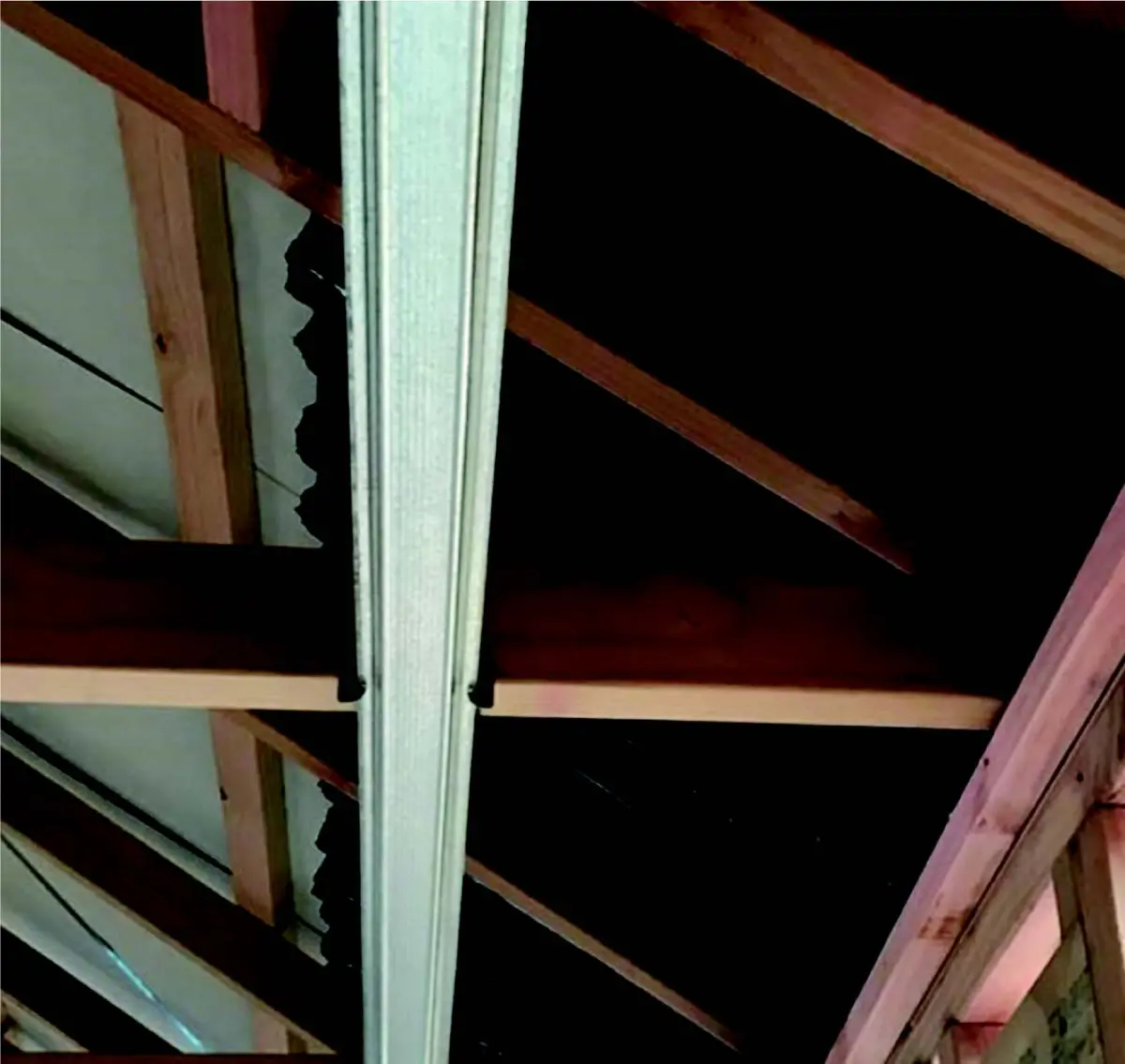
In this case, detailing and installation would need to ensure that the minimum 25 mm ventilation clearance from the top of the insulation to the underside of the roof underlay is allowed for. There are several proprietary baffle-type systems that can be installed on the rake of the roof underlay to ensure this separation is achieved (Figure 2).
Skillion roofs
Meeting the minimum construction R-value of R6.6 can pose some difficulties with skillion roof construction.
Where the rafters are enclosed, there is more space in the overall roof assembly to incorporate thick insulation, but where the rafters are exposed, the available insulation depth is set by the purlin depth. This may require different forms of construction to facilitate the installation of the required insulation. Once again, detailing needs to ensure the 25 mm clearance is allowed.
Concrete slab-edge insulation
The H1 requirements call for minimum construction R-values for slab-on-ground floors of R1.5 in climate zones 1–4, R1.6 in zone 5 and R1.7 in zone 6.
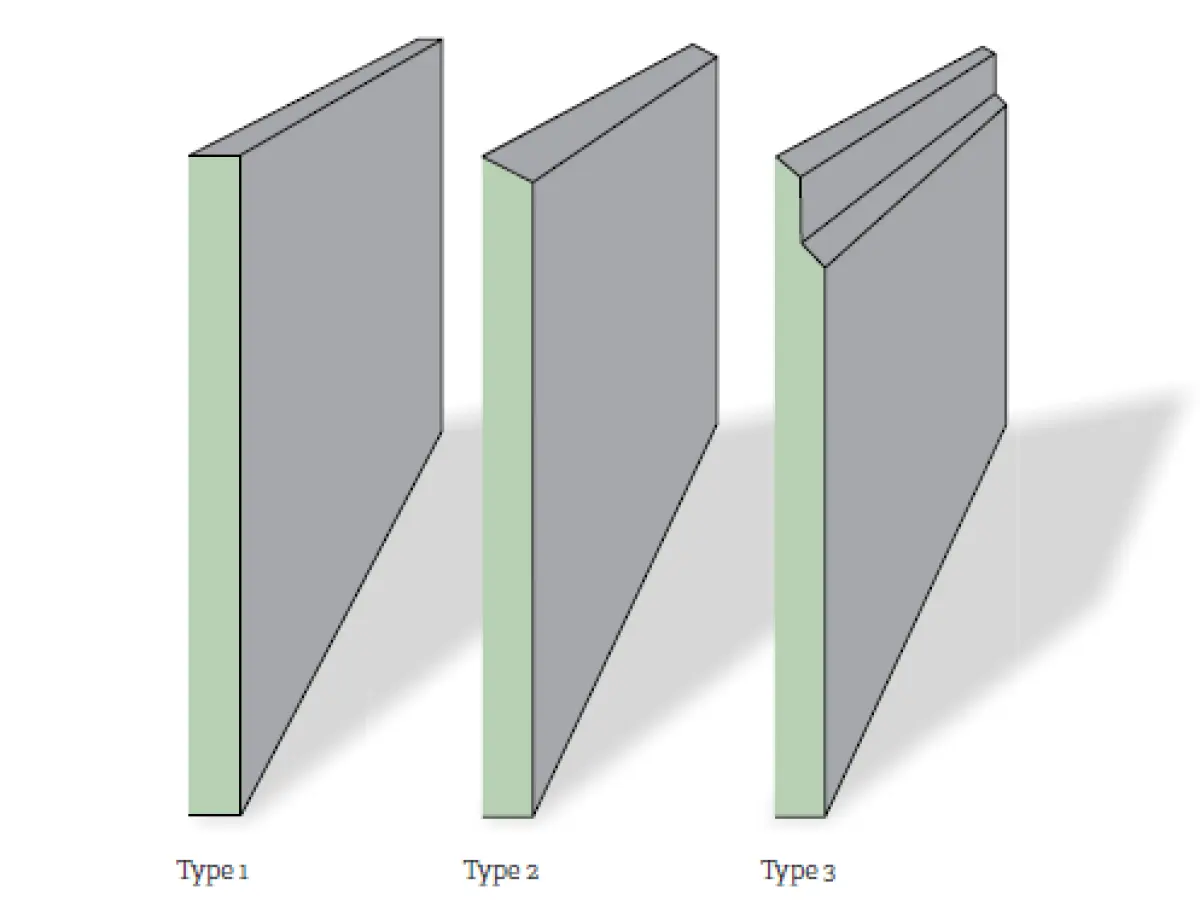
One means of insulating a concrete slab is to use vertical slab-edge insulation (Figure 3) as a significant amount of heat loss occurs through the slab edge.
Several proprietary edge insulation systems were discussed. BRANZ confirmed that R1.0 slab edge insulation was optimal and only minimal improvements in heat loss reduction are achieved by going higher. It is also critical to ensure that the insulation exterior finish is weathertight and durable and that the top edge of the insulation is protected from water entry.
More to come
BRANZ is working on responses to all outstanding questions raised at the workshops, and these will be shared in future issues of Build.
You can find more information on the BRANZ online H1 Hub