




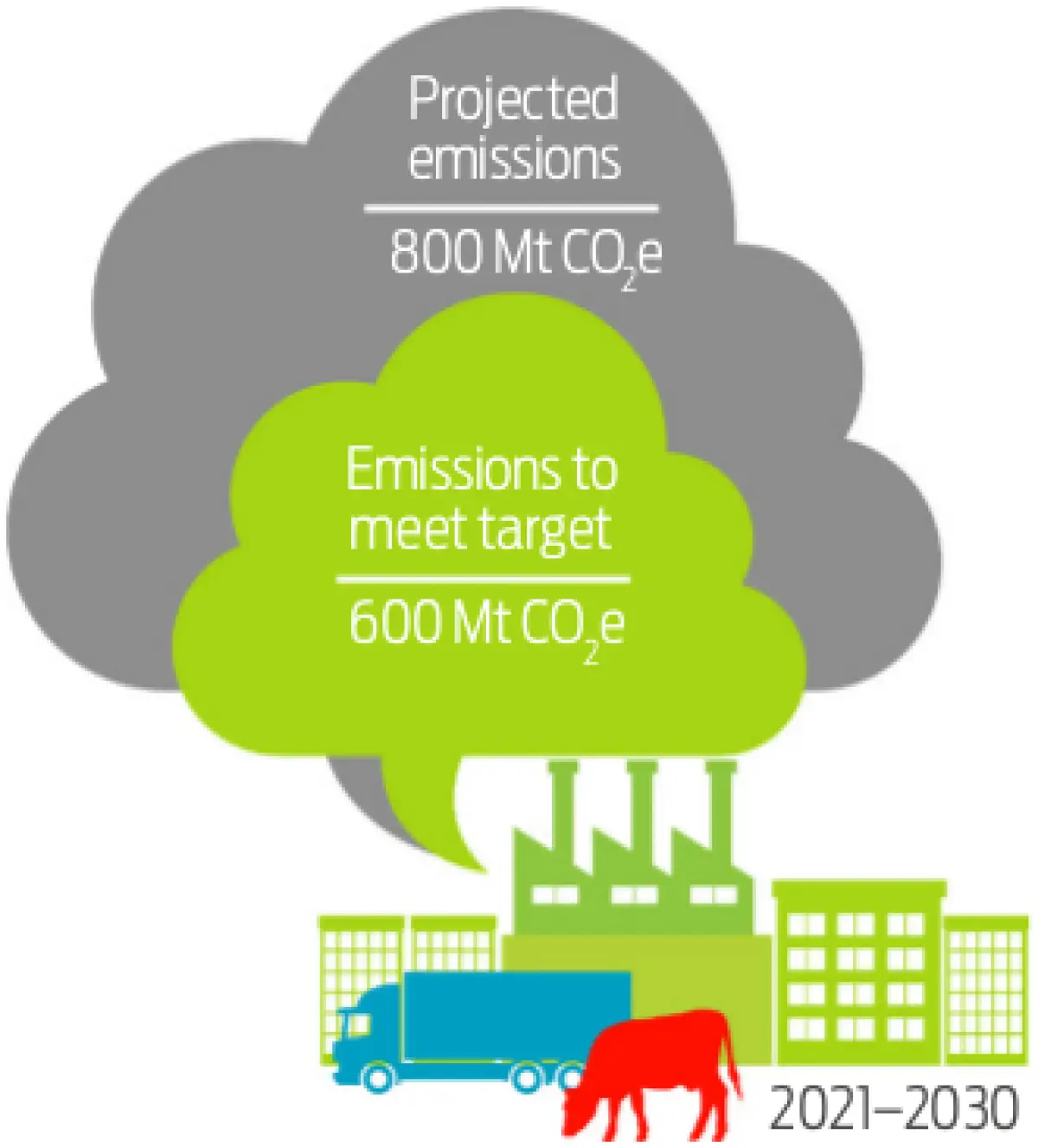
New Zealand has made a commitment as part of the Paris Agreement to play its part in holding the increase in global average temperatures to under 2°C. This entails limiting our total emissions between 2021–2030 to 600 million tonnes of carbon dioxide equivalent (Mt CO2e). Current projections are that we will overshoot this target by 200 Mt CO2e (see Figure 1).
Increased electrification as a solution
The recent Accelerated electrification report from the Interim Climate Change Committee (ICCC) examines how electrifying parts of the economy can assist with meeting this challenge.
Most of New Zealand’s electricity is already generated by renewable sources – about 85% – so unlike many countries, there is not huge scope for reducing emissions by moving away from fossil fuels for electricity generation.
Putting this in perspective, only 5% of our emissions come from electricity generation, but 30% come from transport and industrial heat and 40% from agriculture.
The ICCC report looks at transition to 100% renewable energy, the prospect of electrifying up to half of our vehicle fleet by 2035 and increasing the amount of process heat coming from electricity rather than coal or gas.
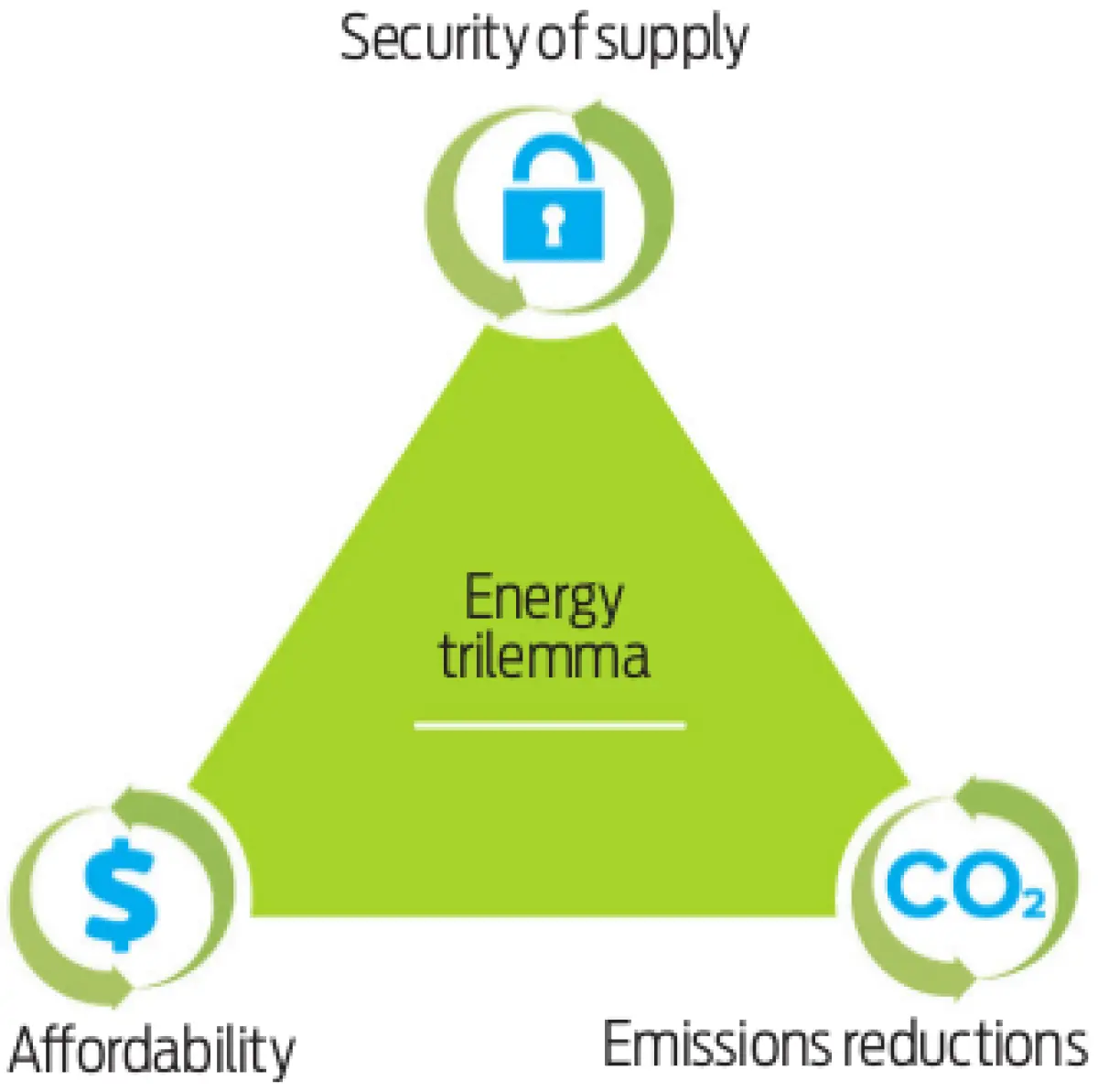
The concept of the energy trilemma runs throughout the study (see Figure 2). The trilemma represents three goals – we need to reduce emissions, but we also need to maintain security of supply and affordability for consumers. Switching to 100% renewable electricity, for example, reduces emissions but the consumer is likely to pay a higher price for that electricity because it has been generated in a more expensive way.
Where does household energy use fit?
The Productivity Commission’s inquiry into a low-emissions economy points out that, while New Zealand does have a very high amount of renewable electricity generation, we still have to rely on fossil fuels to meet peak demand.
Improved efficiency needed to reduce demand
Much of the electricity demand is generated by domestic energy use on winter mornings and evenings. In total, our residential buildings use about a third of all our electricity. Therefore, improving the energy efficiency and demand response of buildings – changing when they use electricity or reducing the electricity used – provides a valuable avenue for tempering electricity demand as other parts of the economy electrify.
In the short term, efficiency measures that reduce electricity demand during periods of peak demand will provide the greatest emissions reduction benefits.
But homes need to be warmer
We also know that our houses are not always warm, dry and healthy (see Energy poverty in New Zealand). Taking individual affordability out of the equation, heating all our houses to the required levels would also put further pressure on the energy system.
The question is, how can New Zealand households affordably create healthy home environments in ways that contribute to the transition to a net-zero carbon economy?
To answer this and plan for the future, we must first understand the present. How and why do households use energy?
HEEP improved understanding
BRANZ’s Household Energy End-use Project (HEEP) collected energy data from around 400 New Zealand homes from 1996–2005. It provided an understanding of how, where, when and why energy was used by measuring fuel use and recording indoor temperatures.
HEEP told us lots of things. It was the first study to recognise the magnitude of the energy provided by solid fuel in homes (Figure 3). From an average perspective, we could also see that household energy could be split roughly into thirds – one third for heating, one third for hot water and one third for everything else (Figure 4).
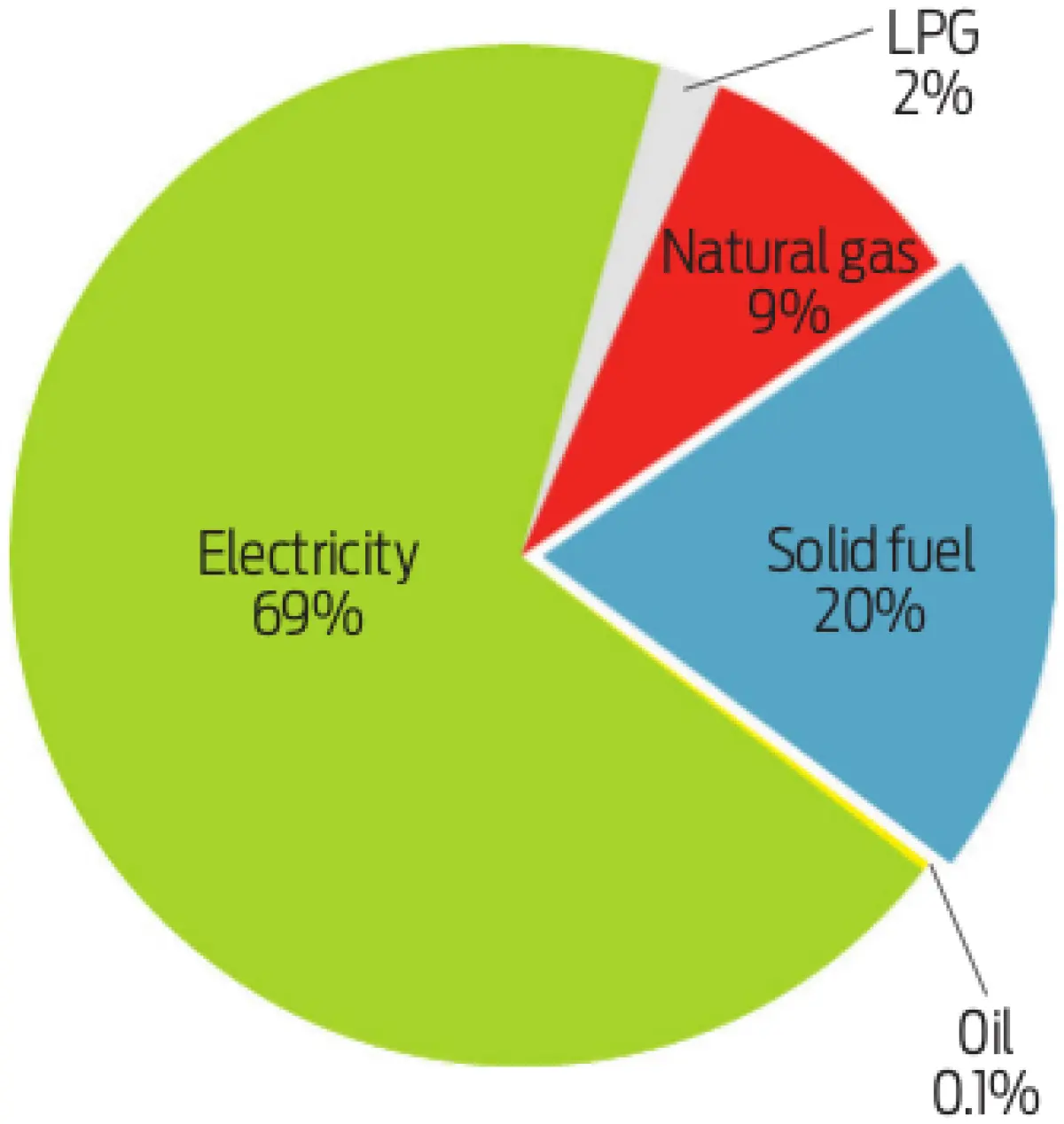
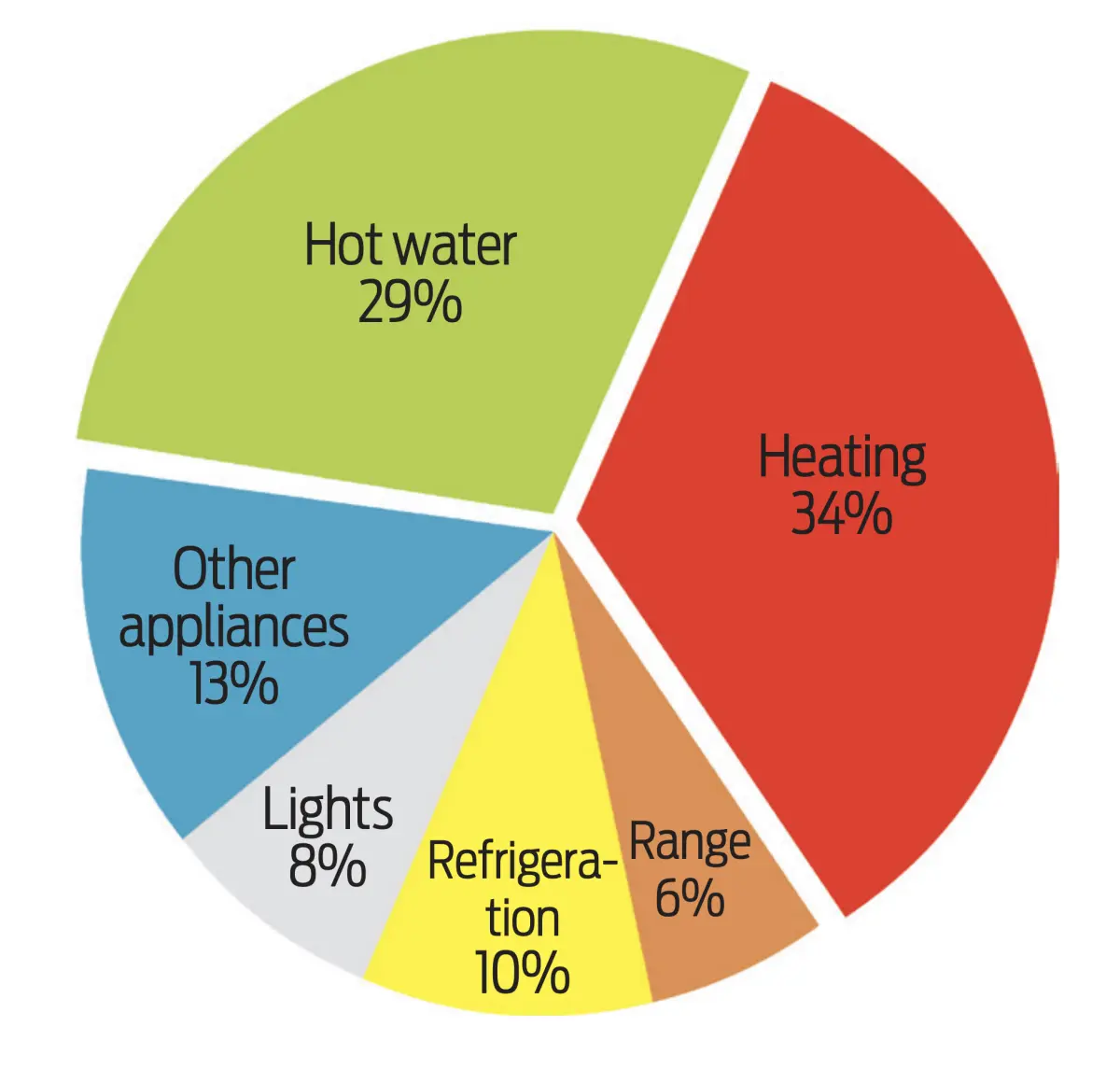
The ‘average house’ from HEEP used 11,410 kWh of energy – 7,800 kWh, from electricity, 1,060 kWh from gas, 240 kWh from LPG and 2,310 kWh from solid fuel. Importantly, HEEP also showed that the averages don’t tell the full story. At the end of HEEP, some reasonably tongue-in-cheek Laws of HEEP were proposed:
- No matter how bizarre the behaviour, somewhere, someone is doing it.
- There is no practical maximum to the number of appliances of a particular type in a house – somewhere, someone is collecting it.
- Any imaginable electrical appliance can be found in houses.
- There is no practical maximum or minimum energy consumption – everything from negative (on-site generation and net export) to the consumption of a small commercial building is possible in any size residential dwelling.
Plenty has changed since HEEP 1
It is worth considering what has changed since the HEEP data was collected. For example, heat pumps hardly featured at all in the HEEP sample. Data from the 2015 BRANZ House Condition Survey suggests that 45% of households now have heat pumps, and they will be increasingly used for summer-time cooling as well as heating.
Lighting technology has also changed significantly, and there have been widespread insulation retrofit schemes, changes to the Building Code, changes in population, changes in living costs and the list goes on.
Understanding how energy is used in homes today is therefore an important step to help New Zealand meet the challenges of fighting climate change and energy hardship and of improving the indoor environments provided by our housing stock.