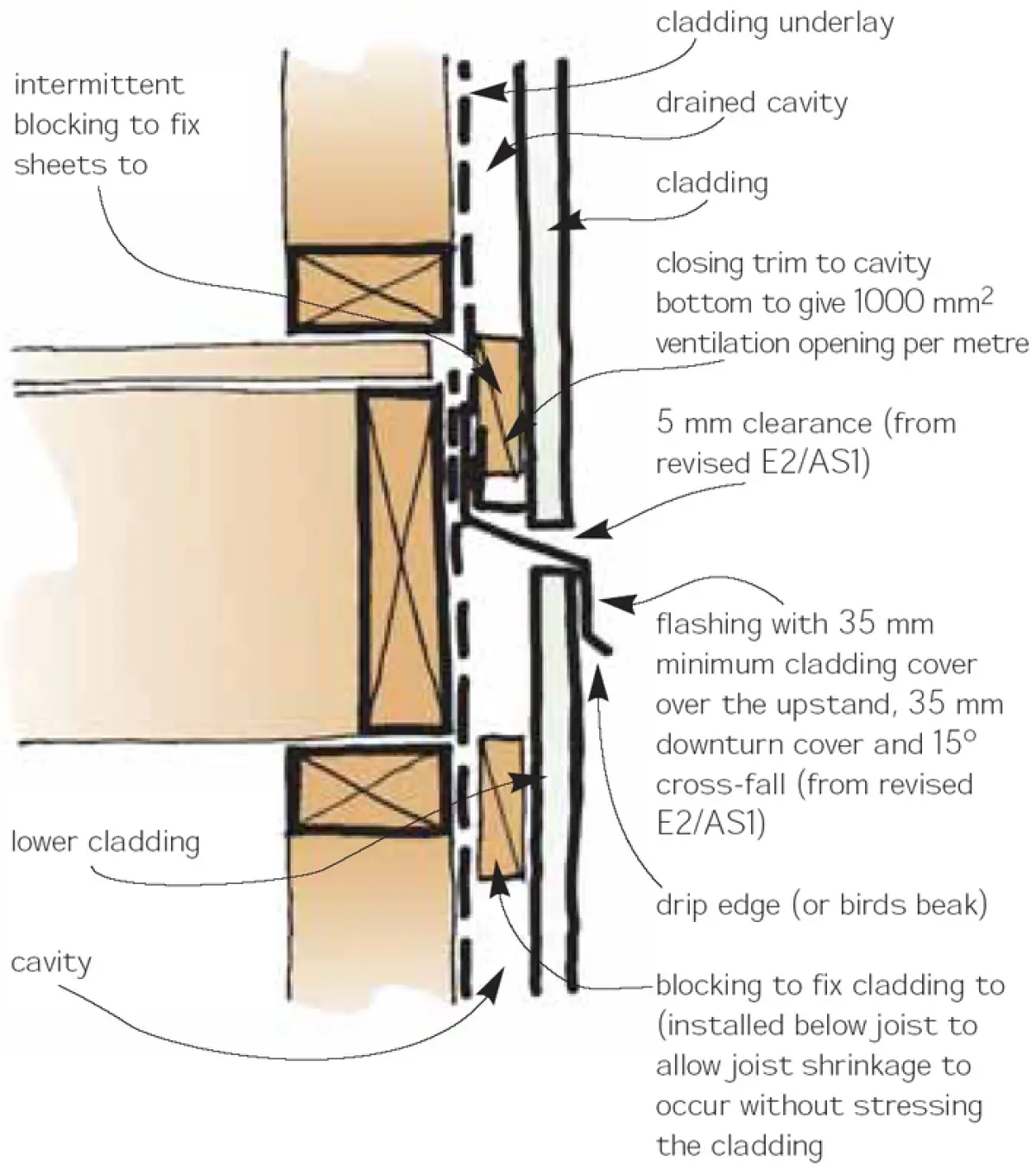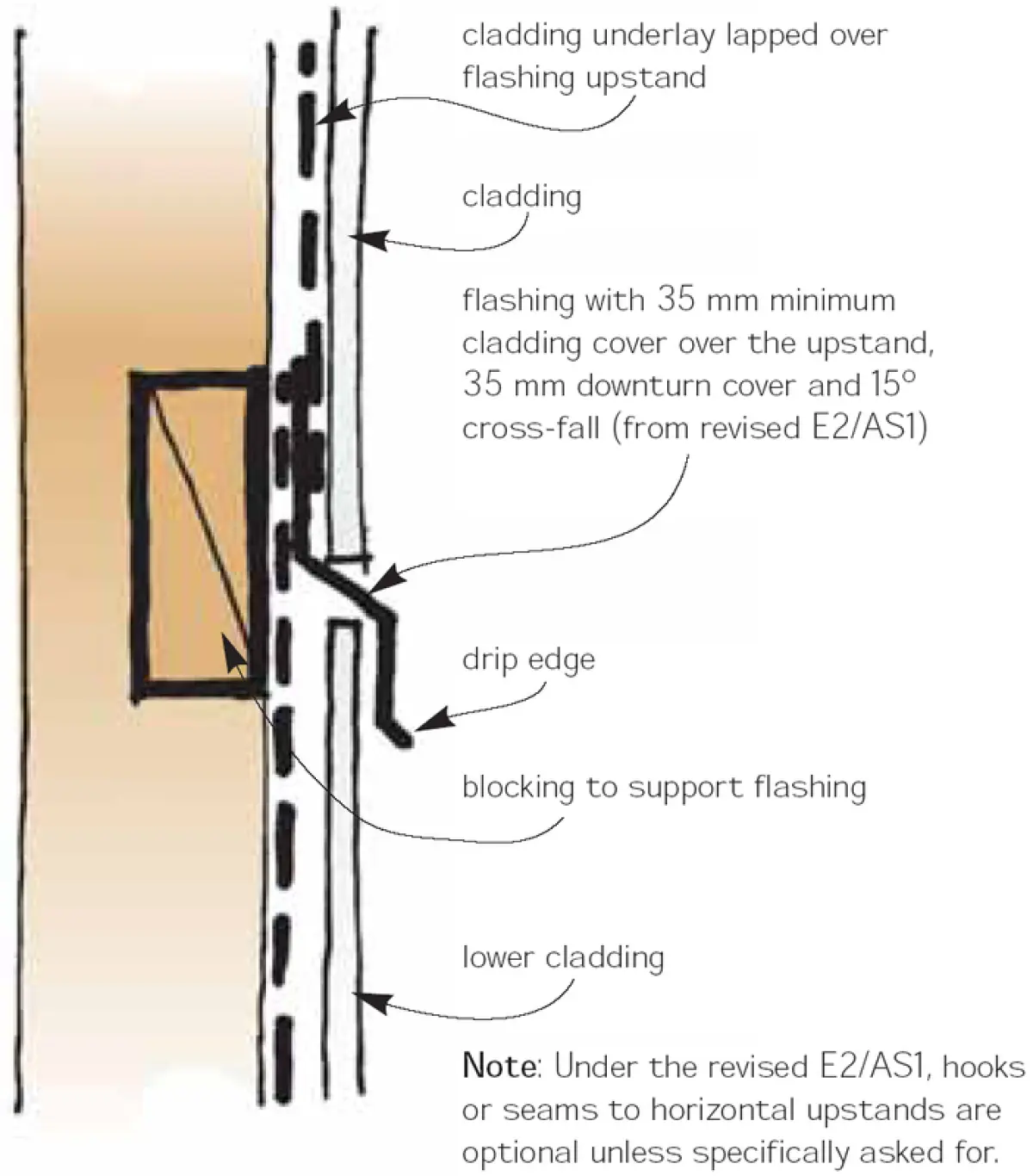


Horizontal joints are typically found in monolithic claddings where movement-control joints are needed, particularly at floor levels, or where sheet materials, such as plywood and fibre cement, have limits on length. For example, the maximum available length for plywood is 2.7 m.
The safest option for dealing with horizontal joints in these situations is to flash the joint with a purpose-made flashing in metal or plastic. Figures 1 and 2 show two situations where horizontal flashings are used.
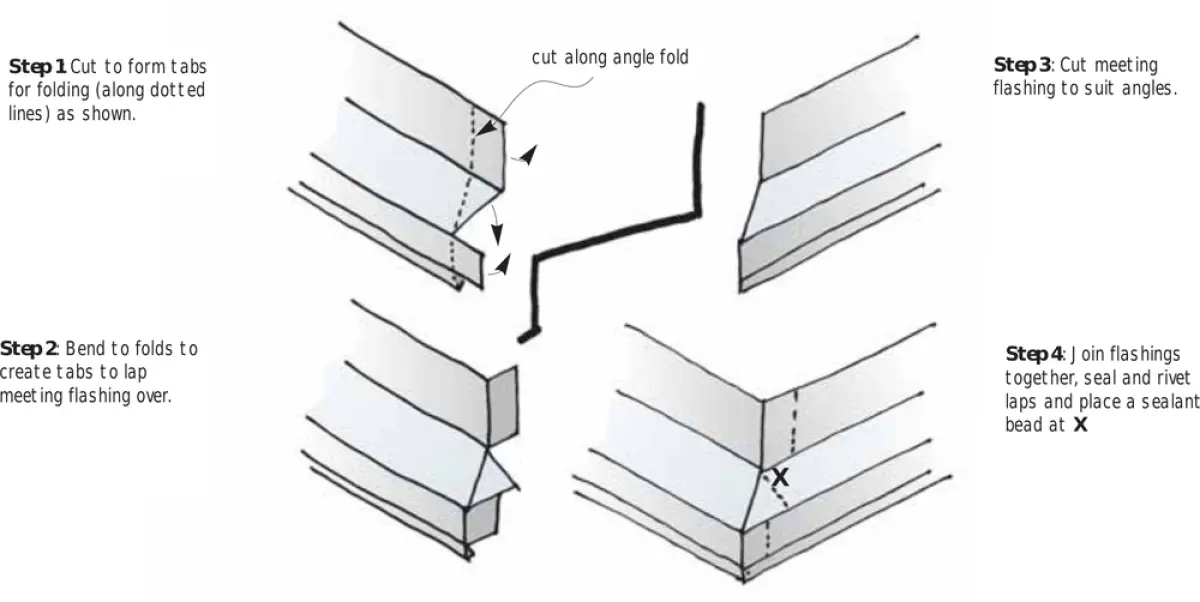
Critical to the performance of any horizontal flashing is how it is detailed at the building’s corners. If timber cover boards are not used then metal flashings can be folded (Figure 3) to provide the correct overlap to exclude water. For projects with many corners (say more than six), having an under-flashing or corner cap-flashing fabricated may prove economical and a safe alternative in the long term.
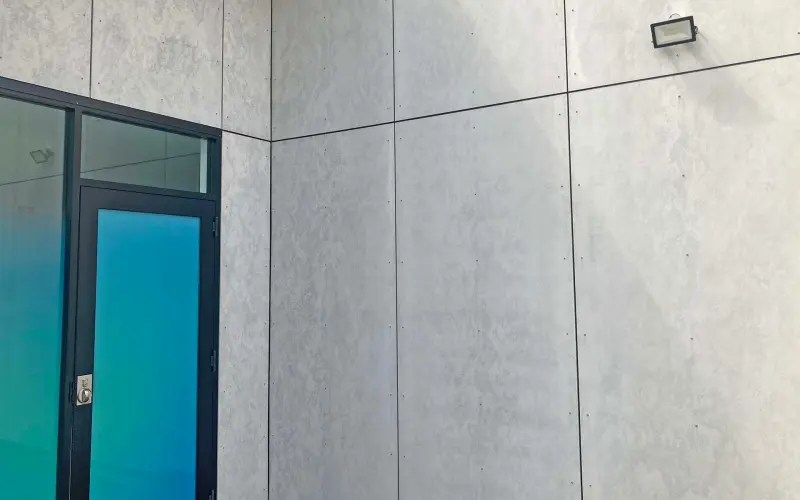
There are proprietary cladding systems that have expressed horizontal joints that are not flashed, but these systems must be installed strictly in accordance with the manufacturer’s instructions to ensure the horizontal joint will effectively exclude water. Building owners also need to be made aware of the maintenance requirements of these expressed joints.