



H1/AS1 Table 2.1.2.2B Minimum construction R-values for building elements that do not contain embedded heating systems establishes a minimum compliance requirement of construction R-value R2.0 for external walls across our six climate zones.
R-value is a measure of thermal resistance, expressed as m²K/W (square metre kelvins per watt), that defines the ability to resist the transfer of heat. Generally, this relates to the thickness, density and thermal conductivity of the insulation material.
R-values and thermal bridging
With exterior building walls, we work with two R-values. The component R-value is the thermal resistance of a specific component within the wall assembly (for example, the insulation material). The construction R-value is the thermal resistance of the built wall assembly, considering the R-value of each of the components.
Because of factors such as thermal bridging, the construction R-value could be higher or lower than the component R-value of the insulation used in the assembly.
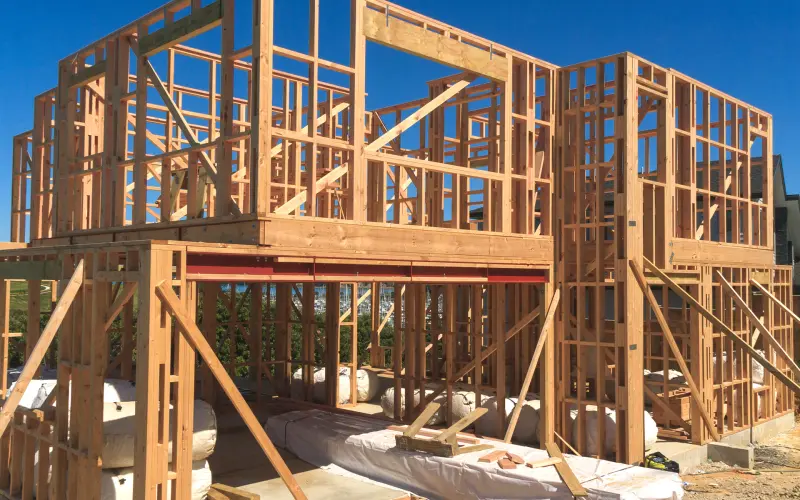
The exterior wall framing bridges the interior to the exterior. This thermal bridge creates a potential heat loss path so minimising the amount of framing in the exterior walls helps to reduce the extent of heat loss.
R2.0 the starting point
Whether you meet the Schedule method minimum of R2.0 in H1/AS1 or achieve a higher thermal performance in the exterior walls will depend on the construction of the exterior wall assembly.
The BRANZ House insulation guide is an excellent online tool for finding the construction R-value of a building assembly. By entering the components of the assembly into the tool, you can establish the component R-value of the insulation material needed to meet the required construction R-value.
Accurate installation essential
The installation of bulk blanket/segment insulation material such as wool, polyester or glass wool in the exterior wall framing is fundamental to attaining the required outcome. However, the construction R-value of the assembly can be dramatically reduced if installation is inaccurate.
Insulation must be cut to size accurately and installed so that it friction fits firmly in the cavity between timber studs and plates/nogs (with the framing moisture content at the required level) with no gaps at the edges.
Where the cavity is larger than the available size of the insulation and the insulation needs to be joined, it must be cut accurately to achieve a friction fit join with no gaps.
The insulation must not be compressed, folded or tucked. It should also be the same thickness as the framing cavity to ensure it does not sag within the cavity.
Insulate voids before flexible underlay
Some areas of exterior wall framing – particularly at junctions with internal walls and at external corners, will form framed voids on the outside face of the wall assembly. These voids should be insulated prior to the installation of the flexible wall underlay to ensure there are no uninsulated voids in the exterior wall framing.
Insulation must also be installed in a way that avoids forcing the flexible wall underlay across the drained and vented cavity as this may reduce the cavity’s drainage and drying capacity.
In extreme situations, it can also force the underlay onto the back of the exterior cladding, restricting ventilation within the cavity and gravity drainage down this secondary drainage plane.
Accurate taut installation of the underlay incorporating plastic tape on the exterior face will ensure that the underlay is held against the exterior face of the timber wall framing and therefore it won’t bulge across the drainage cavity.
A rigid wall underlay could be installed
A rigid wall underlay could also be specified. This forms a solid substrate on the exterior face of the wall framing, ensuring that the integrity of the drainage cavity is maintained once the insulation is installed.
NZS 4246:2016 Energy efficiency – Installing bulk thermal insulation in residential buildings provides guidance for the correct installation of insulation.