




A key aspect of any installation of ceramic tiles is allowing for movement that is likely to occur in the building structure and tile substrate. Movement from thermal expansion and contraction may also occur.
Four places to allow for movement
Allowance for movement needs to be provided:
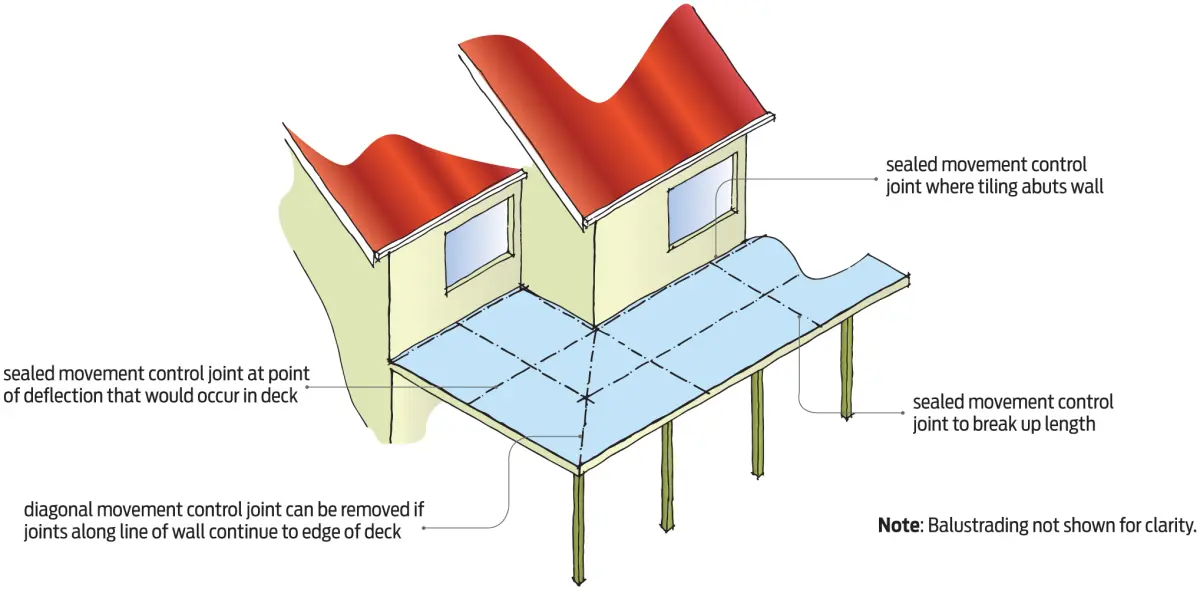
- around the perimeter of the tiled area where the tiles abut a rigid element
- where there are movement control joints in the substrate
- within the body of the tiled area
- where two tiled surfaces meet such as an internal corner or a floor/wall junction.
Finishing edge movement joints
One area where there is confusion is around the perimeter of an area of floor or deck tiling. So what are acceptable ways of finishing the edge movement joint?
Internal dry areas
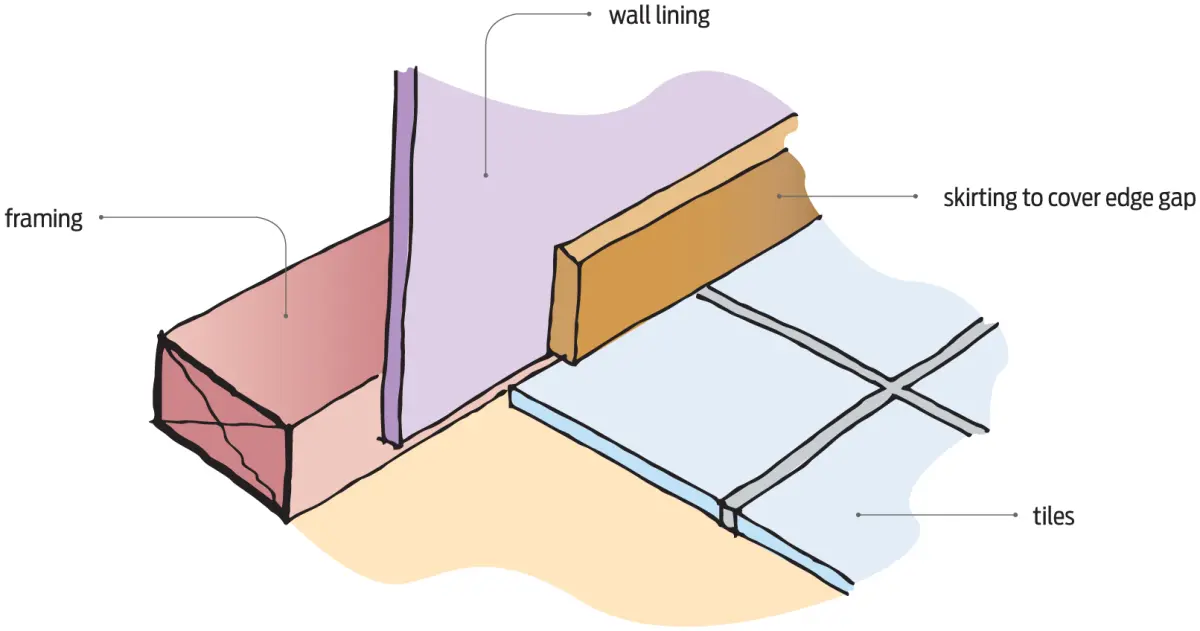
For internal dry areas, the movement allowance can simply be left as a gap. Typically, this gap is concealed by the skirting (see Figure 1).
Wet areas
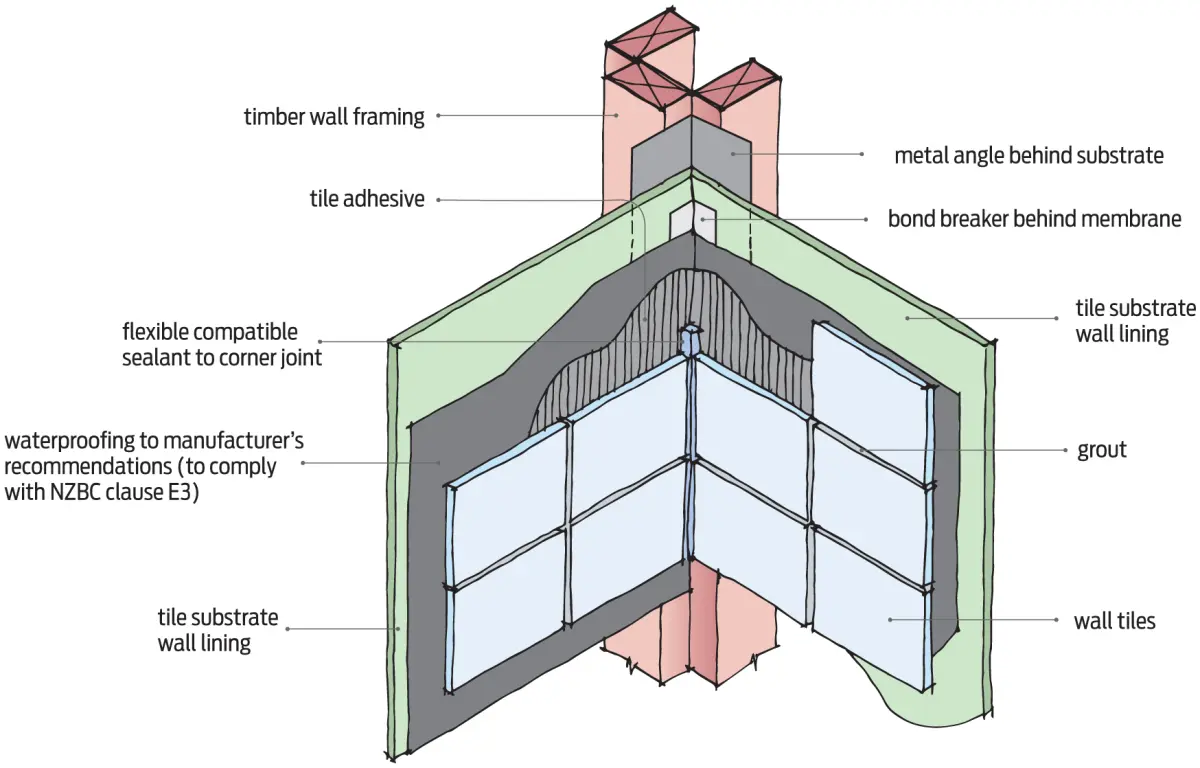
In wet areas where both horizontal and vertical surfaces are tiled, the joint between the two must be a sealant joint.
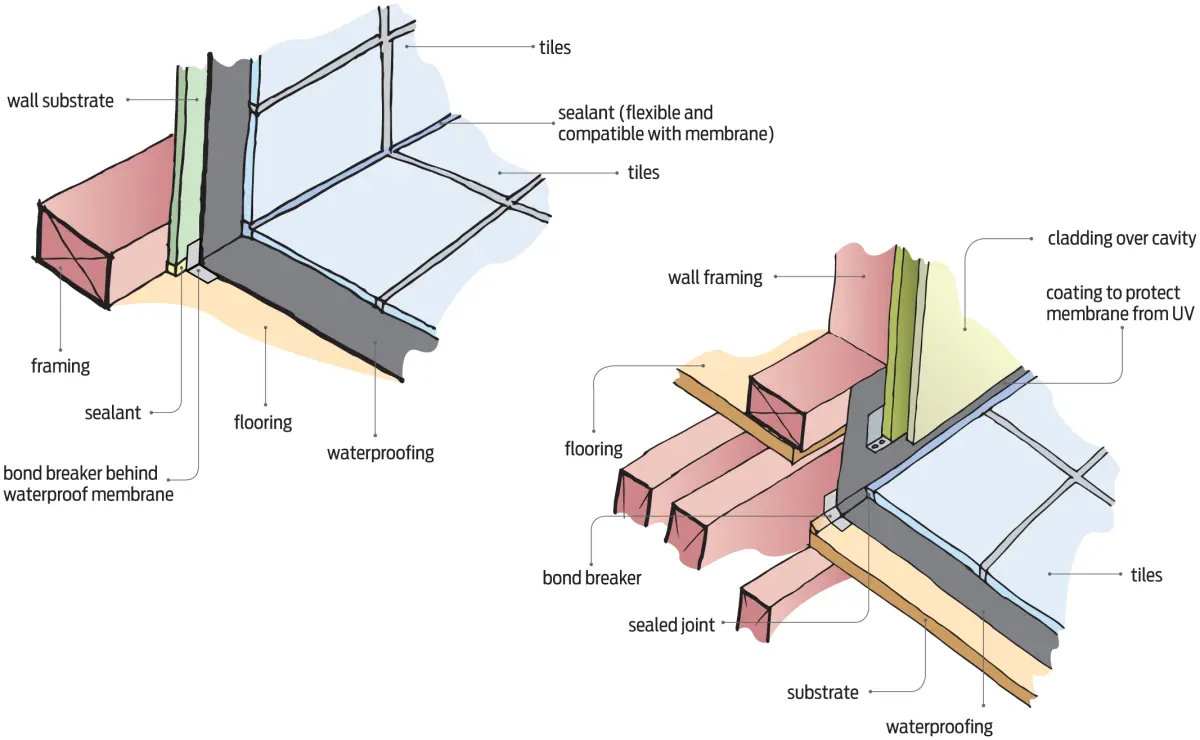
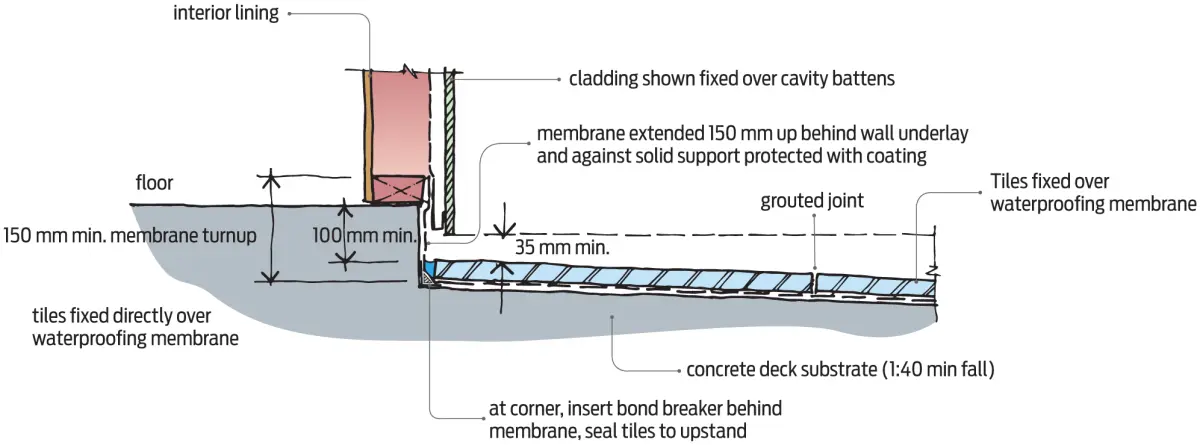
Where only the horizontal surface is tiled and there may be water, it is good practice to fill the joint with a sealant. Examples are bathroom floors or waterproof decks where the tiles are adhered to the deck membrane.
Filling the gap to the adjacent vertical element with sealant does three important things. It:
- allows the movement to occur
- prevents moisture being held and trapped at the junction
- stops the gap being filled with dirt, which will then trap moisture.
Figures 2 to 5 outline details for the finishing of movement control joints adjacent to a vertical surface.
E2/AS1 or alternative method?
Designs and installation that use E2/AS1 as a means of compliance with Building Code clause E2 External moisture do not permit direct adhesion of tiles to a waterproof deck membrane. This is because the membrane is not readily accessible for inspection and maintenance.
All E2/AS1 details show tiles with open joints supported on proprietary chairs.
Any proposal to directly adhere tiles to a waterproofing membrane must be submitted for consent as an alternative method.