


There are good scientific reasons for gaps being left in a cladding system. They let in air and let out water when located on the outer face of the cladding. However, there is also a good scientifically based reason why some gaps need to be sealed to stop air and water flow.
Some gaps need to be left open
Gaps that must be left open to allow gravity drainage, drying and pressure moderation are those located:
- at the base of all cavities either in a cavity closure or via open perpends in brick veneer – allow 1,000 mm² of clear opening for every metre of wall length
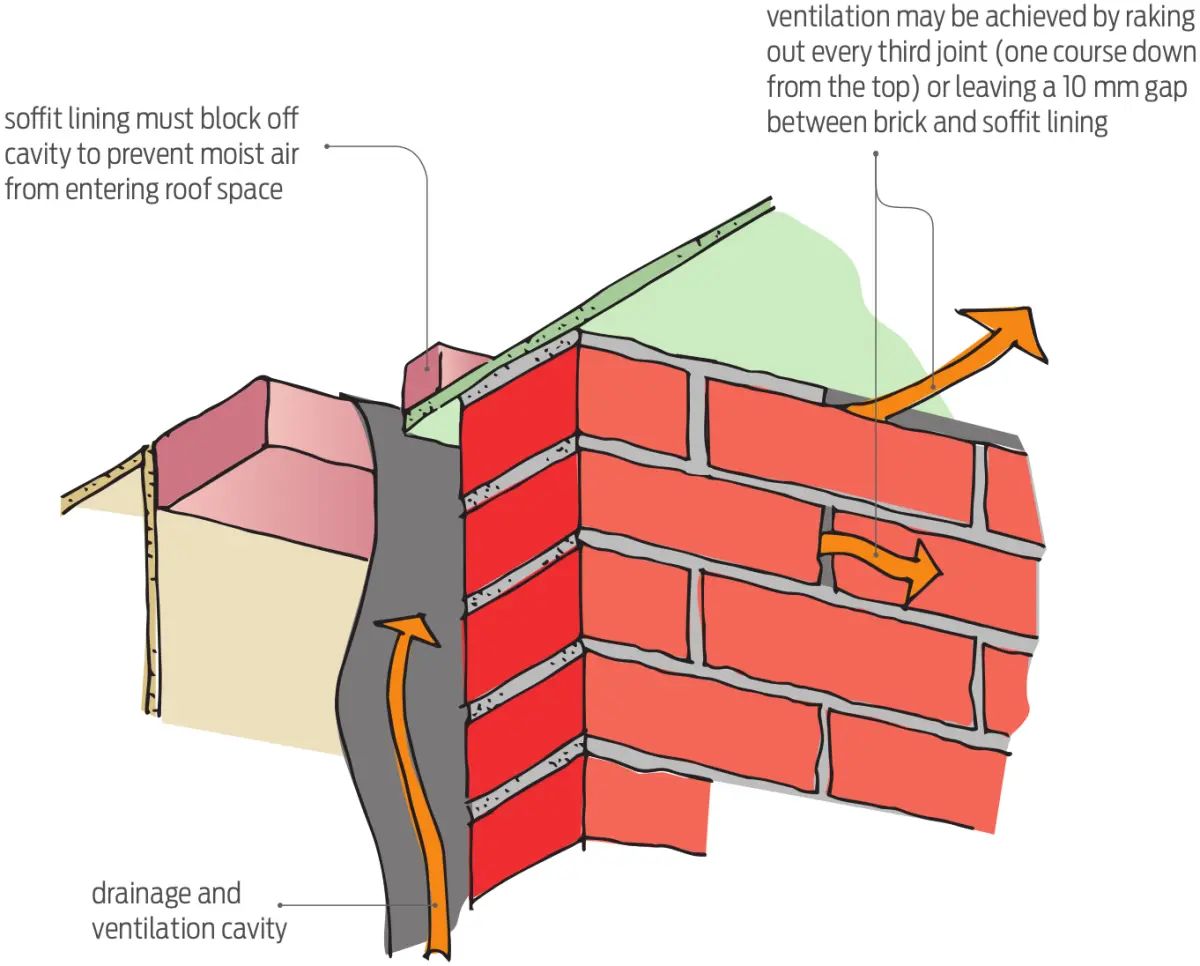
- at the top of brick veneer to allow for ventilation – either every third perpend (one course down) being left open (see Figure 1) or a 5 mm gap to a soffit
- under brick sills more than 2.4 m wide (open perpends)
- between the back of brick veneer and the face of wall underlay – 40 mm minimum and 75 mm maximum
- across the face of a sill tray flashing when windows are installed in direct-fixed cladding – 5 mm minimum
- in both direct-fixed and cavity claddings, between the base of the cladding and:
-
- a head flashing across openings – 5 mm minimum
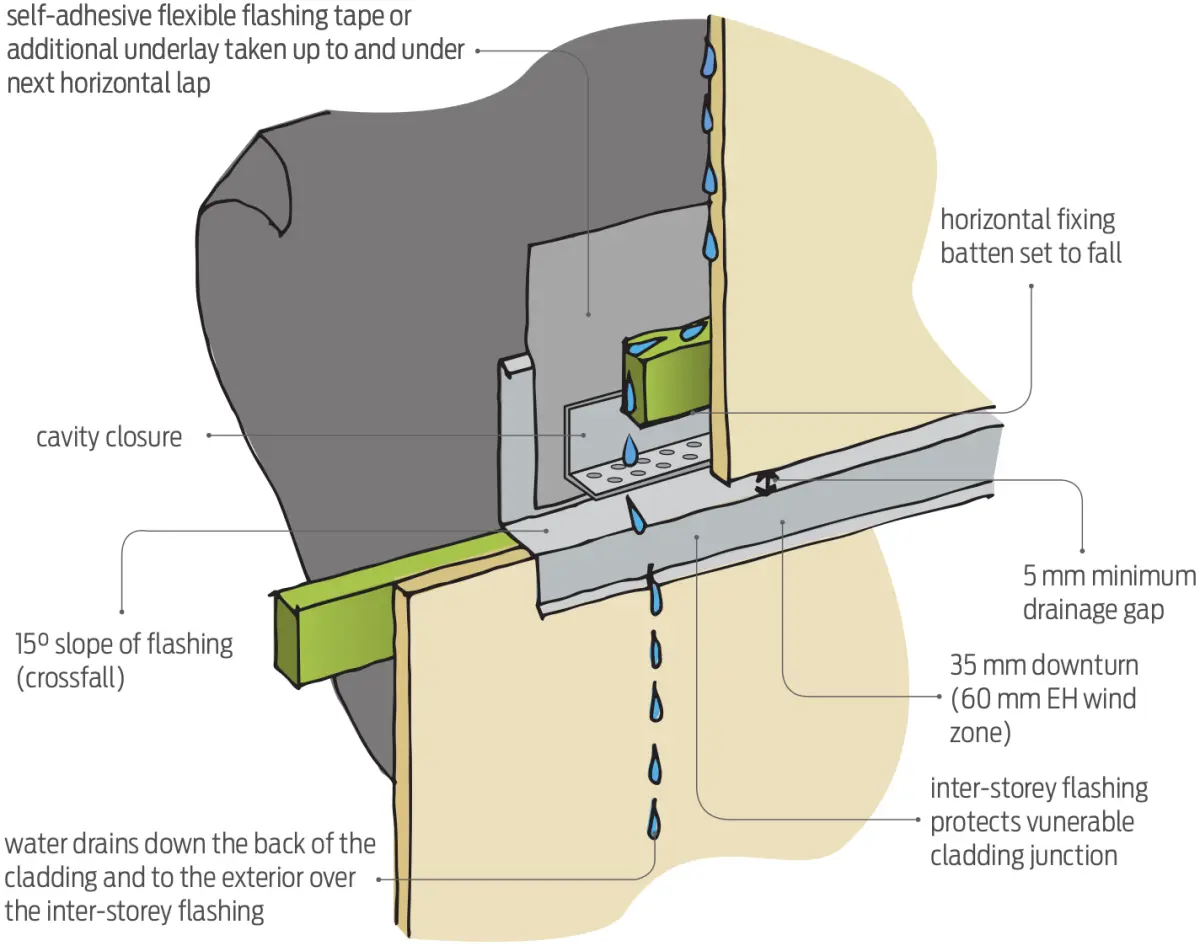
- a horizontal joint flashing – 5 mm (see Figure 2)
- between vertical solid timber cavity battens and horizontal fixing blocks – 50 mm.
Other gaps need to be sealed
Gaps that must be sealed are:
- movement control joints, as the sealed gap forms part of the weatherskin of the building
- exterior vertical joints in face-sealed panel claddings, as the sealed joint is critical to preventing water entry
- air seals around penetrations such as windows, doors and meter boxes to stop airflow across a wall (outside to inside) and also to allow pressure moderation to occur across the cladding system
- behind the jamb flanges of aluminium windows to stop water entry
- gaps around pipe and wiring penetrations through a wall underlay or air barrier to stop airflow.