




Age Concern New Zealand estimates that around 70,000 New Zealanders currently live with dementia – and that number is growing fast as our population ages. Dementia is an umbrella term used to describe a range of symptoms affecting memory, cognitive ability and communication.
Studies by global health organisations have found that housing design contributes significantly to the quality of life of older people living with dementia. However, in Aotearoa New Zealand, disability design typically focuses on designing or retrofitting for accessibility.
Indoor daylight environment matters
'That is only part of the issue', says Dr Alessandro Premier, Senior Lecturer at Auckland University’s School of Architecture and Planning and lead investigator for new Levy-funded research that will develop New Zealand- specific dementia-friendly design and retrofit guidelines.
‘The indoor daylight environment is very important for people living with dementia. It can affect their capacity to perceive space around them, their behaviour and their ability to sleep – all things that affect quality of life. This is an underinvestigated area.’
This year, a team of experienced researchers coordinated by Dr Premier will work directly with people living with dementia to address this gap. They will draw on the expertise of lighting specialists, advocacy bodies such as Alzheimers New Zealand and the New Zealand Dementia Foundation and specialists in housing design and retrofitting. They will be supported in this effort by the specialised resources of CCREATE-AGE – a centre established by Auckland University to improve the health and wellbeing of older people through co-created research.
‘Ultimately, we will co-develop and validate a set of practical design and retrofit guidelines that will address daylight controls such as window design and solar shading but also look at the nature of indoor surfaces – right down to the materials and surfaces used – which can influence the perception of light,’ Dr Premier explains.
People at the centre
A new people-centred post-occupancy evaluation (POE) methodology, pioneered by recent BRANZ Scholarship recipient Jane Waterhouse, will be key to the early phase of the project. Researchers will visit the homes of people in the early stages of dementia to obtain subjective and objective measurements of how the daylight environment affects their quality of life.
‘The POE phase is when we’ll learn a lot and obtain appropriate data and evidence on the daylight environment of these people,’ Dr Premier says. ‘With the help of CCREATE-AGE, we’ve been able to connect with potential participants who can provide informed consent and are comfortable engaging with us in this way.’
Closing the circle
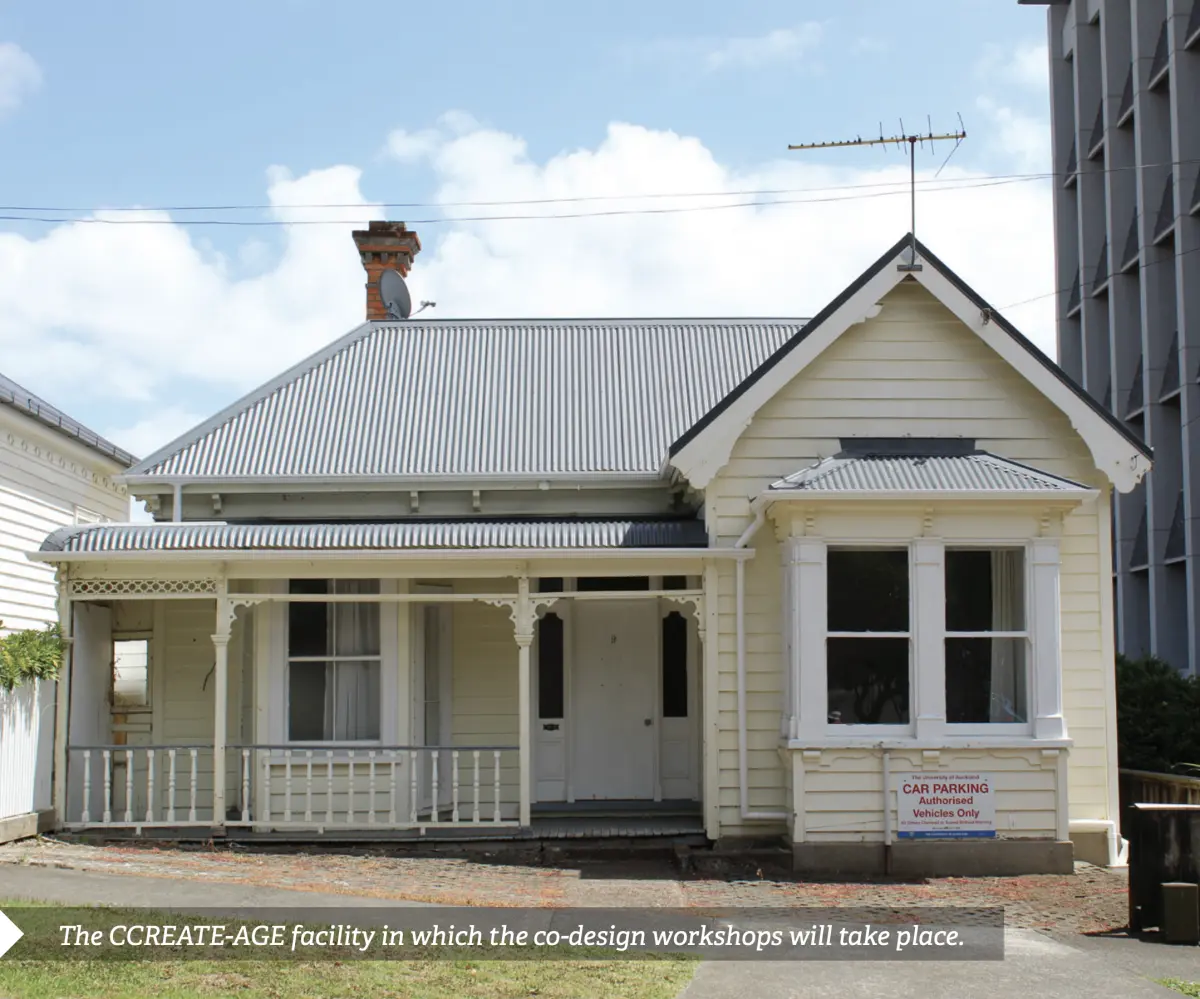
Next will come a focus group with all stakeholders to review findings and discuss interventions that might work in the New Zealand context. That will be followed by a series of co-design workshops, where participants in the POE phase and caregivers will gather at the CCREATE-AGE centre to experience and explore potential design solutions.
‘The CCREATE-AGE facility is a lovely, new, safe space in a recently retrofitted home in which people can sit quietly and work together on ideas that might help them in their own homes,’ says Dr Premier.
‘It’s extremely important that we close the circle by bringing the ideas and potential solutions back to the people living with dementia and their caregivers. They are the ultimate users of this knowledge.’
A draft set of design and retrofit guidelines will then be reviewed by all stakeholders before release – expected in August 2026.
‘We are excited about co-designing housing solutions for the daylit environment that are grounded in the everyday experiences of older New Zealanders living with dementia. It’s a critical step towards improving quality of life for a growing proportion of our population.’