



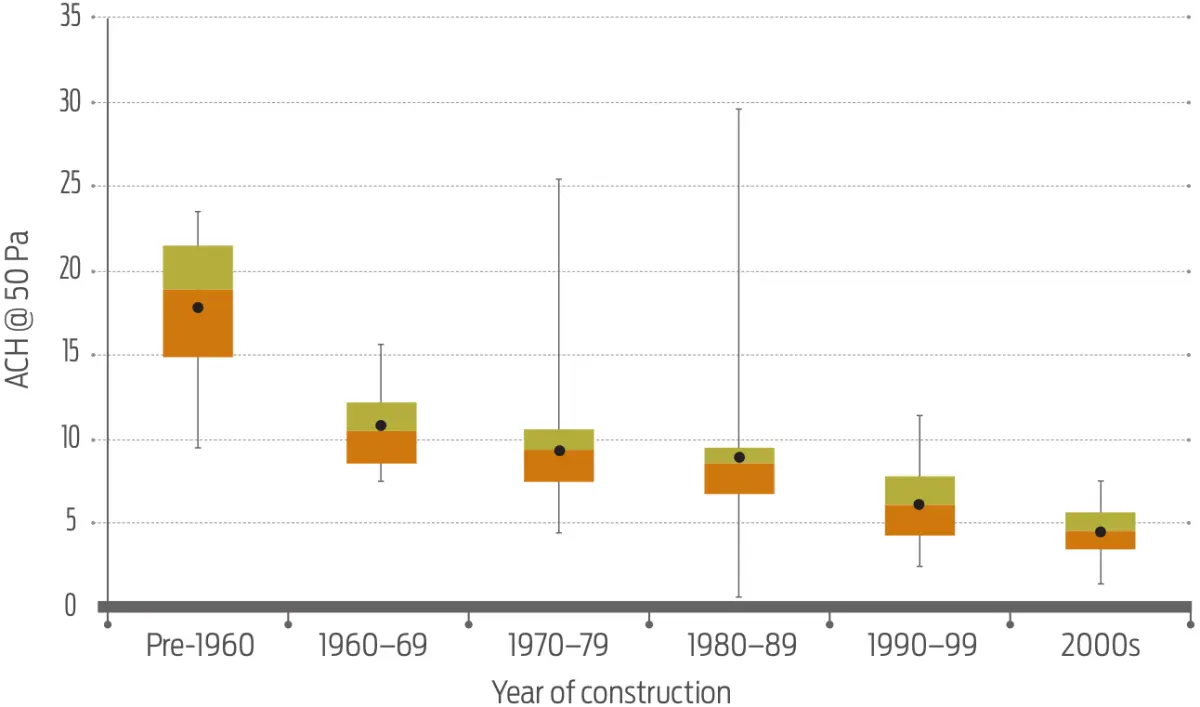
Our houses have become more airtight with the use of sheet linings for walls and ceilings and the wholesale use of aluminium joinery. Draughts that used to ventilate old villas and bungalows have been eliminated in new builds and renovated older buildings (see Figure 1).
Warmth, security and internal moisture
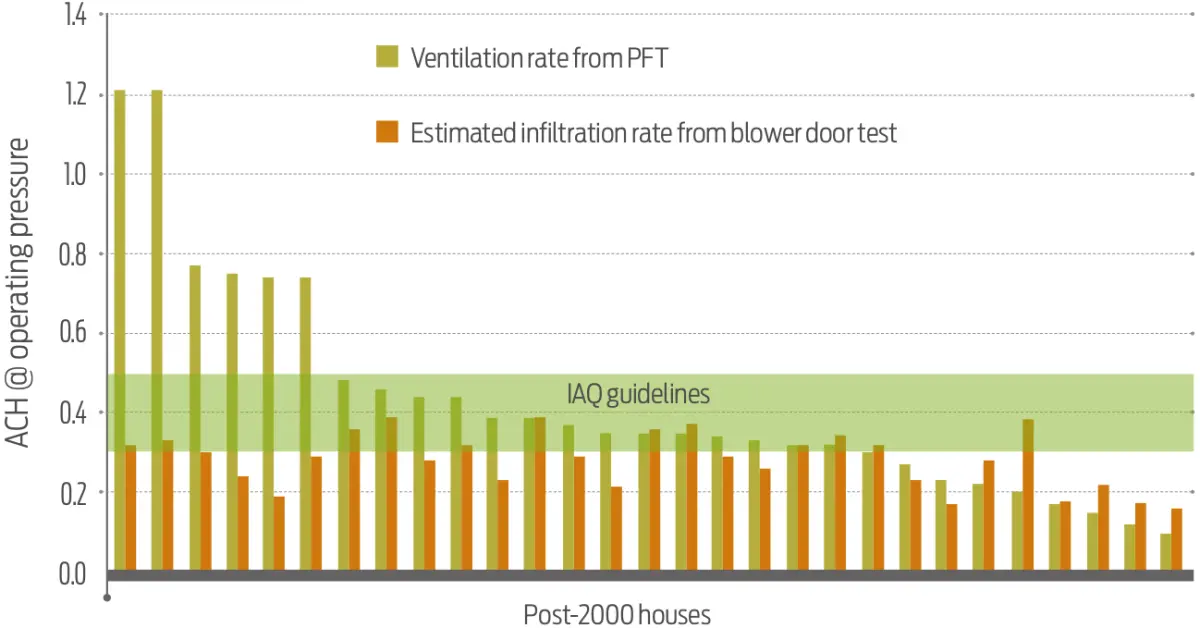
Homes are also becoming less well ventilated as homeowners aren’t opening windows and doors or operating extract fans to remove stale or moist air (see Figure 2). This may be for security reasons or to keep warm air inside.
New Zealand houses also tend to be underheated or heated only in the morning and evening when people are home. All these factors mean the numbers of new or renovated buildings with high internal moisture levels are growing.
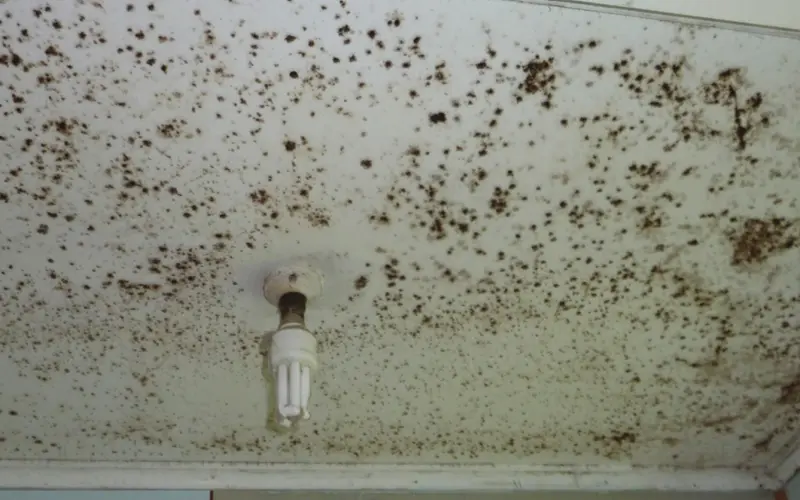
This moisture, combined with low levels of heating, is causing an increase in condensation and mould on internal surfaces in homes, as reported in consecutive BRANZ House Condition Surveys and in national census findings.
For example, in the 2023 Census, 16.5% of New Zealanders (693,894 people) said they lived in houses where mould was sometimes or always present.
Clear link to health problems
Health researchers have shown a very clear link between high internal moisture and cold internal environments causing asthma, respiratory tract issues, coughing, wheezing and breathing difficulties. Other associated problems are an increased prevalence of dust mites, bacteria, mustiness and unpleasant odours.
For optimum occupant comfort, the relative humidity is recommended to be in the 40–60% range and the air temperature 18–24°C.
Building Code sets requirements
Building Code clauses that give the performance requirements for the environments in internal spaces are:
- E3 Internal moisture – E3/AS1 specifies minimum levels of thermal resistance, ventilation and energy efficiency
- G4 Ventilation says that ventilation for household units must be provided by natural ventilation, mechanical ventilation or a combination of both
- H1 Energy efficiency – H1/AS1 and H1/VM specify the means of achieving minimum levels of thermal insulation.
Make ventilation easy
So what can we as designers and builders do, and what are the risks associated with each option?
At the design stage, how a building is ventilated is a key aspect of design. The easier we make ventilation for owners, the more likely it is to occur.
Educate about moisture sources
Provide clients or occupants information up front on how moisture can be generated in buildings. Give them real facts and figures on the moisture that may be present in a new build and likely to be generated by how they live in the house.
In older houses, moisture can come from the subfloor via gaps and cracks in a suspended timber floor. Around 40 L of moisture per day evaporates from the ground under an average 100 m² house. How much gets into the interior depends on the flooring and the amount of subfloor ventilation.
In new buildings, moisture evaporates from construction materials such as concrete, paint, plasterboard stopping compound and grout. For example, a newly laid concrete floor has around 120 L of water/m3 that needs to dry from the slab.
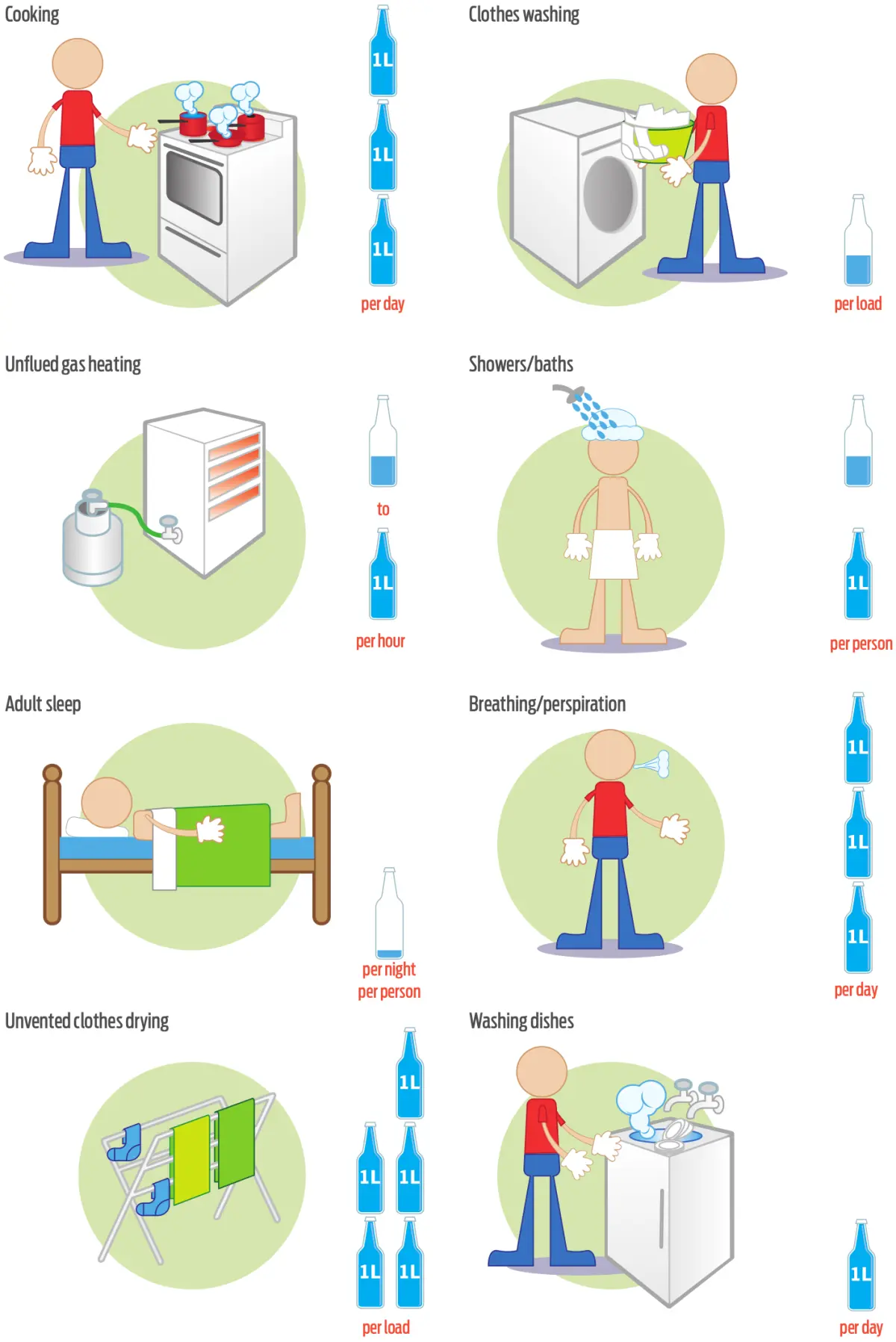
Other major sources of moisture include cooking, washing and drying clothes indoors (on a rack or with an unvented dryer), showering or bathing, washing dishes, leaks, plants and breathing/perspiration (see Figure 3).
Define a strategy
The hierarchy of moisture control is:
- eliminate
- manage at source
- ventilate:
- passive
- active
- temperature control:
- heating
- insulation.
Ventilation options
Occupants and clients need to understand the ventilation options since some require occupant input and others are automatic:
- Passive ventilators fitted to windows, these require some occupant interaction, and there is a risk they will be closed and remain closed.
- Opening windows – often occupants do not open windows, even when security stays or restrictors are fitted. Windows are also less likely to be opened in colder winter conditions when condensation risks are greater.
- Source-specific moist air extraction, such as rangehoods and bathroom extracts, must be vented to the outside and switched on by occupants.
- Source-specific extract systems where control is taken out of the occupants’ hands — for example, a humidistat control so that the unit operates only when needed. Fan systems that work when the lights are turned on can be inefficient as they run even when no moisture is present, sometimes for an extended time.
- Incorporating a ventilation system — under Building Code clause G4, the provisions for ventilation can only be satisfied where the system brings in fresh air from outside.
Additional measures to reduce impact
The impact of moisture can be minimised by:
- laying out living and sleeping spaces in the building so sun is maximised in winter and limited in summer to prevent overheating
- maximising the thermal performance of the building by installing higher levels of insulation
- minimising thermal bridging and specifying the highest-performing window frames and glazing that the client can afford
- incorporating effective passive heating with thermal mass
- designing in efficient heating systems such as heat pumps and wood pellet burners so that surfaces and the air in the building are kept warm. To do this, heating should be designed to provide an even temperature during the whole day.
Pros and cons of ventilation systems
An active ventilation system:
- can target specific areas and remove moisture at source
- has no excessive ventilation
- has controllable airflow and can be automated
- can be selected to provide filtering, heating, cleaning and drying of incoming air
- is independent of outdoor conditions
- requires energy to run
- may be noisy
- may be expensive
- will require maintenance
- does not compromise security.
A passive ventilation system:
- gives free and continuous operation
- may have limited control
- will not always be practical
- will rely on the occupant to operate and control
- will depend on exterior conditions (wind) and the building design for how much ventilation is provided
- may have a negative effect on heating
- can be secure.