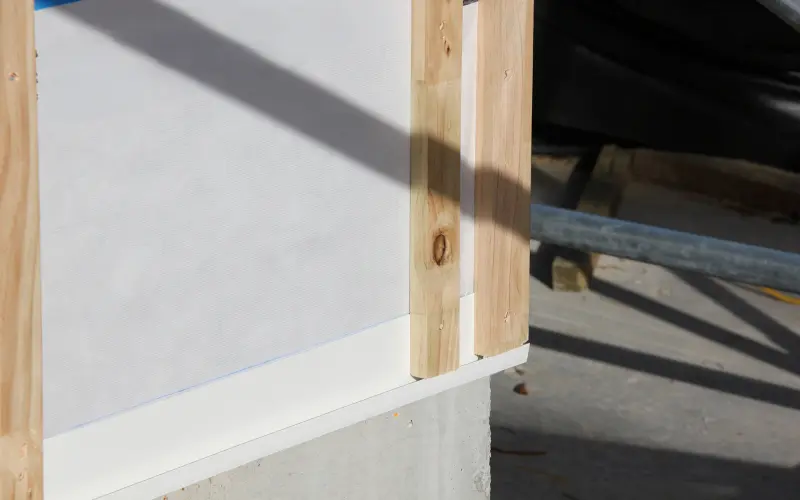


Before 2005, direct-fixed claddings were top dog. However, things changed when we realised the extent of problems with water getting in behind claddings and not being able to get out or dry out. Now, almost all lightweight cladding systems for houses are installed over a cavity.
Introducing cavities
Initially, the introduction of cavities in E2/AS1 was based on adding a margin of safety to the installation of claddings. In effect, the cavity was a space that separated the back of the cladding from the face of the wall underlay.
The premise was that, if some water got in, it would be able to drain down the cavity more easily. The gap created, together with an opening at the bottom, would allow some air circulation to dry out any remaining moisture.
Why they work
Over the following decade, BRANZ put significant resources into proving, through research, that a nominal 20 mm cavity with bottom venting cavities does actually work. In reality, research has shown they work better than was first thought:
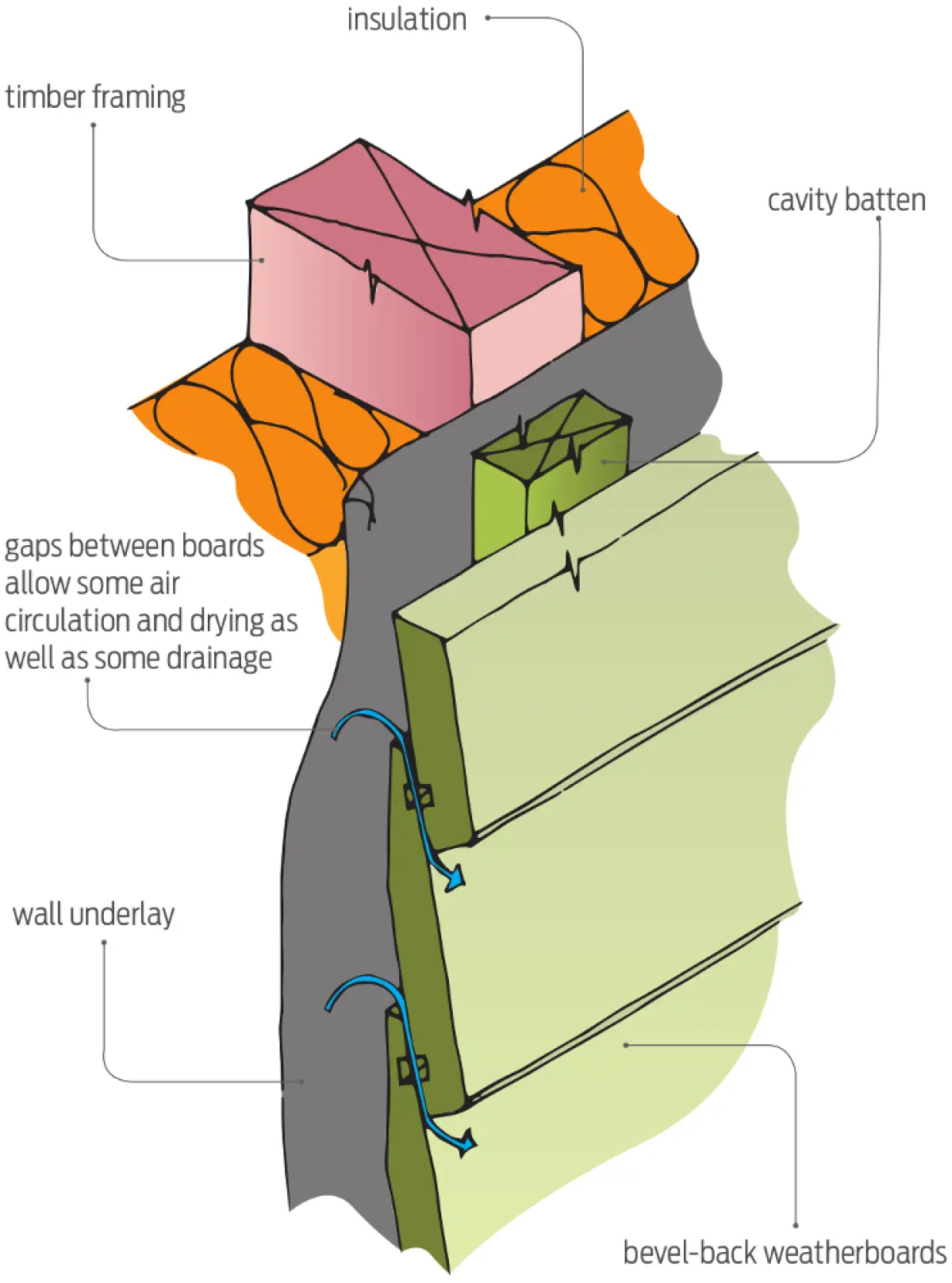
- For claddings that are considered well vented, such as bevel-back timber weatherboards, a significant amount of air gets in through the laps, which increases the potential rate of drying (see Figure 1).
- For poorly vented claddings, such as sheet materials, there is sufficient drying from the openings at the base of the cavity and above windows and doors. The amount of air movement is also influenced by wind pressures and external temperatures. For example, variations in temperature across a wall surface due to eaves shading part of the wall will induce air movement within the cavity.
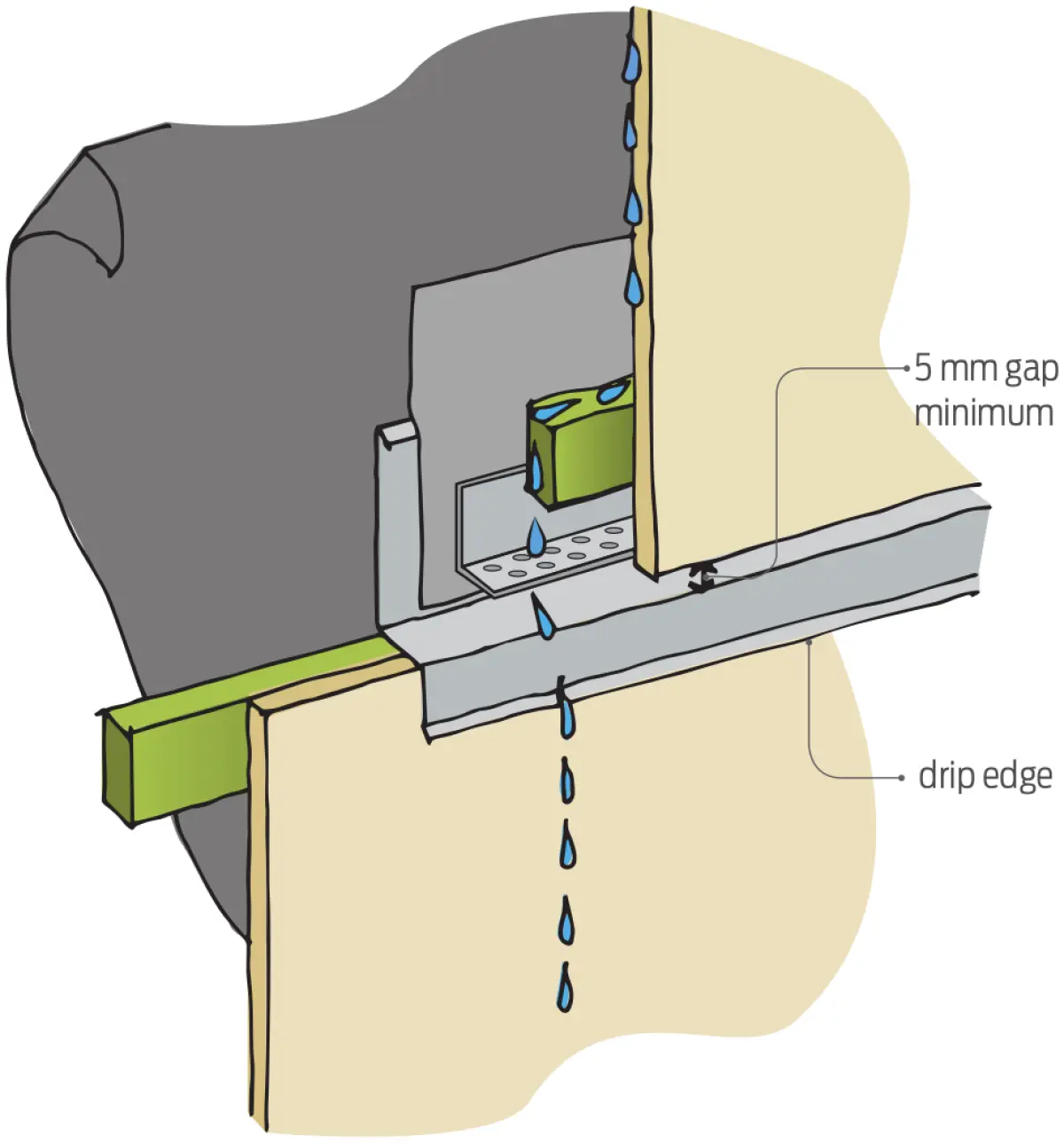
- Surface tension will hold water droplets on the back of a cladding, and they then migrate down under gravity to drain at a lapped cladding joint, a flashing (see Figure 2) or the bottom.
- The air pressure on the back of the cladding is the same as that on the face, provided the wall construction includes air barriers and air seals. This stops water being carried further into the framing.
Drying rates vary but sufficient
Drying rates are greater in summer in all localities. There is a 2:1 difference between cavity drying on north and south walls and a similar difference between summer and winter.
In comparison, differences due to the building location are comparatively small. However, the research has shown that sufficient drying is provided during winter even on the south face of a building.
Cavities do not significantly increase the drying rate for wet framing that has been closed in – the wall underlay and bulk insulation restricts the drying of moisture within the framing cavities.
Some design pointers
A nominal 20 mm cavity with bottom venting cavities works. However, it is important that:
- there are specifically designed openings in the building envelope to the exterior of the wall cladding
- an effective drainage path (gap) is maintained down the face of the wall underlay so any water that bridges the cavity can also drain.
- insulation or poorly installed flexible underlay does not result in the flexible underlay bridging the cavity.