

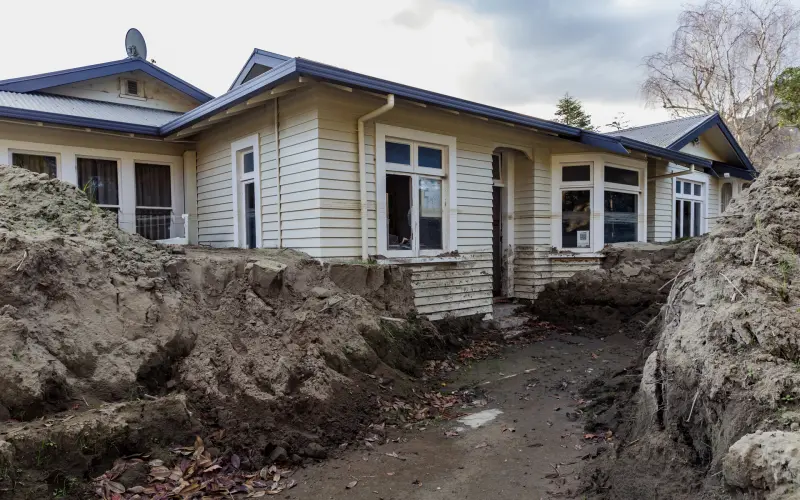


Following Cyclone Gabrielle and the Auckland Anniversary floods in 2023, BRANZ Bulletin BU666 Restoring a home after flood damage (link below) proved invaluable for thousands of households facing a major clean-up and repairs. The bulletin provides comprehensive step-by-step guidance on what to consider and how to proceed after a home has been flooded.
Safety first
First and foremost, the bulletin stresses the importance of ensuring the safety of anyone accessing and working at the site. Access must be avoided altogether until Civil Defence Emergency Management personnel have assessed whether the building is safe to enter. The bulletin clearly explains the system of coloured placards (red, yellow and white ‘stickers’) and what they mean for owners and others wishing to enter damaged buildings.
The dangers posed by a flooded property aren’t always obvious. The bulletin explains that, beyond any clearly apparent physical dangers, there’s the risk of additional flooding or land slippage and the possibility of hazards inside like exposed electrical wires, leaking gas and contaminated items.
No cutting corners on drying out
Once safe entry is secured, thorough drying out is the priority before any remedial work begins. Often the temptation is to crack on with major repairs but thorough drying out will prevent longer-term damage and ongoing problems from mould or timber decay.
Proper drying out is a complex process and could take months – particularly in winter. The bulletin lists comprehensive steps to take to ensure no nook or cranny that could be harbouring moisture is forgotten – including within plasterboard and insulation, behind skirting boards and under baths and shower trays.
There’s special advice for cleaning inside – including basements and subfloor spaces, which might require the use of pumps or drainage channels. There are also tips for cleaning up outside. For example, the bulletin explains how to clean brick and blockwork properly and describes the special attention that must be given to monolithic cladding.
The bulletin also acknowledges that opportunity can often follow adversity. When older homes are damaged by flooding, there might be an opportunity to build back smarter – for example, by applying a brush-on preservative to structural framing timber so it meets the latest Building Code requirements.
There’s also a list of things to check before beginning redecoration.
Laws, regulations and special powers
A third soon-to-be-released BRANZ bulletin – BU702 Construction work after an emergency – complements the other resilience-themed bulletins with a summary of the various laws and regulations that govern what and how construction work can proceed after a natural disaster.
The bulletin looks at the extraordinary laws and powers that can be enacted after an emergency and how they affect building owners and building practitioners commissioned to undertake repairs. It also includes information about urgent works that might be required to prevent injury or death and works that might be exempt from requiring a building consent in the wake of a natural disaster.
Also discussed are the dos and don’ts of dealing with insurance companies following an emergency. It might seem like a low priority at the time, but keeping a full and accurate record of the condition of the property and all actions taken is key.