



Claddings and underlays
1 All EIFS and flush-finished fibre-cement sheet claddings must be fixed over a cavity regardless of the risk matrix score.
2 Buildings in the extra high wind zone require wall claddings to be installed on drained cavities, a rigid wall underlay with an overlay of flexible wall underlay and an additional 25 mm height to flashing upstands, with hooks or hems.
3 The term ‘wall underlay’ replaces the previously used term ‘building paper’ and covers kraft building paper, synthetic wall wraps and non-proprietary rigid sheathing.
4 Masonry veneer information is now in E2/AS1 (not NZS 3604:2011) and has changed from what was in NZS 3604:1999.
5 Decorative elements applied to flush-finished cladding systems must be provided with a 10° slope to the top surface and a drip edge. The cladding must be sealed before decorative elements are attached.
6 Sheet plywood and fibre-cement claddings can only be direct-fixed – up to weathertightness risk score 6 – if horizontal joints are flashed and vertical joints have a cover batten or H jointer.
7 Sill trays in direct-fix claddings can have a flat base but require an 8 mm minimum upstand at the back. The detail at the trimming stud is also modified to incorporate additional vertical packers.
Roofs and eave flashings
8 The minimum pitch of membrane roofs is increased to 2° (1:30). However, BRANZ still recommends a minimum pitch of 3° to ensure positive drainage over the life of the building.
9 Roof underlay is required for masonry tiles in very high and extra high wind zones.
10 Roof underlay must now be run horizontally on roof slopes below 10°.
11 Minimum roof valley widths must be designed to take account of valley slope and catchment area.
12* Eaves flashings are required for all metal roofs that:
• are under 10°, and
• have a soffit width of 100 mm or less, and
• are located in very high and extra high wind zones.
Gutters
13 Hidden gutters must have a minimum slope of 8°.
14 Membrane gutters must be laid without cross seams, and metal gutters must have welded joints.
15 The metal tile gutter overhang is reduced to 40 mm. For masonry tiles, a 50 mm minimum overhang is specified.
Windows and doors
16 For all cavity claddings, a sill support bar must be installed on all doors and windows wider than 600 mm.
17 The fixing of windows into the opening is now specified – number, spacing and type of fixing.
18 A seal is required between the top window flange and the underside of the head flashings in very high and extra high wind zones.
19 A factory-installed corner soaker is required at the jamb/sill junction or all aluminium windows and doors.
20 E2/AS1 now requires a minimum threshold height of 100 mm rather than requiring a step-down onto a membrane deck at doorways.
21 Bifolding and sliding doors are now included.
Parapets, balconies and decks
22 The minimum pitch of membrane decks is increased to 1.5° (1:40).
23 Claddings to parapet and enclosed balcony walls must be installed over a drained and vented cavity.
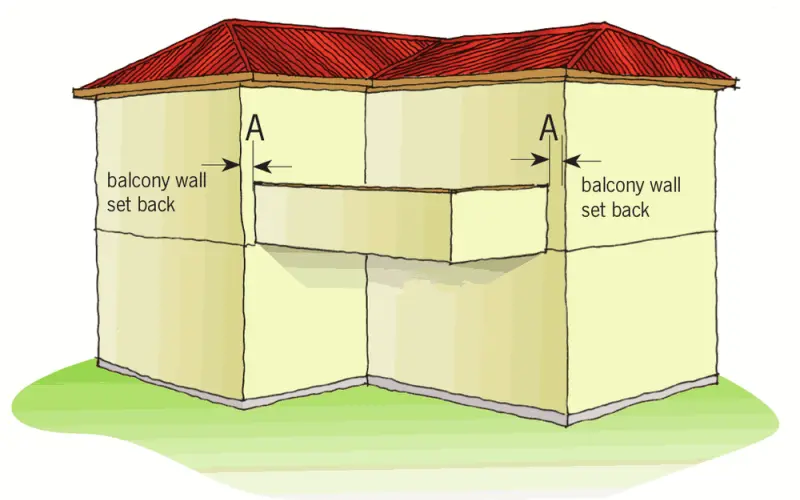
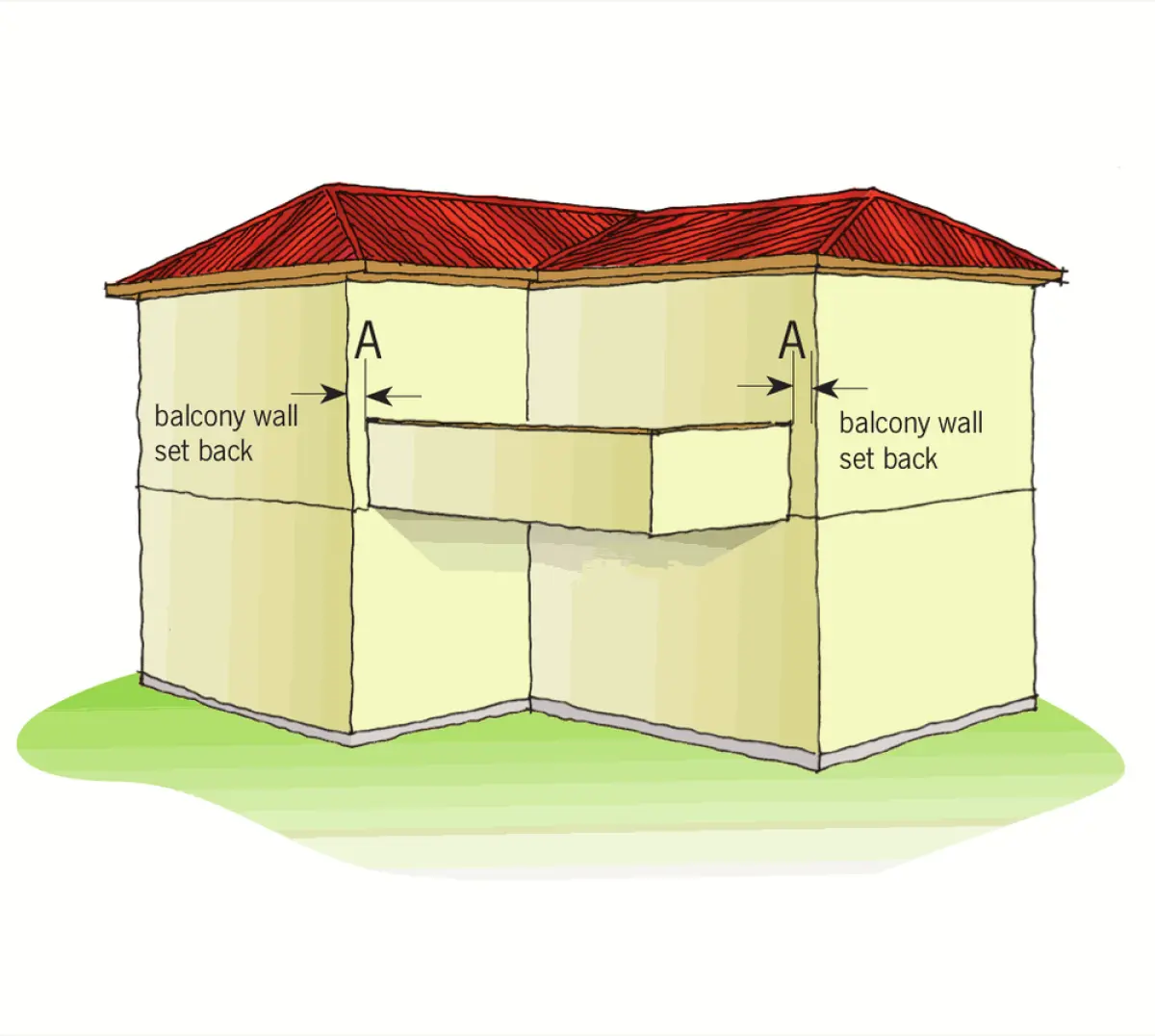
24 The Acceptable Solution no longer covers the saddle flashing detail for parapets and enclosed balcony walls in the same plane as the adjacent walls – an offset is now required (see Figure 1).
NZS 3604:2011 alignment
25 The Acceptable Solution aligns with NZS 3604:2011 for building height, exposure zone definitions and wind zones.