




Is Aotearoa New Zealand a corrosive place? A political argument to ruin many dinner parties but speaking with a strictly built-environment point of view, the answer is a resounding yes! All those things we love about our environment – the blazing sunshine, the seemingly endless beaches, the spectacular landscape shaped by volcanoes – come together to create a beautiful place to live but sadly one that is very harsh on our buildings.
Our unique corrosion challenge
What exactly is corrosion? And what is done to make sure our buildings will be able to withstand the environment they are built in?
Three types of corrosion are commonplace here – UV degradation, salty air corrosion and geothermal activity. None is unique to Aotearoa, but it is the bringing together of all three in a small space that makes this such a uniquely challenging place to build in.
Saltwater corrosion
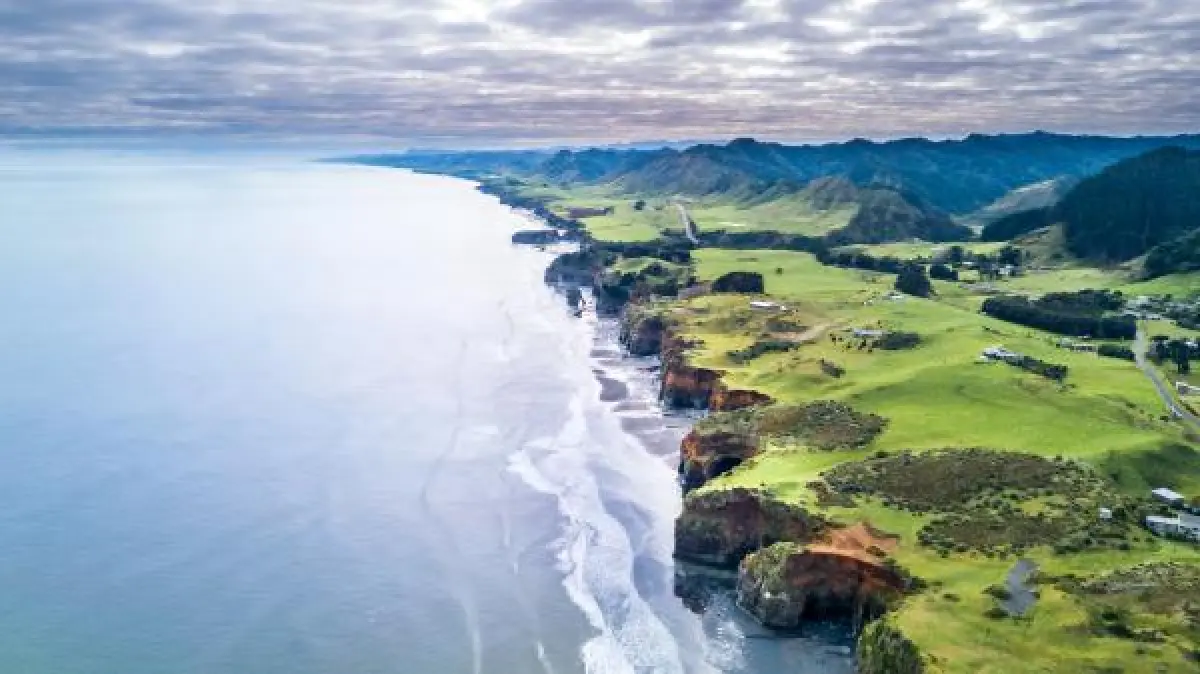
Standing at the window watching the waves roll in and sipping a cold one sounds like absolute bliss, right? Sadly, those calming waves are also spraying nearby buildings with salty water, which is extremely good at causing rust and rot. And when the wind picks up, those buildings could be given a nice sandblasting too.
NZS 3604:2011 Timber-framed buildings defines any areas within 500 m of the sea or 100 m from tidal estuaries and sheltered inlets and all offshore islands as corrosion zone D (high).
There are specific requirements for the building materials that can be used in each zone. For example, in zone D, all structural fixings must be type 304 stainless steel, whereas in zones B and C, hot-dip galvanised steel can be used in some areas. This is because stainless steel is much more resistant to rusting from exposure to saltwater than galvanised steel.
Details on what materials can be used in different locations are found in NZS 3604:2011 section 4. It is worthwhile familiarising yourself with the materials that are suitable for your project, whether building the framing for a new home or just redoing your fence.
UV degradation
We all know the sun can be brutal in summer. Who doesn’t remember being told to slip, slop, slap every time the sun shines? But did you know the same chemistry that causes your skin to burn in the sun also causes damage to materials on our buildings?
UV radiation from the sun interacts with the chemical chains in plastics, causing them to break. This can both reduce the mechanical strength of materials and cause the colour to fade. But just like applying sunscreen to your skin, plastics can be impregnated with protective chemicals. Specifically, UV-stabilising additives and pigments such as carbon can help protect plastics from the sun, significantly increasing their lifespan.
Geothermal activity
Did you know we live on the Ring of Fire? And no, that is not a Tolkien reference! Aotearoa sits on the circum-Pacific belt, also known as the Ring of Fire. This approximately 40,000 km ring follows the boundaries of several tectonic plates around the edge of the Pacific Ocean, including the Australian and Pacific tectonic plates. It is this boundary that formed the motu we call home.
In addition to the earthquakes we are all sadly familiar with, this living-on-the-edge gives us an entire town that smells of rotten eggs, to put it politely. The smell is a mixture of chemicals given off by the geothermal vents in and around the Rotorua district. These chemicals create unique microclimates and require very special consideration when you are building in these areas.
These chemicals are not limited to the Rotorua district either. There is potential geothermal activity all over Aotearoa.
Zoning
We talk about different corrosion zones, but what exactly are they? NZS 3604:2011 defines three distinct corrosion zones – B, C and D. Notice the distinctive geography of Aotearoa means NZS 3604:2011 doesn’t define a zone A! This standard contains a fuller description for each zone:
B: Low – inland.
C: Medium – inland coastal.
D: High – coastal.
Due to the long and narrow geography of Aotearoa and our shared love of the sea, most Kiwis live, work and play in buildings constructed in zones C and D. For example, Auckland, Wellington and Christchurch cities lie entirely within these two zones.
Corrosion maps
Who decided which areas are in each zone?
In the 1980s, BRANZ set out to research the corrosivity of different areas of Aotearoa. This included many different branches of research. For example, samples of different materials were placed out in nature, scattered around New Zealand, and their degradation was monitored over the years (see page 62). We also used accelerated ageing techniques in the lab to simulate what would happen to materials after many years of use.
In the 1990s, BRANZ released the first version of its corrosion map based on information gathered from this research. The map shows the levels of corrosion expected across Aotearoa. It was incorporated into NZS 3604:1999 and updated with the release of NZS 3604:2011.
The map is available online as well through BRANZ Maps. Numerous layers have been added, including wind zones, rainfall intensity and earthquake zones. BRANZ continues to research the effects of corrosion on materials across the country as those materials and the climate change.
BRANZ Maps is not just for architects and designers specifying new projects. It’s a great resource for anyone looking to learn more about the buildings they interact with every day.
Buildings in zones C and D may have increased maintenance requirements, for example, which is important for building owners and residents to know. Always remember, however, that if you are specifying a project, it is important to check the relevant standards directly for the most up-to-date information.
What to consider when building
Living in such a geologically active place brings a lot of challenges when it comes to building. The corrosion zone you are building in, the microclimate and the level of sun exposure all need to be considered for all the buildings we interact with.
It affects everything from what materials we use in the first place to how often we should clean and repaint. That said, every time I sit on the beach and watch the sun set over the mountains, I think it’s worth it.
For more, see the BRANZ Corrosion Map