

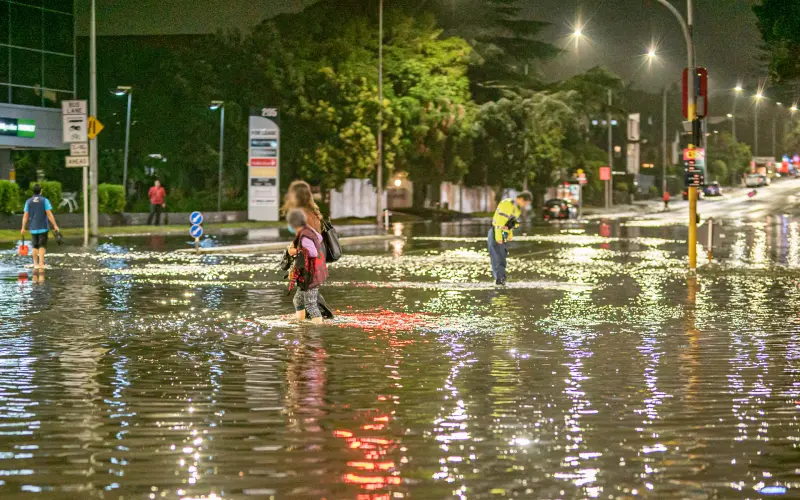


Of all the four-letter words uttered in the first 2 months of 2023, ‘rain’ was certainly one and probably explained some of the others. Auckland’s January rainfall was the heaviest since records began in 1853, with a few areas seeing over half a metre of rain fall in just weeks. One central city recording station saw 211 mm in less than 6 hours.
And that was just January. It was quickly followed on 12–14 February by Cyclone Gabrielle, dropping 400 mm of rain on some North Island locations in 12 hours. Around 46,000 houses lost power and 11 people died.
State of emergency
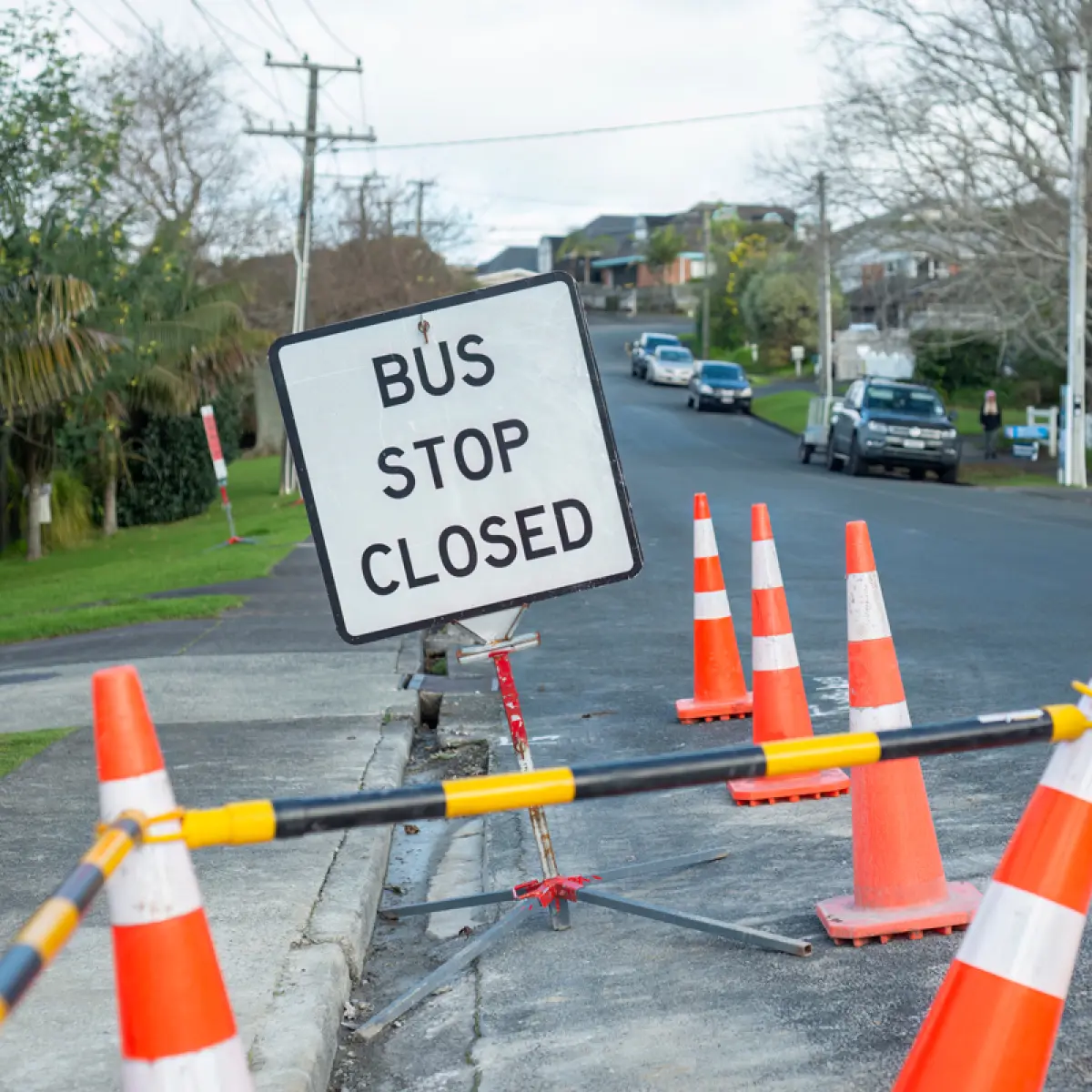
On 14 February, New Zealand declared a national state of emergency, putting government in charge of the recovery response rather than local authorities. (This was only the country’s third-ever national state of emergency – the two previous were due to COVID-19 and the Canterbury earthquakes.)
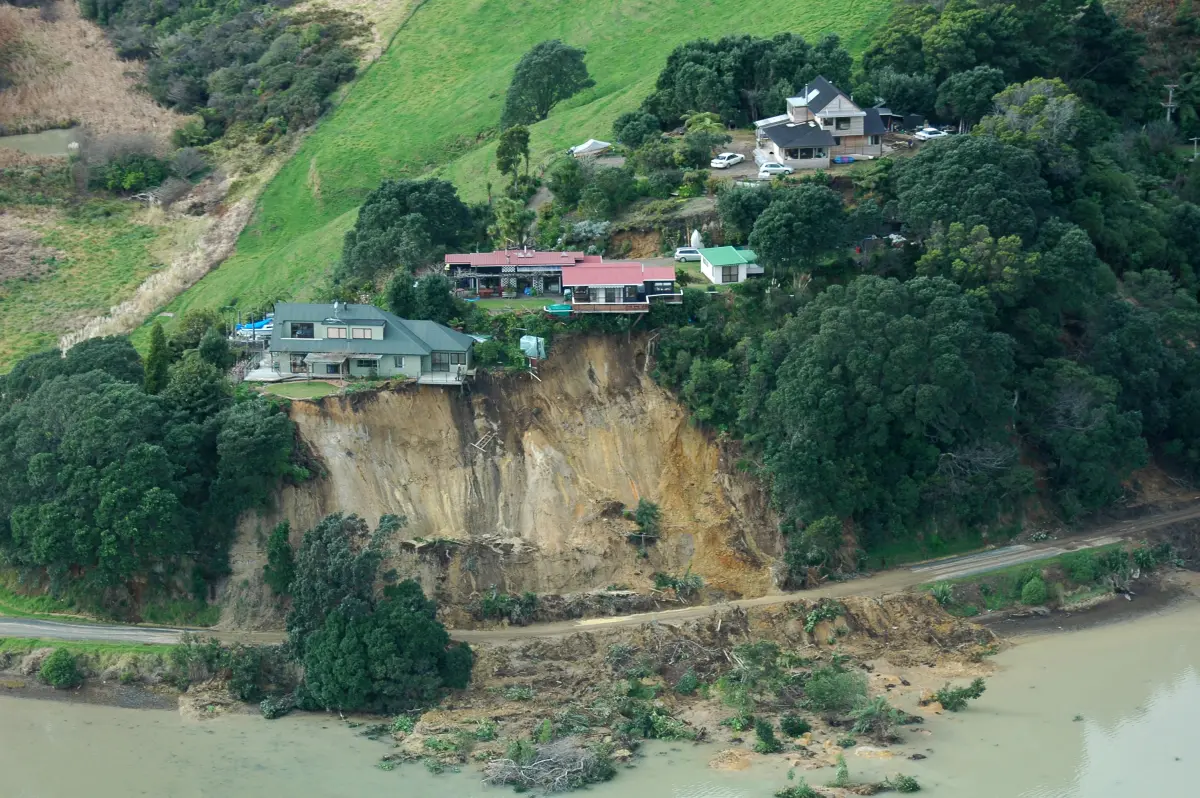
In June, the government announced that it would work with councils to offer a voluntary buy-out to homeowners in locations too risky to rebuild on, rated Category 3, largely in Auckland and Hastings. With Category 2 homes – an estimated 10,000 – government and councils would work on building flood protection measures to reduce the risk of future flood damage. Initial funding of $100 million was announced in Budget 2023. The risk framework was developed in 2023.
In August, Auckland Council and the government said they had agreed on a buy-out of uninhabitable homes where they would split the costs 50/50. Other parts of the agreement included flood resilience projects and roading repairs. Other councils made their own agreements, with detailed discussions continuing as the year ended.
Wet and wiltingly hot
The deluges weren’t just limited to the first half of the year. For example, Whakatāne had its wettest September since figures have been kept, and quite a few other areas had more than double their average rainfall in that month.
September 2023 was also the warmest September since records began over a century ago. While averages were high, there were some steamy standouts. Wairoa recorded 29.6°C on 21 September and Timaru, 28.9°C on the previous day.
Assessing flood risks
Three major pieces of research that had been well under way before the floods showed the scale of future risk we face:
- Work by NIWA and the University of Auckland found that 282,395 houses valued at $213 billion are in flood hazard areas. Construction in at-risk areas peaked between 1960 and 1980, but the research found homes are still being built in flood hazard areas.
- The Reserve Bank found that 2.5% of the total value of residential mortgage lending is exposed to the coastal flood zone. In Auckland, it found that more than a quarter of banks’ mortgage lending was on properties at risk from rainfall flooding.
- A report jointly published by the Ministry for the Environment and Stats NZ indicated that the costs from flood damage (estimated at $9–14 billion in 2023) are likely to rise. The report Our atmosphere and climate 2023 says that around 750,000 people and 500,000 buildings worth more than $145 billion are near rivers and in coastal areas already exposed to extreme flooding. It says that atmospheric rivers are projected to continue to get bigger and carry more moisture.
Action stations
Councils with a high number of at-risk properties had action under way last year:
- Auckland Council announced that, under its Making Space for Water programme, it aims to carry out flood planning work in 6 years that would normally take decades. This includes increased stormwater maintenance, stream rehabilitation and more site-specific solutions for high-risk properties.
- Christchurch City Council estimated that a quarter of the city’s roads, one-third of its drinking water/stormwater pipes and one-sixth of its wastewater pipes will be at risk of coastal flooding, erosion and rising groundwater before 2050.
- Dunedin City Council is looking for support from government and Treasury for a voluntary property buy-out scheme for at-risk properties in South Dunedin, home to 13,000 residents. South Dunedin is largely built on reclaimed land and filled-in wetlands, now at risk from flooding and sea-level rise.
Managed retreat … by insurers
While the term ‘managed retreat’ is most often used for communities relocating away from areas at risk of floods or rising seas, insurance companies are conducting their own version of managed retreat away from homes facing natural hazard risks.
Insurance companies are expanding systems to risk-rate individual homes for natural hazards such as flooding, landslips and sea-level rise. Some companies have said that they will no longer offer insurance for Category 3 properties at high risk of damage from future weather events.
Not all bad news
If there is a silver lining to the heavy rainfall, it is evidence that planning for it pays off. In late January, Hobsonville Point on the upper Waitemata Harbour recorded over a third of a metre of rain in a single week but saw far less damage to houses than in other locations. Hobsonville Point includes large areas of planting that reduce run-off and ponds that can receive large volumes of stormwater.
All signs pointed to a slow-down
In early 2023, research company CoreLogic NZ said that evidence of a construction slow-down had started to materialise. The company expected dwelling consents to fall to about 30,000–35,000 per year from an annual figure of 50,000 in late 2022. This was a bigger fall than 2022’s Construction Pipeline Report forecast, which saw a drop to an average annual figure of 37,000.
In the year ended September 2023, new stand-alone house consents were down 27% compared to the year ended September 2022. Multi-unit home consents were down 15%. There were 7.8 new homes consented nationally per 1,000 residents in the year ended September 2023 compared to 9.9 in the year ended September 2022. The 2023 figure remains higher than the long-term average, which is 6.7 homes consented per 1,000 residents between 1966 and 2023.
MDH continued its growth
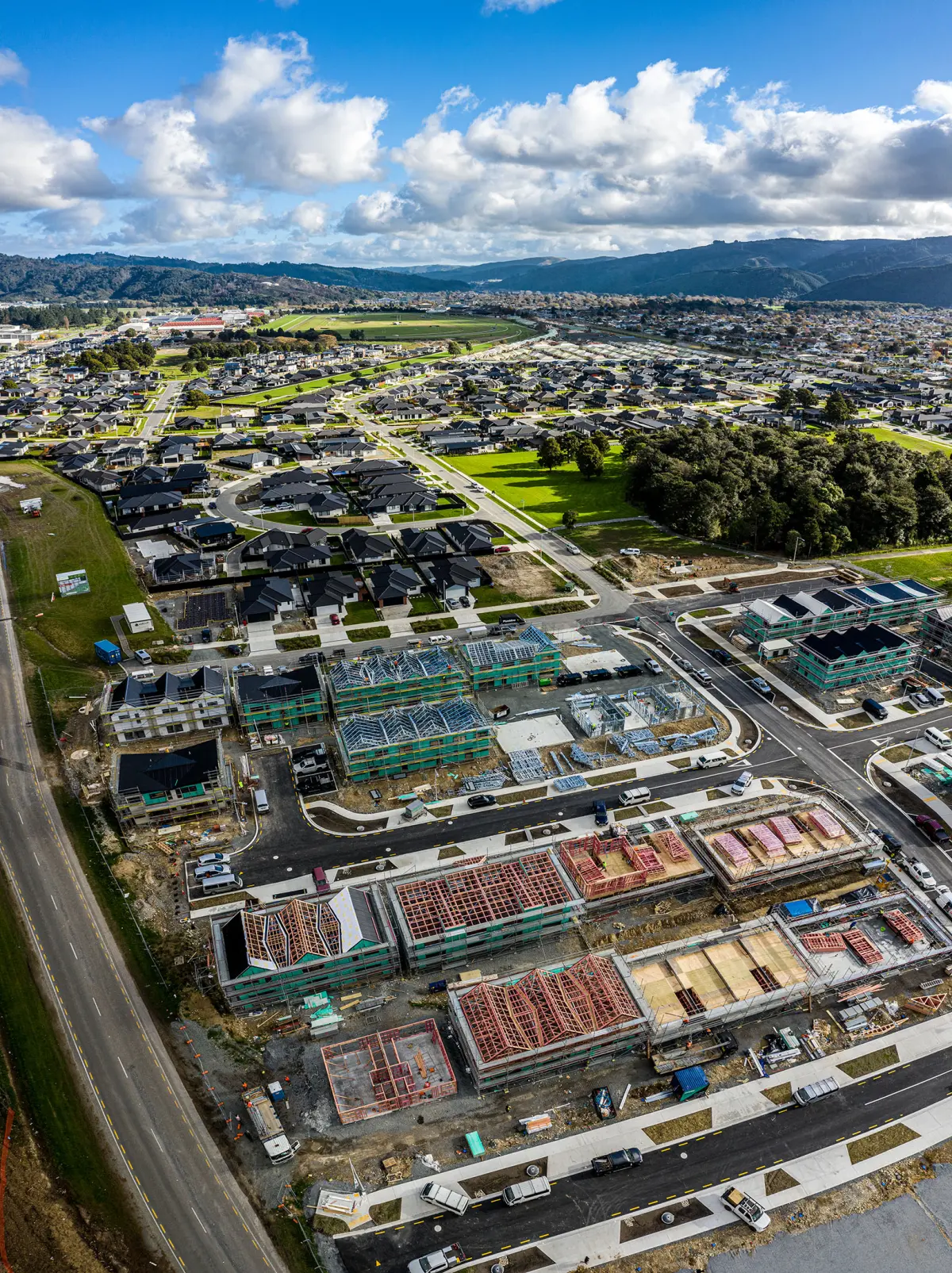
Multi-unit homes have grown to account for almost two-thirds of all new housing consents nationwide – 76% in Auckland and 69% in Wellington. For the first time, in the year ended September 2023, the number of building consents issued just for townhouses, flat and units (which excludes apartments and retirement village units) was greater than the number of consents for stand-alone houses.
For most of the year, councils were working hard for the introduction of the Medium Density Residential Standards (MDRS), allowing for three homes of up to three storeys to be built on urban sites without the need for resource consent. With the change of government, the MDRS have gone from something councils must accept to one they can opt out of if they wish.
The rumble in the jungle
The change of government has brought a large number of policy changes in the building and construction sector, including the repeal of the previous Labour Government’s resource management legislation. For more on legislative changes in 2023, see the article on pages 40–42.
Slowing construction cost inflation
The building material supply problems and rapidly rising prices of previous years eased off in 2023. Early in the year, one survey found that, over the previous 2 years, the price of building products had increased 45%, but that was changing quickly. One in 10 suppliers forecast they would lower the prices of products over the next 6 months. There were indications that supply was getting back to pre-COVID-19 levels.
Plans, technologies and materials advances
The last year saw advances in new construction technologies, materials and research:
- A passive house built was built using 3D printed concrete walls from a BRANZ-Appraised system. The company says the walls of the Auckland home were printed in its factory in 20 hours, and from leaving the factory to completing the installation, the process took 5 days.
- A new demonstration plant turns recycled glass, quarry crusher dust, concrete and slag into sand for new concrete. This potentially reduces or even eliminates the need for dredging natural sand. The company said that its goal is to reduce carbon emissions from concrete production by up to 20%.
- The concrete industry itself launched a roadmap to net-zero carbon by 2050, aiming for a 44% decrease from 2020 carbon levels by 2030 and net-zero carbon two decades later.
- HERA (Heavy Engineering Research Association) received $150,000 from the Building Research Levy to support its project Circular Design for a Changing Environment: A Design Framework. The project aims to reduce construction waste and embodied carbon and to enhance the circular economy for construction materials.
- A growing number of MDH projects are being put together with modules or pods that are built off site. A 63-unit Kāinga Ora development in Auckland used factory-built modules from China. Property Partners Group is constructing buildings using modules built in New Zealand in a factory in Wiri using local timber products.