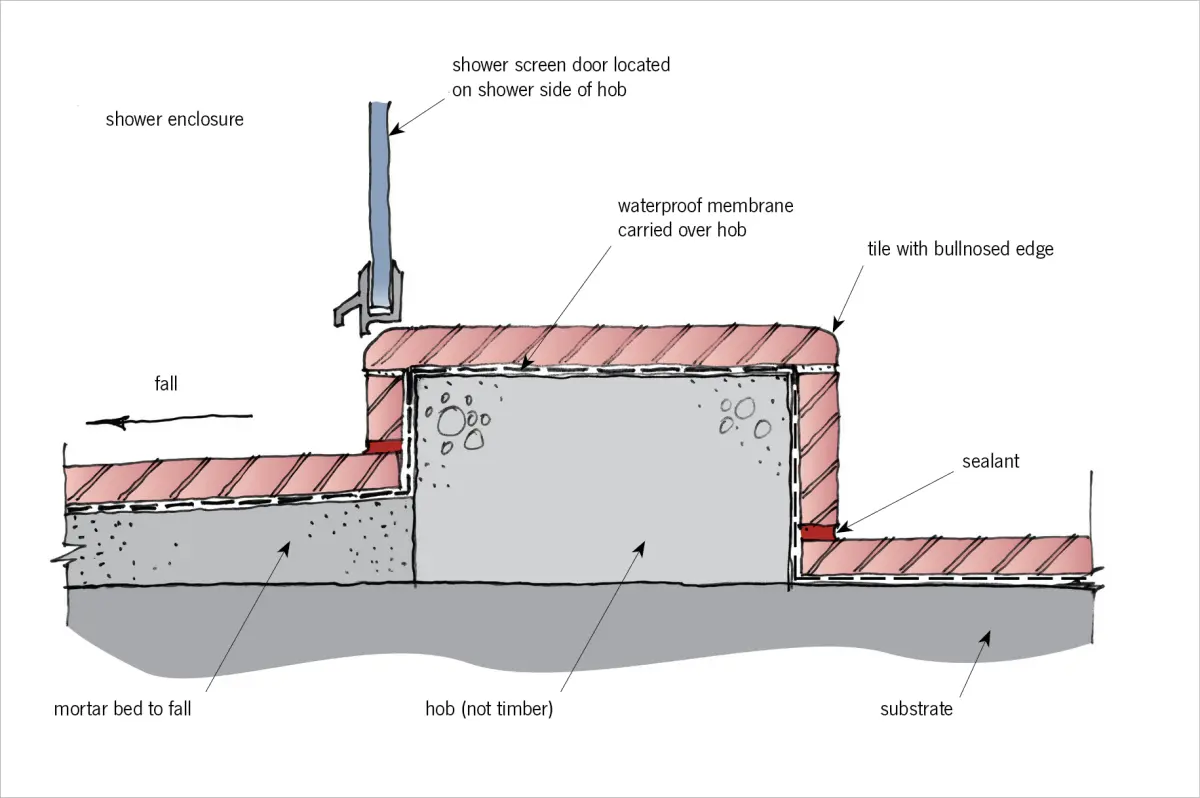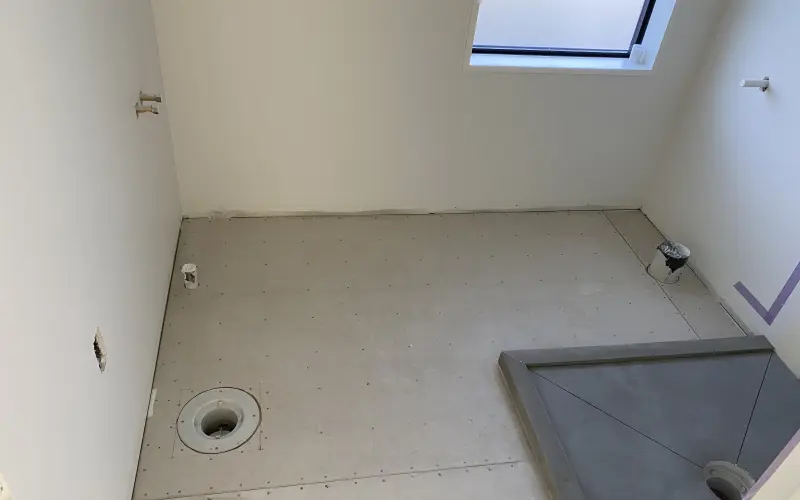


We have heard of issues around installing waterproofing membranes in wet areas, particularly tiled showers. One problem is that in some installations, where a liquid membrane is used it is applied too thinly. While tiles may be impervious to water, cement-based grout is not, so applying the waterproofing membrane properly is crucial.
Key Building Code compliance considerations are:
- B2 Durability – the membranes must have a service life of a minimum 15 years
- E3 Internal moisture – surfaces of building elements likely to be splashed must be constructed in a way that prevents water splash from penetrating behind linings or into concealed spaces.
- The Waterproofing Membrane Association Inc (WMAI) Code of Practice for Internal Wet Area Membrane Systems is referenced in E3/AS2 Internal Wet-area Membrane Systems. The referenced 2020 edition is available for free download in E3/AS2 while an updated 2024 edition can be purchased from the WMAI website.
The Code of Practice says that one of the factors for successful application is ‘If using a liquid-applied system, ensuring it achieves the film build required by the supplier’s handling/installation instructions.’ Manufacturer and supplier requirements affecting thickness typically include:
- the minimum number of coats that must be applied – very often two coats
- application rate – such as 1.5 litres per m2
- a minimum wet film or dry film thickness.
A wet film thickness gauge is an easy way to ensure adequate membrane coverage during the application of each coat. These gauges are readily available, inexpensive and provide a simple robust method to confirm the application requirements are met.
While building consent authorities commonly require an inspection after the membrane has been applied and before tiling, it can be difficult for them to effectively check the membrane’s thickness.
Many liquid membranes for internal wet areas carry a BRANZ Appraisal. Check the details and requirements in both the manufacturer’s installation documents and the Appraisal before applying the membrane as many requirements must be met apart from achieving the right thickness.
A new LBP licence class for waterproofing is due to be announced this year.