

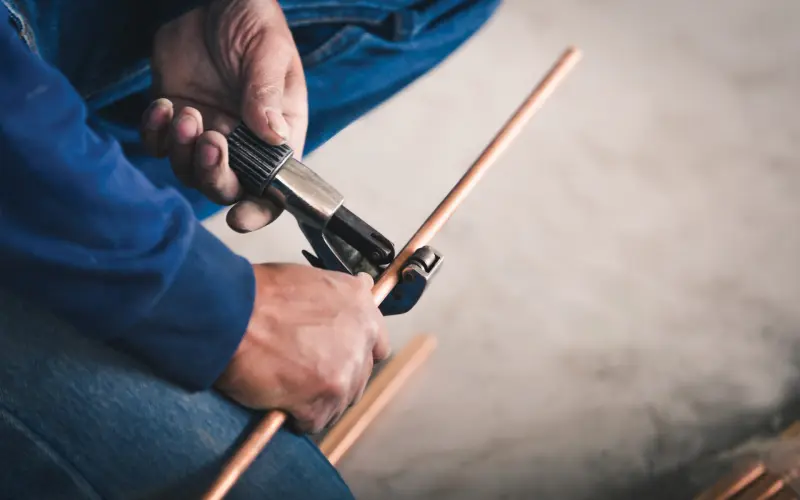


In November 2023, MBIE published amendments to the Acceptable Solutions and Verification Methods for three plumbing and drainage-related Building Code clauses:
- G12 Water supplies – requires the safe supply, storage, reticulation and delivery of hot and cold water.
- G13 Foul water – requires the safe disposal of foulwater to prevent illness and the loss of amenity due to odour and accumulated matter.
- E1 Surface water – requires buildings and sitework to protect people and property from adverse effects of surface water.
Cited standards
Two updates and one new Acceptable Solution cite the latest versions of AS/NZS 3500 series of standards for plumbing and drainage as a compliance pathway:
- G12/AS3 (a new Acceptable Solution), which cites AS/NZS 3500.1:2021 Plumbing and drainage, Water services and AS/NZS 3500.4:2021 Plumbing and drainage, Heated water services
- Updates to G13/AS3, which cites AS/NZS 2500.2:2021 Plumbing and drainage, - Sanitary plumbing and drainage
- Updates to E1/AS2, which cites AS/NZS 3500.3:2021 Plumbing and drainage - Stormwater drainage.
These standards have been updated to include several New Zealand-specific requirements, removing the need for many modifications in how they are cited.
G12 Water supplies
The update to G12/AS1 requires low levels for lead in plumbing products, reduced hot water temperatures, methods to protect potable water from backflow contamination and changes to new water supply system components.
Lead in plumbing products
There are now low limits for the maximum amount of lead in products that contact water for human consumption.
G12/AS1 states that ‘any product that contains copper alloy and is intended for use in contact with potable water for human consumption shall have a weighted average lead content of no more than 0.25% verified in the form of a test report provided by a test facility with IANZ or equivalent accreditation in accordance with NSF/ANSI/CAN 372’.
This affects products such as copper alloy fittings and stainless steel braided hoses, valves, taps and mixers but excludes things like shower and bath mixers, sanitary fixtures and products used exclusively for non-potable uses.
Pipe materials
As well low levels of lead, the update also clarifies that copper alloy plumbing products must be resistant to premature corrosion from dezincification.
G12/AS1 now states that all copper alloy water supply system components in contact with water and subject to hydrostatic pressure shall be dezincification resistant and shall comply with AS 2345-2006 Dezincification resistance of copper alloys.
Cross-connection hazard
G12/AS1 maintains a list of potential sources of cross-connection contamination. MBIE has amended this list, providing new examples at each hazard level.
High hazard now includes bidets and douche seats, healthcare waste disposal equipment and hose taps used for mixing pesticides and soil waste dump points. Medium hazard includes vehicles and equipment connections, swimming pools and spas (except those filled by a hose tap) and treated greywater. Low hazard additions include drinking fountains and bottle fillers, and low-risk hose taps.
Containment backflow protection
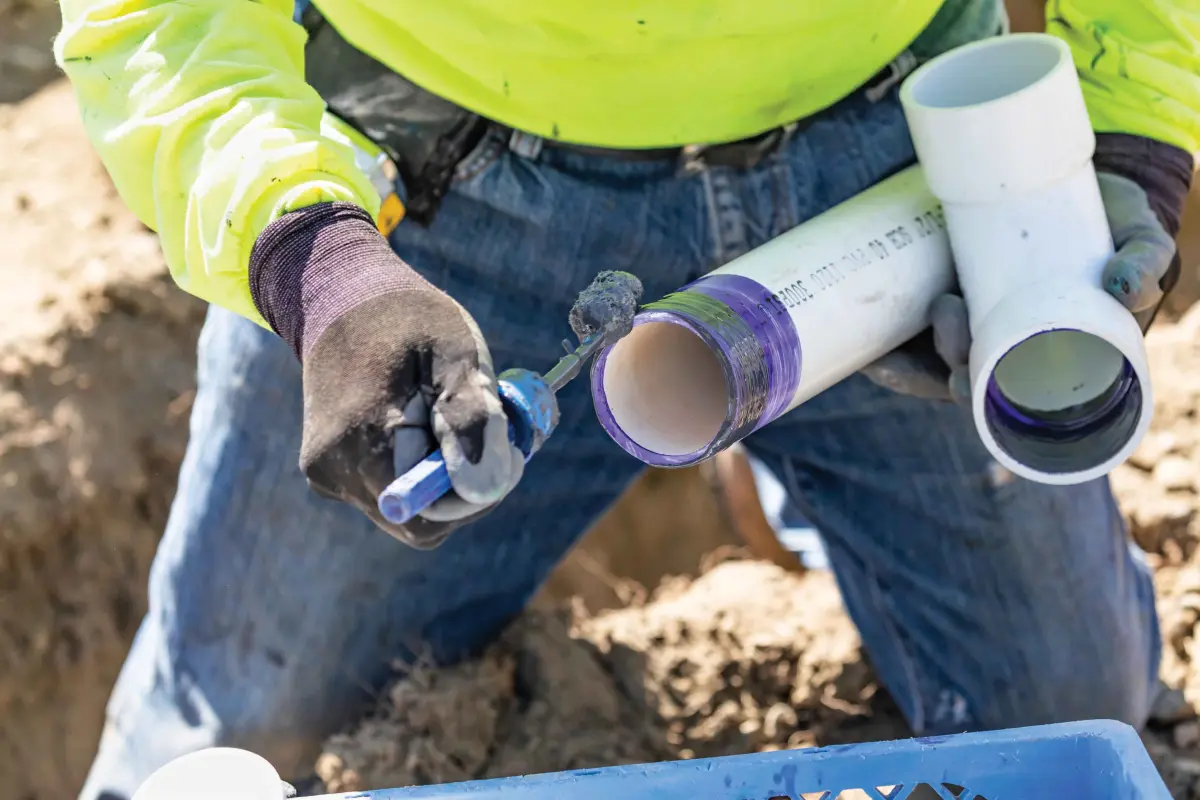
The update also introduces new requirements to protect potable water from backflow contamination. It clarifies when backflow prevention is required, what type of devices are suitable and how they should be installed and tested.
G12/AS1 now states: ‘Where containment backflow protection is not provided by the network utility operator, appropriate containment backflow protection shall be provided where a premises ... is served by a water main. This paragraph does not apply to premises containing only household units. This paragraph also does not apply to the protection of water main connections used solely for firefighting purposes.’
Among other requirements, backflow prevention devices must be:
- attached only after the pipework has been flushed
- fitted with a line strainer immediately upstream
- fitted with connections that allow for the easy removal and replacement of the device
- installed with suitable isolation valves
- adequately supported.
Pipeline identification
The update introduces new requirements to identify non-potable water supply pipework. Such pipework must now be coloured lilac or appropriately marked.
G12/AS1 states: ‘Where a non-potable water supply is reticulated around the building, all non-potable water supply pipework shall be Lilac coloured or made readily identifiable as non-potable water supply pipework using permanent identification markings.’
Safe water temperatures
In perhaps the most significant change for home occupants, MBIE lowered the
maximum hot water temperature delivered at the tap from 55°C to 50°C. The changes apply only to fixtures used for personal hygiene in new plumbing systems such as hand basins, baths and showers.
G12/AS1 states: ‘The delivered hot water temperature at the outlet of any sanitary fixture used for personal hygiene shall not exceed: a) 45°C for early childhood education and care centres, schools, old people’s homes, institutions for people with psychiatric or physical disabilities, hospitals, and b) 50°C for all other buildings.’
The 5°C reduction is based on research that suggests the change will greatly reduce the severity of scalds and burns, especially among children under 5 years.
The update adds several temperature control devices to help plumbers limit hot water temperatures, including tempering valves and thermostatic mixing valves.
Water supply system components
These temperature control devices are among changes to using and installing water supply system components. These are some other notable examples:
- An option to use an expansion vessel to manage the effects of thermal expansion in a mains pressure storage water heater system along with guidance on suitable sizing of the vessel.
- New options to seismically restrain water heaters using additional centre straps to accommodate water heater inlets, outlets and controls.
- Requirements to prevent pipework insulation degrading when exposed to UV light. Pipe insulation must either use UV-resistant materials or be suitably protected from the sun.
- A requirement to install cold water supply systems in a manner that avoids the water becoming unintentionally heated such as in roof spaces or in proximity to higher temperature components.
- MBIE also amended Verification Method G12/VM1 to include a new design method to size hot and cold water pipes for maximum simultaneous flow rates.
Changes to G13/AS2 for foul water
G13/AS2 now includes new requirements for junctions, reduces the height to prevent surface water ingress into the foul water drain at gully traps and clarifies drains gradient.
Junctions
Junctions in graded discharge pipes and drains must have an upstream angle and be positioned at an incline to reduce the risk of blockage.
G13/AS2 states: ‘Any connection to a drain, excluding vent pipe connections, shall be made by means of a junction with an upstream angle no greater than 45° and installed in the direction of flow. Junctions in graded drains shall be installed so that the entry level of the branch drain is elevated at an incline of not less than 15° above the horizontal.’
In addition, the update clarifies the requirement for drains to be installed at the maximum practicable gradient.
Collectively, these changes are to better align G13/AS2 with AS/NZS 3500.2:2021 Plumbing and drainage - Sanitary plumbing and drainage.
E1 Surface water
Changes relate to pipe materials and include a sump size example, minor corrections and editorial changes. E1/AS2 cites AS/ NZS 3500.3:2021 Plumbing and drainage - Stormwater drainage, with a greater number of modifications than for Parts 1,2 and 4.
Many other changes
This is only a brief outline of the major changes. For more information, see:
- G12 Water supplies 3rd edition amendment 13
- G13 Foul water 2nd edition amendment 10
- E1 Surface water 1st edition amendment 12.