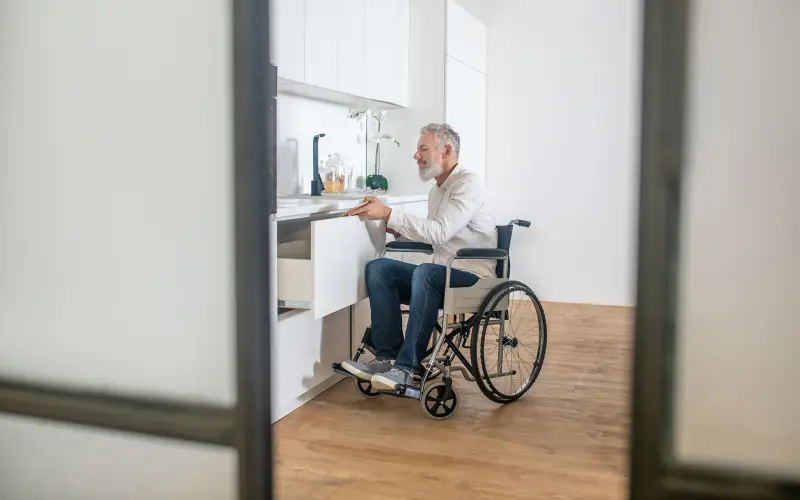


The design of a kitchen is important for good accessibility and to enable universal design principles to be incorporated.
Space is important
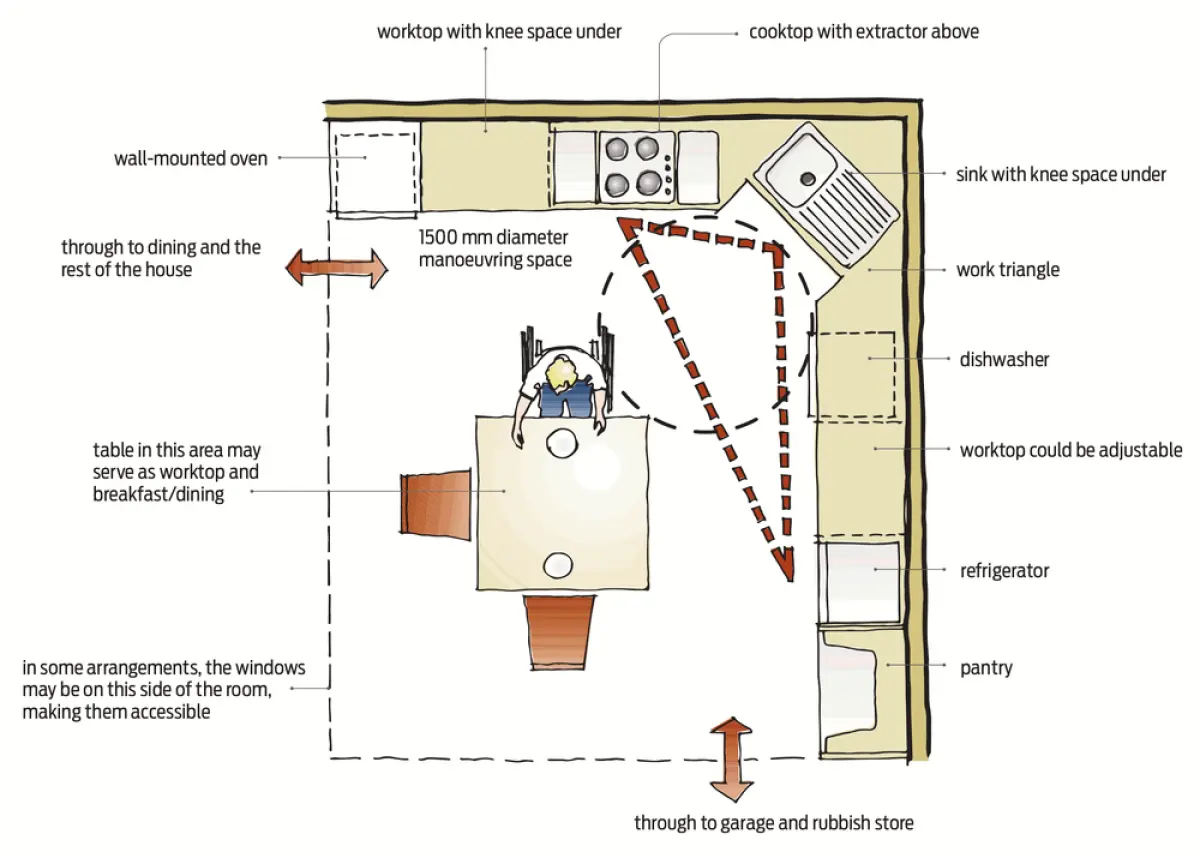
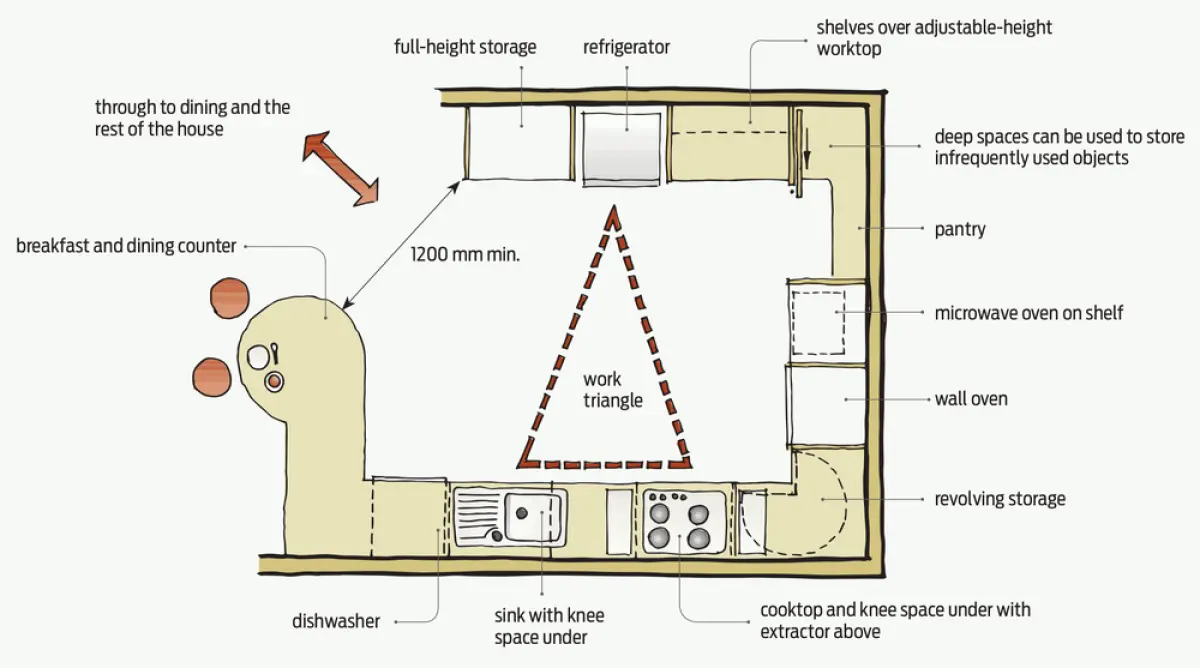
Kitchens should have sufficient clear floor area to allow a person using a wheelchair or with restricted mobility to work effectively. A turning diameter of at least 1500 mm is required as well as a 1200 mm minimum approach in front of all workbenches and appliances (see Figures 1 and 2).
Adjust the work surface height
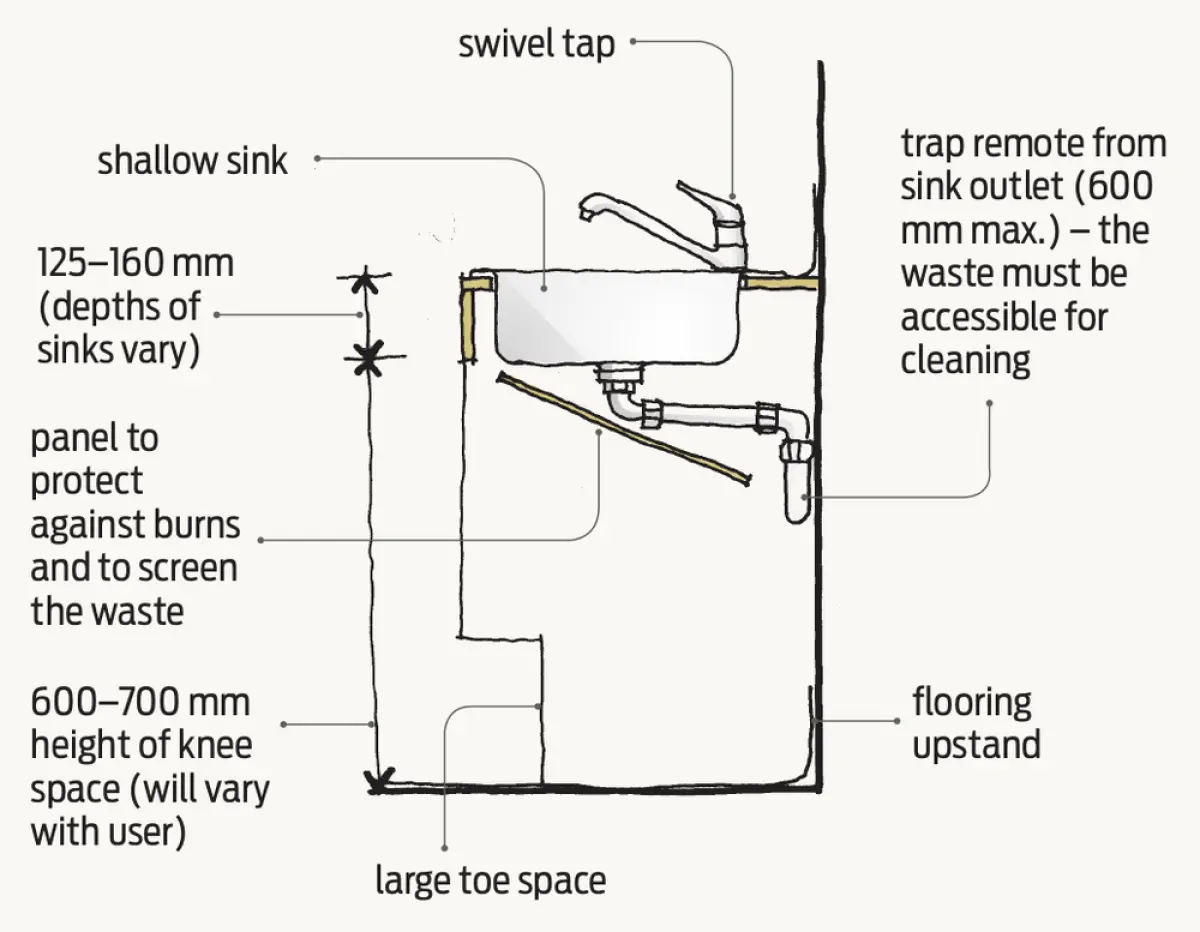
Some of the worktops and sink benches need to be low enough to use from a wheelchair and have wheelchair access below them (see Figure 3).
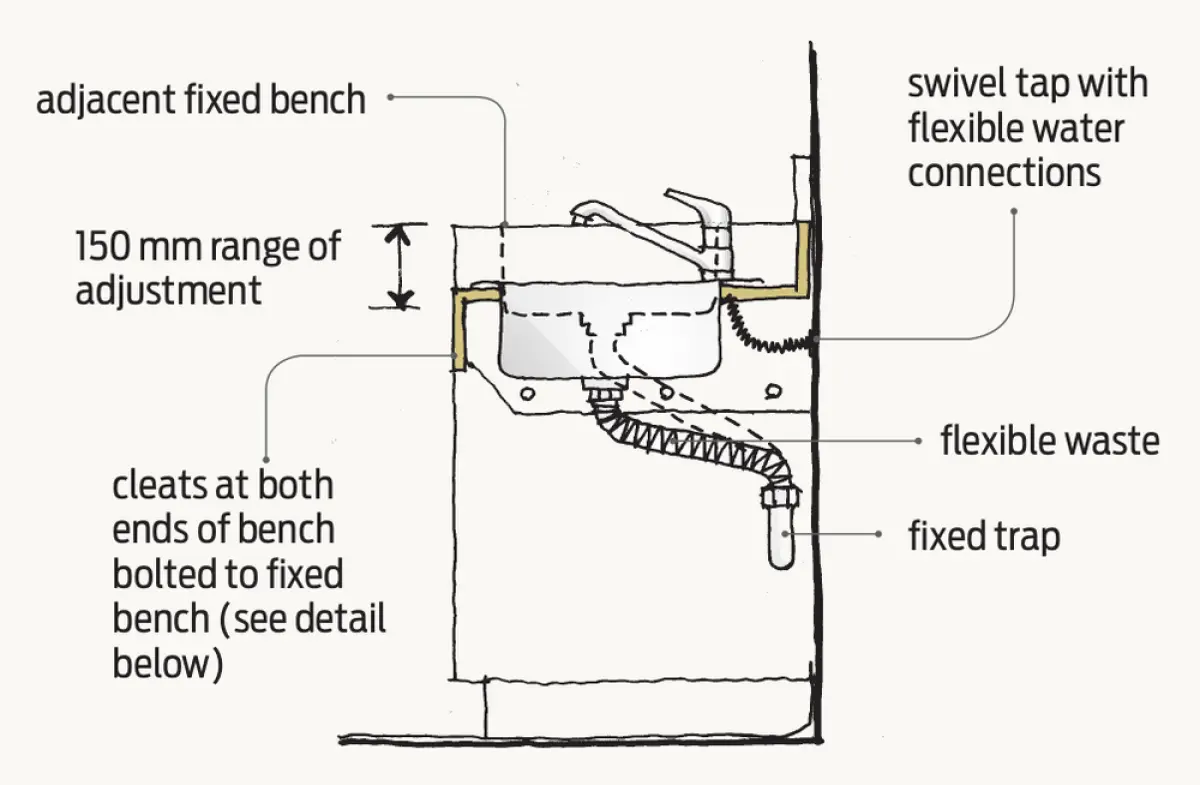
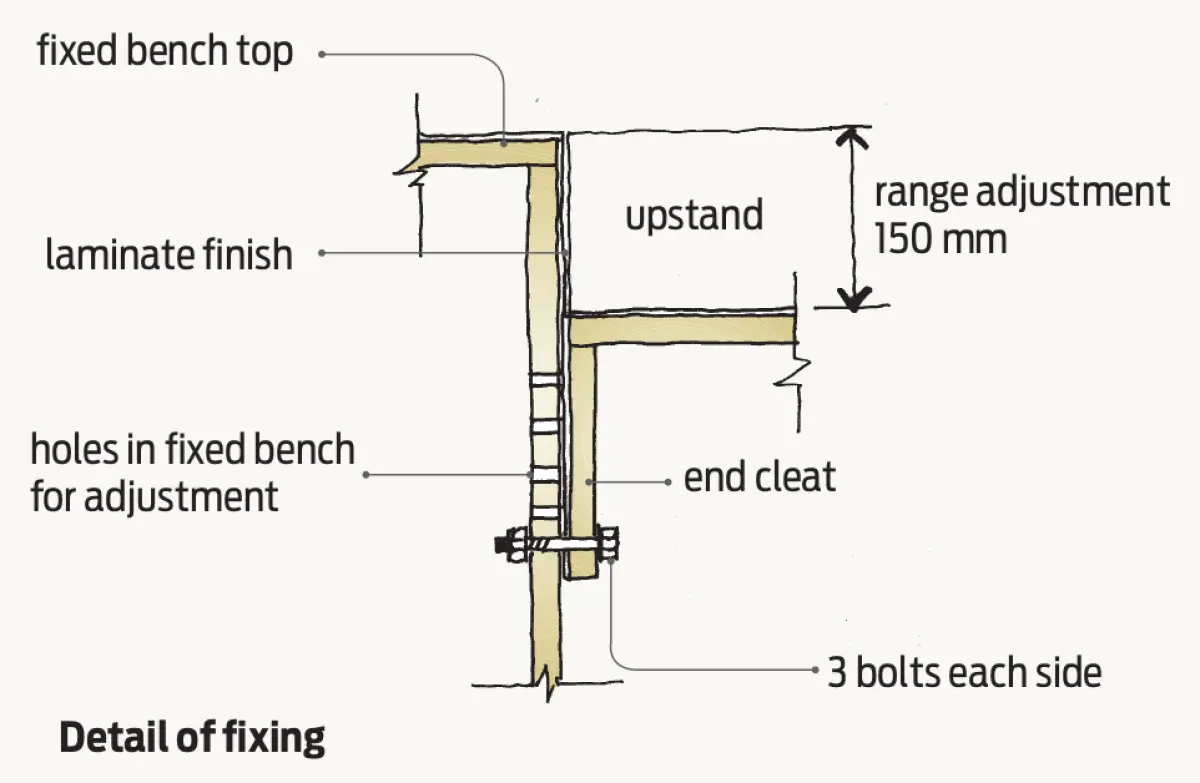
Several proprietary, adjustable-height, support bracket systems are available for height adjustment of work surfaces including fixed brackets and mechanical and electrical adjustable-height worktop mechanisms. The height adjustment range is generally 620–900 mm.
Where sink bench units are height adjustable, sinks must be fitted with a flexible plumbing kit (see Figure 4).
Shallow sinks and lever taps
Allow wheelchair access beneath sinks so that wheelchair users or people who have difficulty standing for any length of time can sit at and work beside the sink. Seated people have a shorter reach, so sink bowls should be shallow.
Lever mixer type taps are easier to use, and an extendable hose spray increases the range of use.
Cupboard and shelf design
Cupboards and shelves should be set at a height appropriate for the user or be easily adjustable (see Figures 5 and 6). Pantries and walk-in storage can be designed for wheelchair entry with clear wheelchair access below (Figure 7).
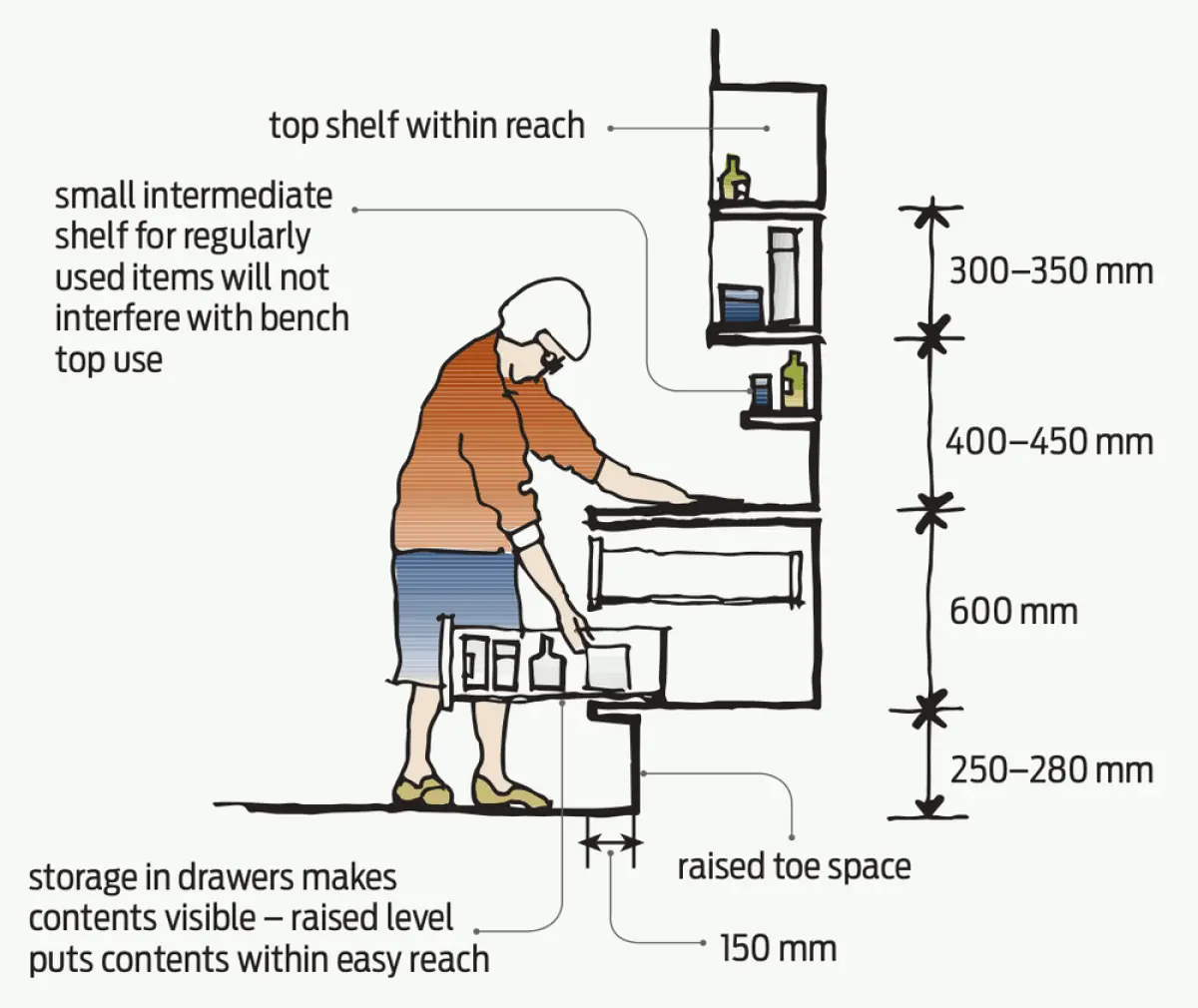
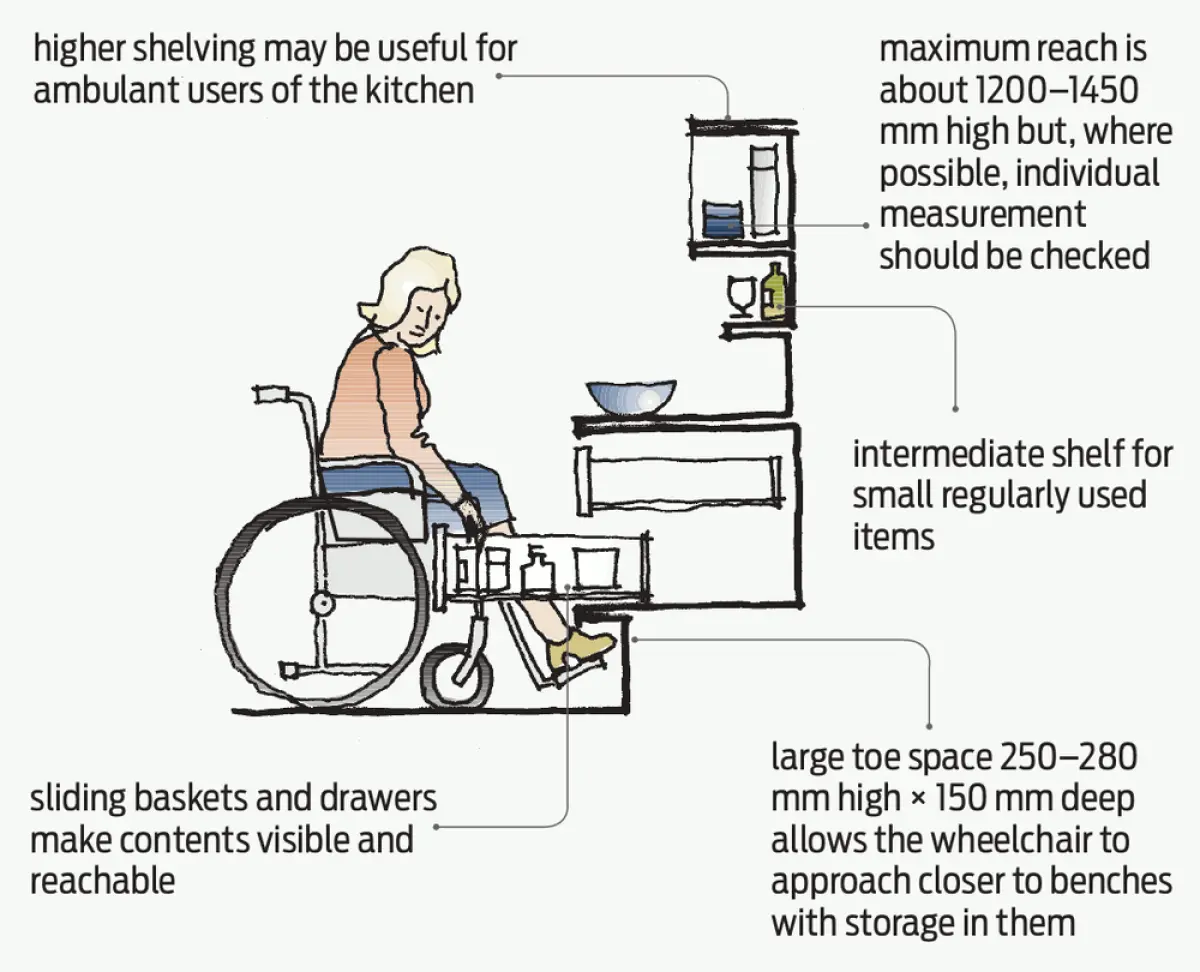
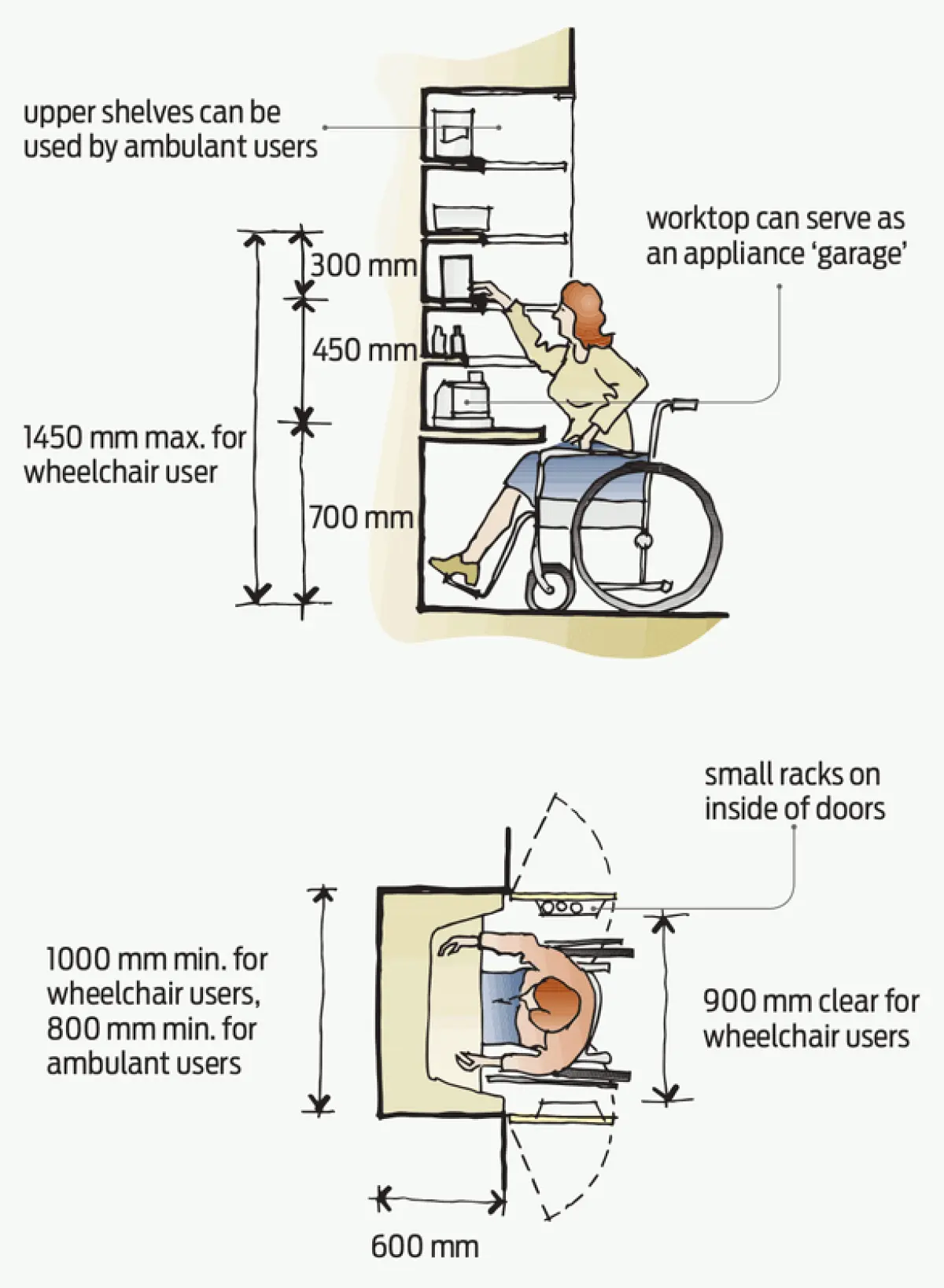
Drawers are easier to access for wheelchair users but may not be for elderly or ambulant people with a disability. Solutions for low-level storage such as below-bench storage should be selected according to need. Mobile units that fit under benches or can be moved elsewhere provide increased flexibility.
A range of proprietary products is available:
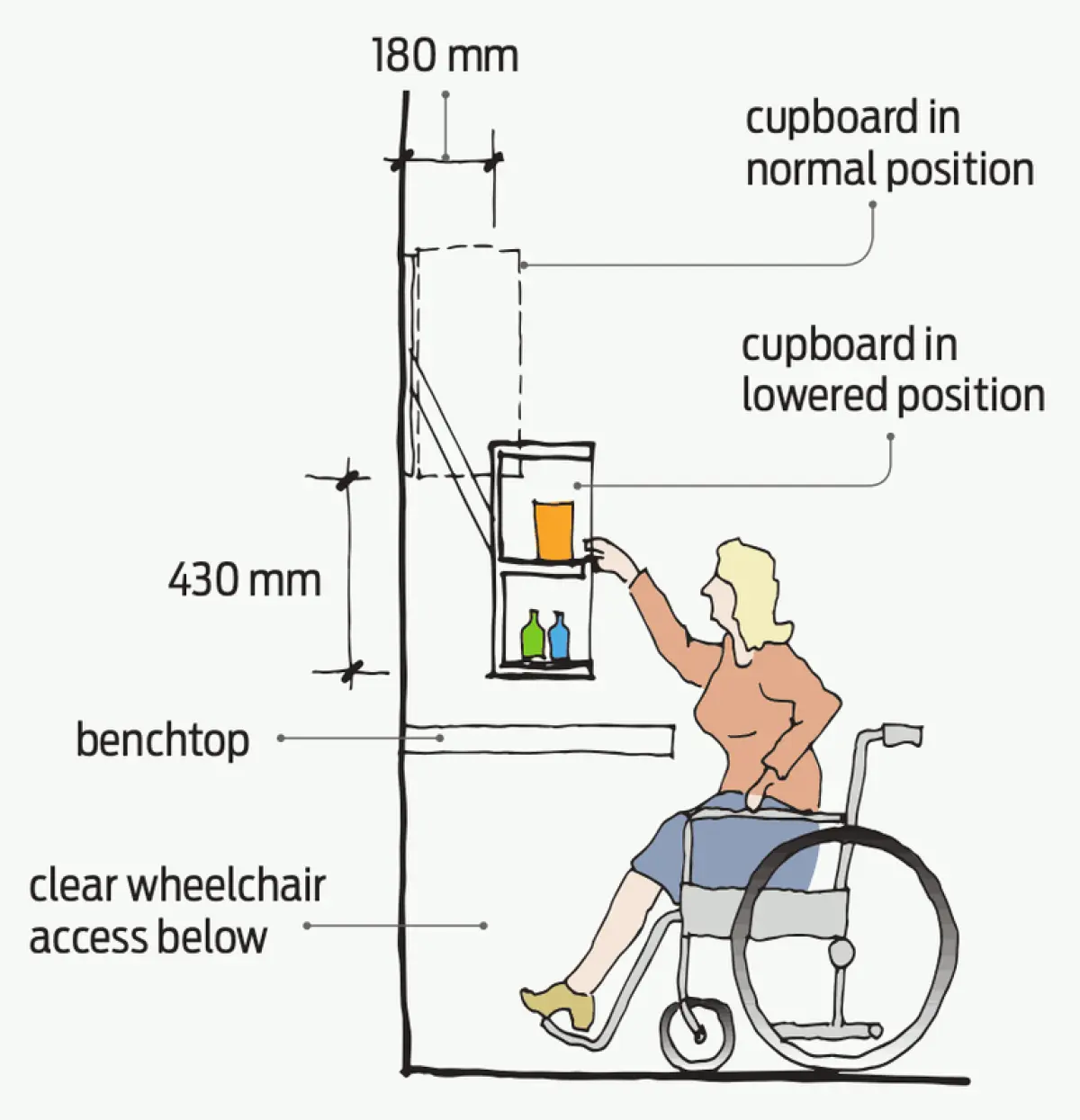
● Electric lifts for wall-mounted cupboards that lower cupboards to a height where they can be accessed by a person in a wheelchair. These can be fitted to cupboards between 500–700 mm high. One motor lift will raise and lower a cupboard unit up to 1200 mm wide and weighing approximately 100 kg. A typical range of movement is 430 mm lowering extension and 180 mm outwards extension (see Figure 8).
● Pull-down baskets and shelving that can be fitted into wall-mounted cupboards.
● Carousels or lazy Susans that can be fitted into corner cupboards for access to items stored at the back.
● Pull-out shelving units that are available in a range of heights and widths. These generally roll out on wheels.
Positioning appliances
Cooktops should be set into easily adjustable work surfaces and have front or face-mounted controls. Staggered burners can also reduce the need to reach across the cooktop.
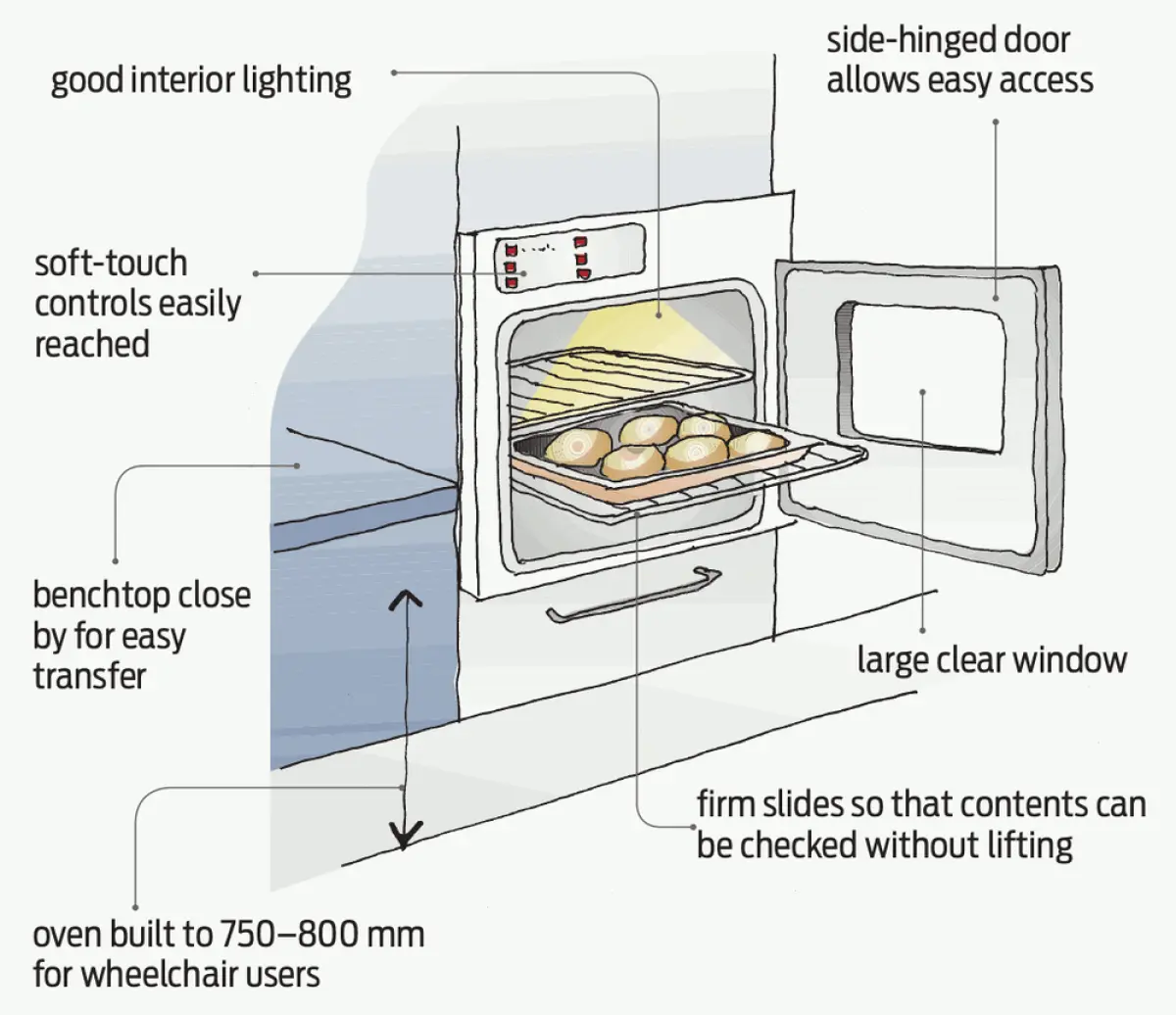
A wall-mounted oven should be at eye level height to suit the user and the oven door side or upward opening (see Figure 9). Unfortunately, neither of these opening options is commonly available.
Mount a microwave at bench level and have a bench surface or pull-out shelf in front so hot dishes can be safely transferred from the microwave to the benchtop.