



Wheelchair users and many ambulant people with disabilities need more space to function independently than non-disabled people. This doesn’t necessarily mean larger homes, rather homes with good space planning.
Include open-plan design
Universal accessibility is greatly enhanced by designing open plan spaces so one space flows into another and the manoeuvring area is incorporated in the open plan area.
Open planning also keeps the number of doors to a minimum or avoids them altogether. This makes movement between spaces easier.
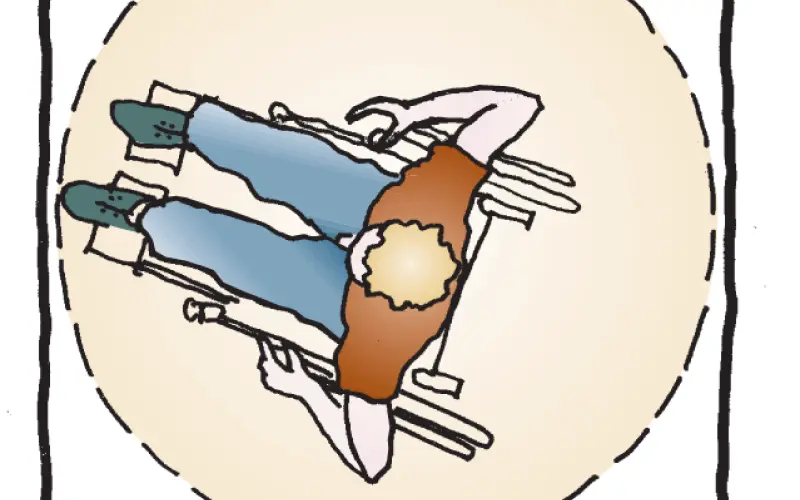
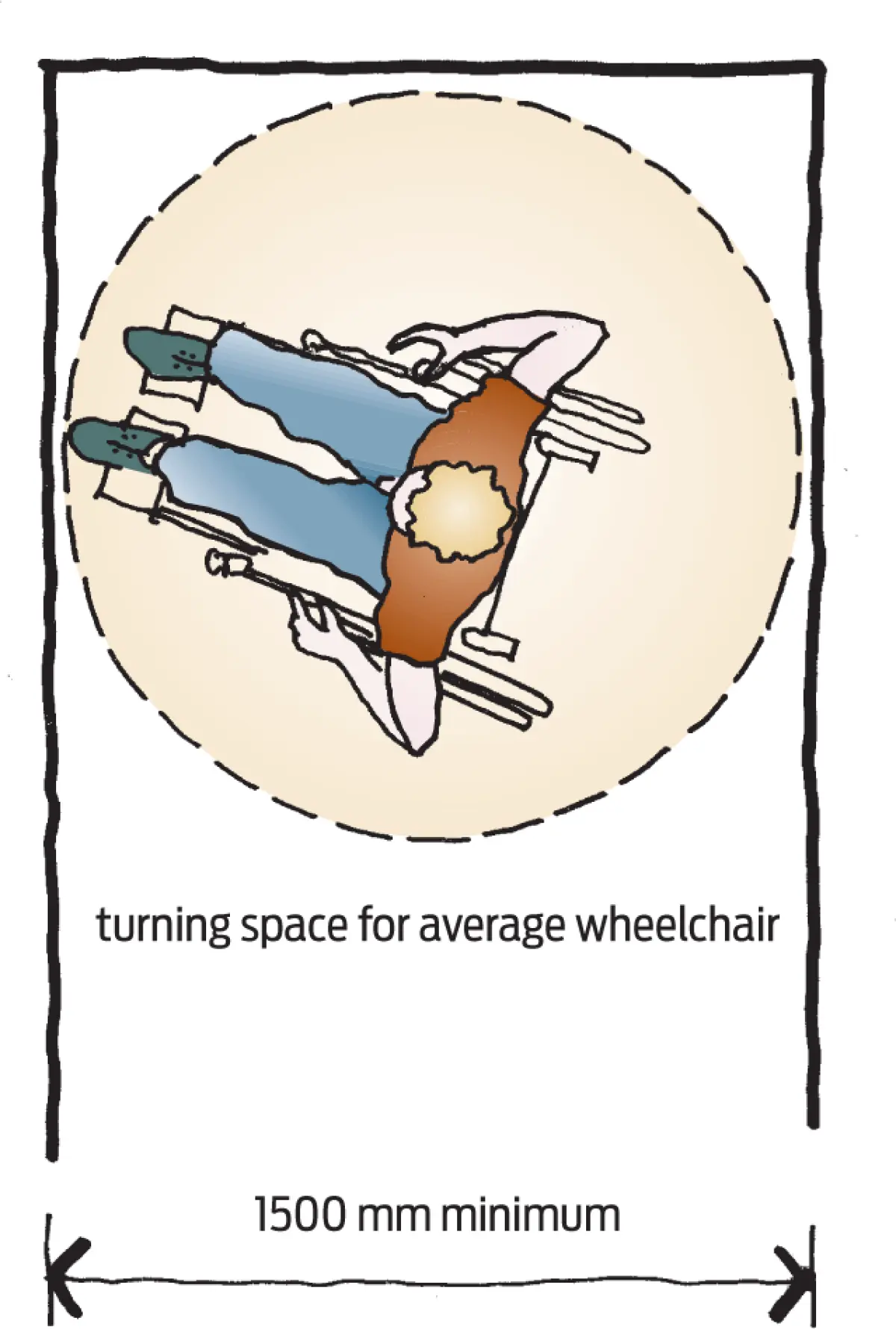
The circulation spaces and position of furniture in open plan should allow enough clear floor space so that a wheelchair can comfortably turn 360° – typically a 1500 mm diameter area (see Figure 1).
New homes can provide universal accessibility by incorporating open-plan concepts. Where possible, alterations to an existing house should minimise or remove hallways and reorganise the layout to create open-plan spaces.
These spaces can be defined in various ways, such as using different finishes for floors, walls or ceilings. Keep the transition between floor surfaces from one area to another flush or with as little change in height as possible. Use materials such as low-pile carpet or non-slip flooring.
Tips for hallways and small areas
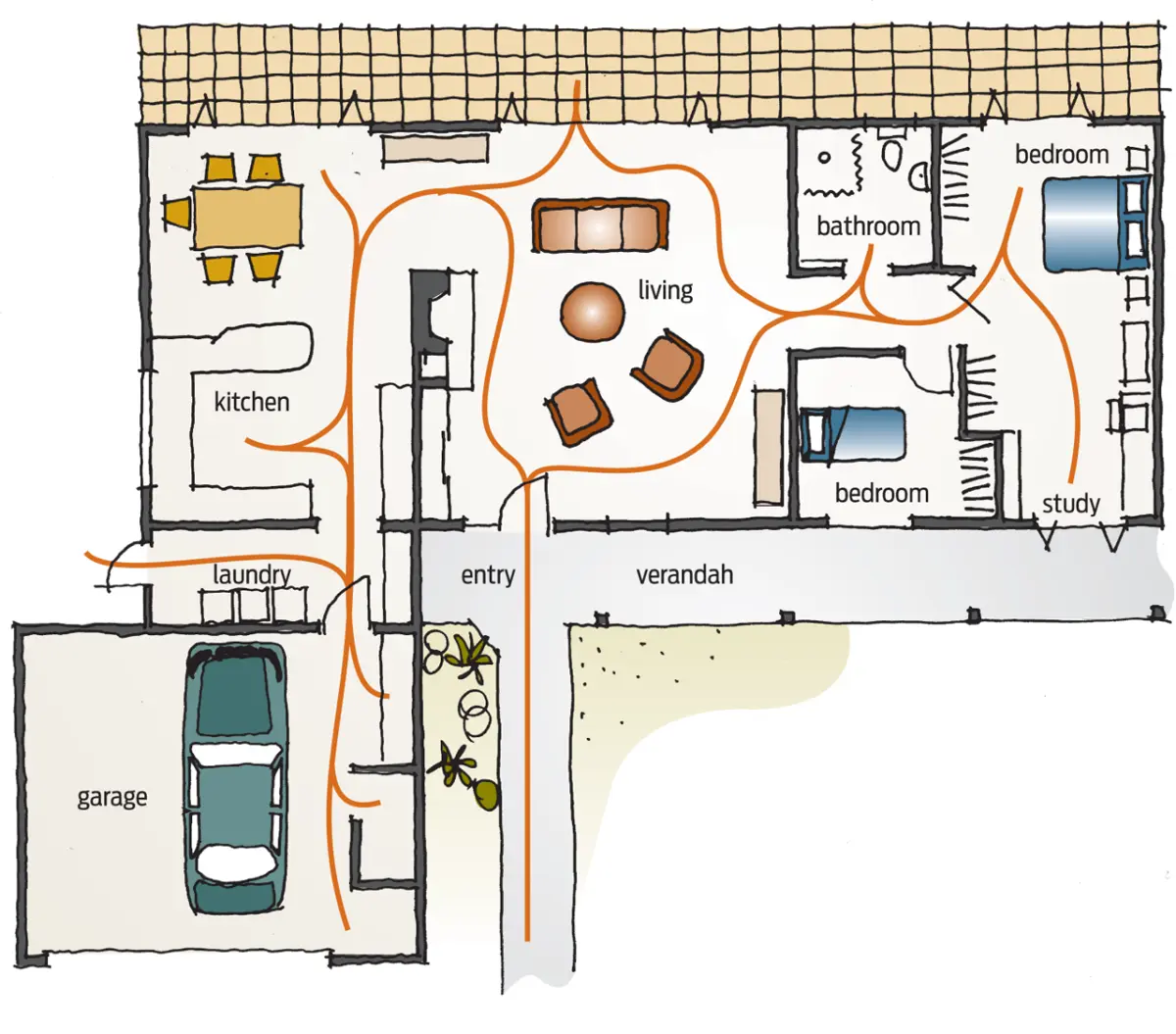
Small spaces and narrow hallways can make moving around the house difficult for wheelchair users. A home designed with good accessibility will avoid hallways and incorporate open-plan areas to facilitate movement instead (see Figure 2).
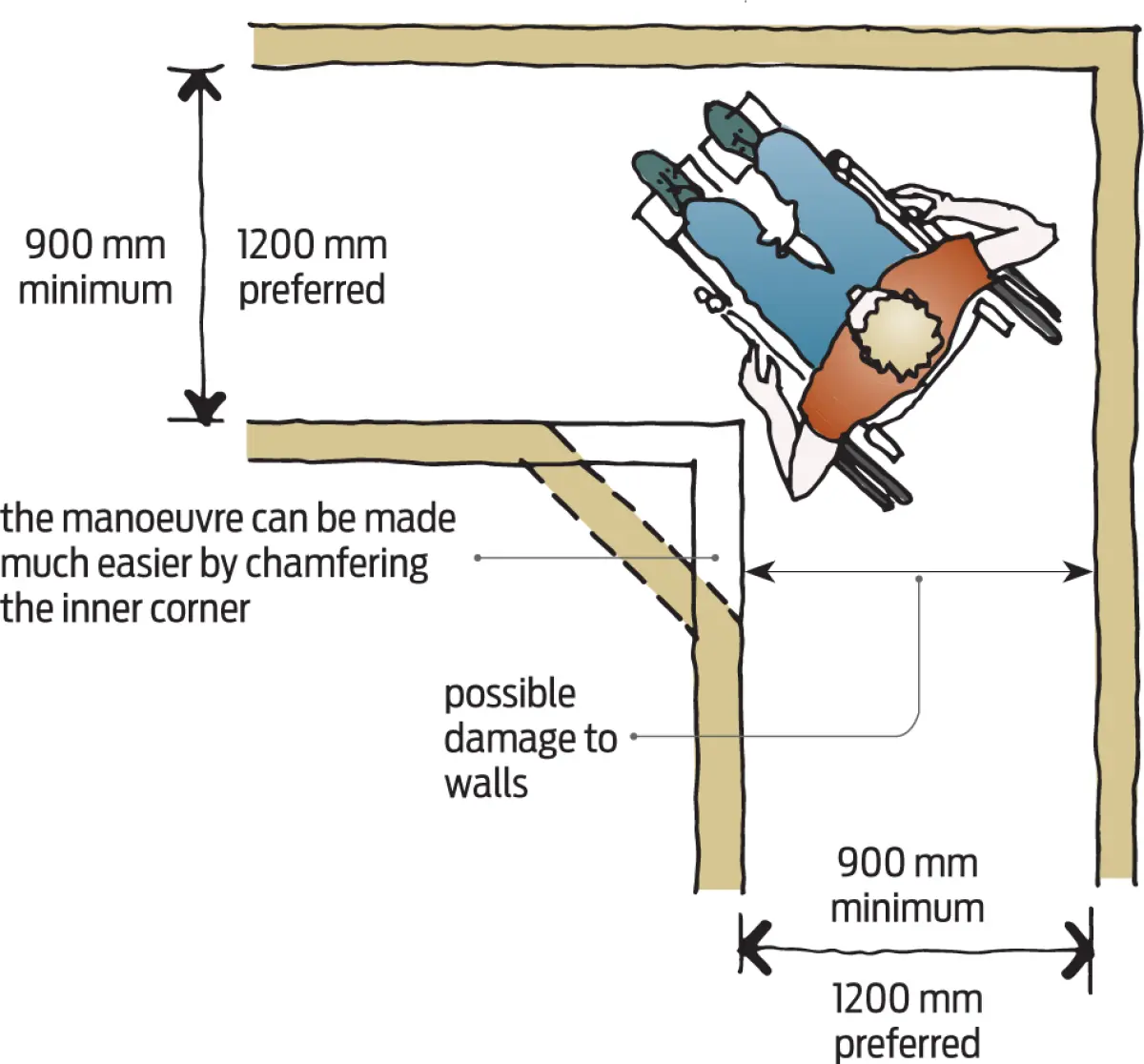
Hallways that can’t be designed out of a new house or removed in an existing house should be at least 1200 mm wide. If a house is being altered, it may be possible to chamfer or cut back the inner corner of a narrow hallway to improve wheelchair manoeuvrability (see Figure 3). Avoid dead-end hallways.
Narrow hallways – for example, 900 mm wide – need to be as short as possible. A wheelchair can manoeuvre in a 900 mm width, but there isn’t space for an ambulant person to pass, and a 90° turn in or out of the hallway can be difficult.
Include good lighting in hallways. Use natural light where possible during the day and good artificial lighting at night. Install two-way light switches at both ends of all hallways so there is no need to negotiate the space in the dark.
Difficulties with doors
Multiple small rooms with doors present a significant barrier to access around the house. When doors are narrow, they are also difficult for wheelchair users to negotiate. The minimum door width accessible for a wheelchair user is 760 mm, but a door that is 810 mm wide is easier for a wheelchair to go through.
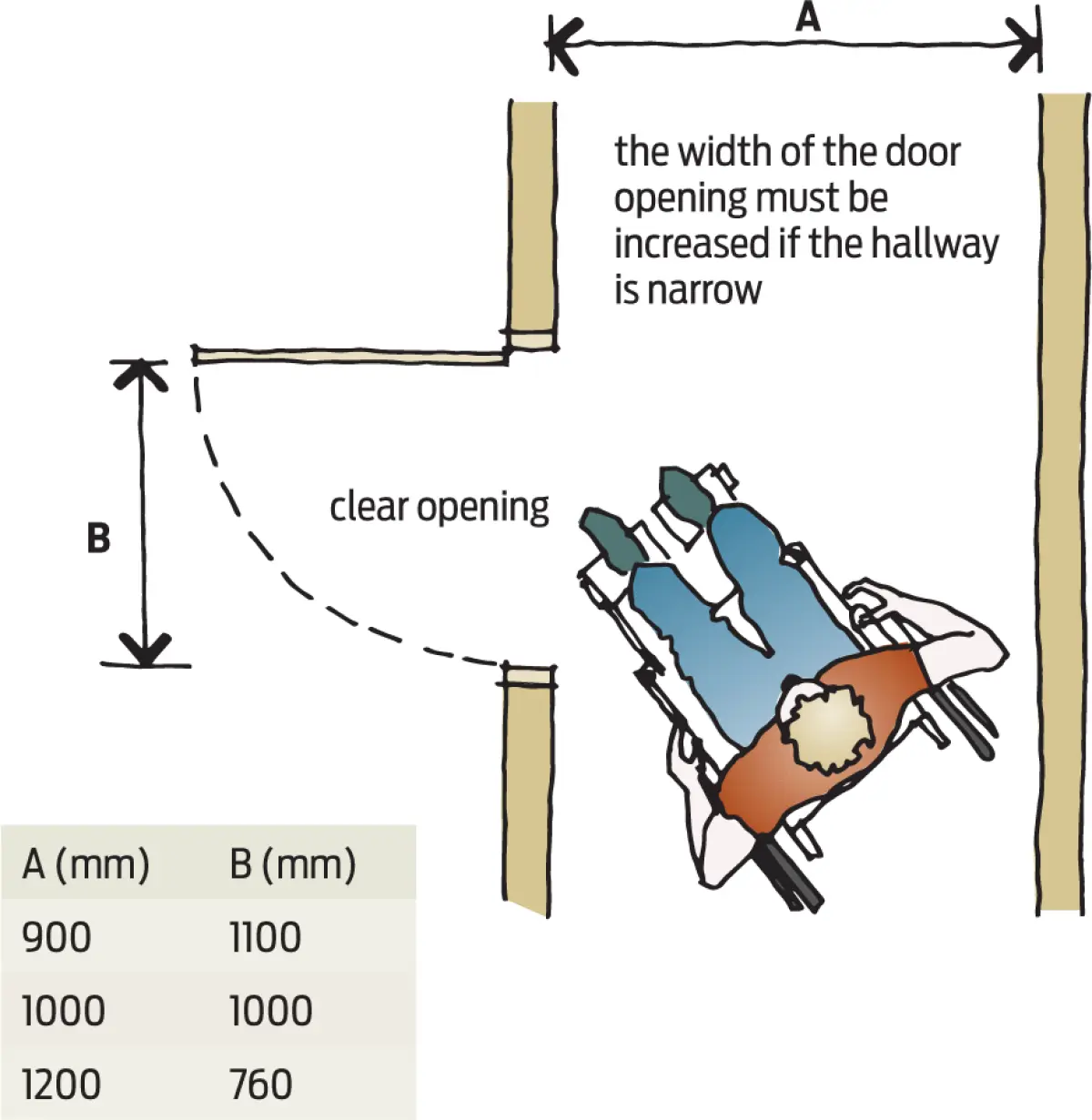
A narrow door opening off a narrow hallway is likely to be very difficult or impossible for a wheelchair user to turn into. As a general rule for easy wheelchair access, the narrower the hallway, the wider the door must be opening off it (see Figure 4).
Sliding vs hinged doors
While a sliding door may be easier for wheelchair users to open than a hinged door, they do have disadvantages. Sliding doors:
• are more difficult to draught-proof when external
• are more difficult to prevent sound transmission through
• may be noisier to operate than a hinged door.
Hinged doors are perceived to limit the usable floor space in the area of the door swing. In reality, the swing space is also required as access space, and sliding doors also require access space on both sides of the door.
Usually the direction of swing of hinged doors is irrelevant as it varies depending on the direction of the approach to the door. The exception is for toilet cubicles. These typically open inwards, but accessibility improves if the door opens outwards. Then, if a person collapses, they will not block access. An alternative is to install a proprietary dual-swing door hinge and latch set to enable the door to be opened outwards in an emergency.
When stairs are necessary
An accessible home should ideally be on a single level or have a lift. Stairs are generally impossible for wheelchair users to manage and can be difficult for semi-ambulant and elderly people.
In an existing two-storey house, however, it may be possible to adapt the stairs to install a stairlift or lift.
If a change in level is required in a new house design:
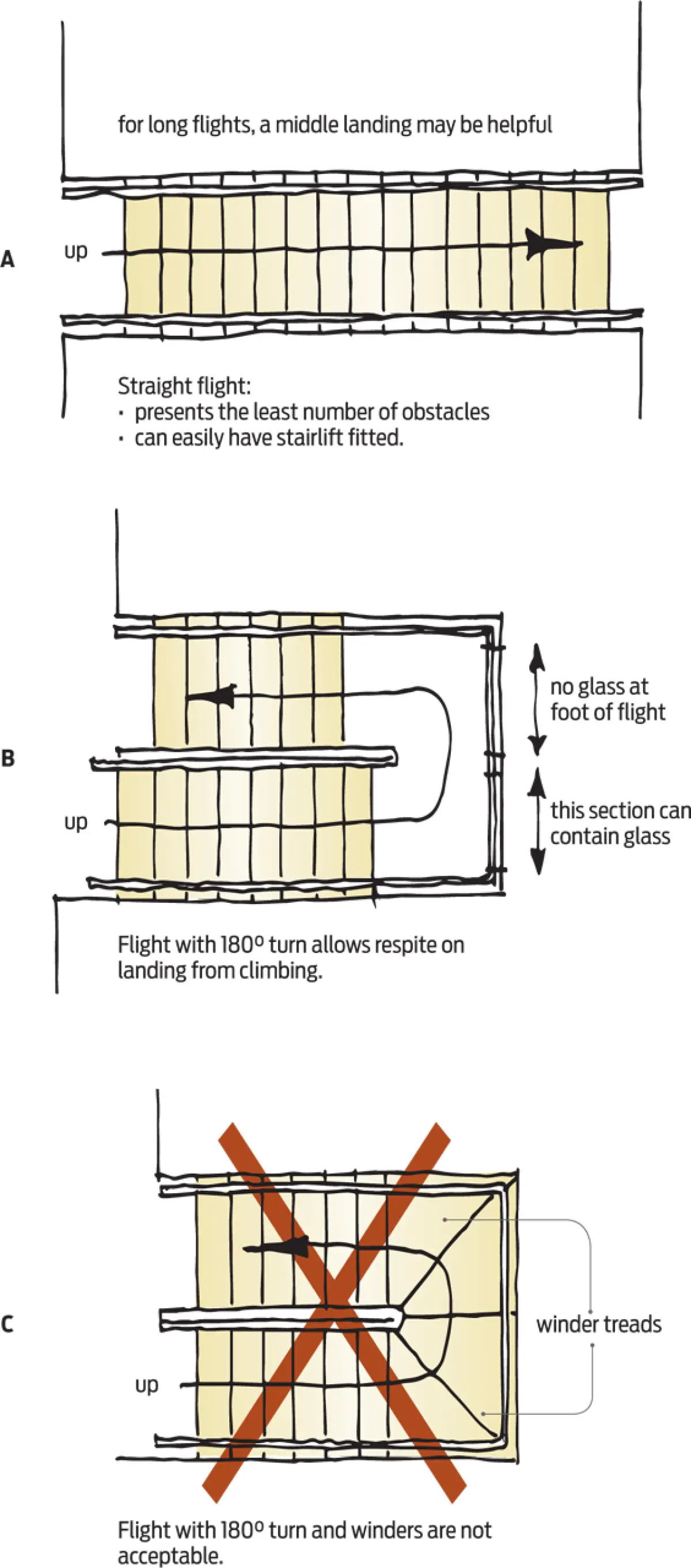
• a single, straight flight is the easiest to negotiate for a person with a disability
• a landing should separate each straight flight if the stairs require a 90° or 180° turn
• do not use winder treads (see Figure 5).
The requirements for access in buildings are in New Zealand Building Code clause D1 Access routes. Specific stair design details are in Acceptable Solution D1/AS1. Additional design considerations to improve accessibility for people with disabilities include having:
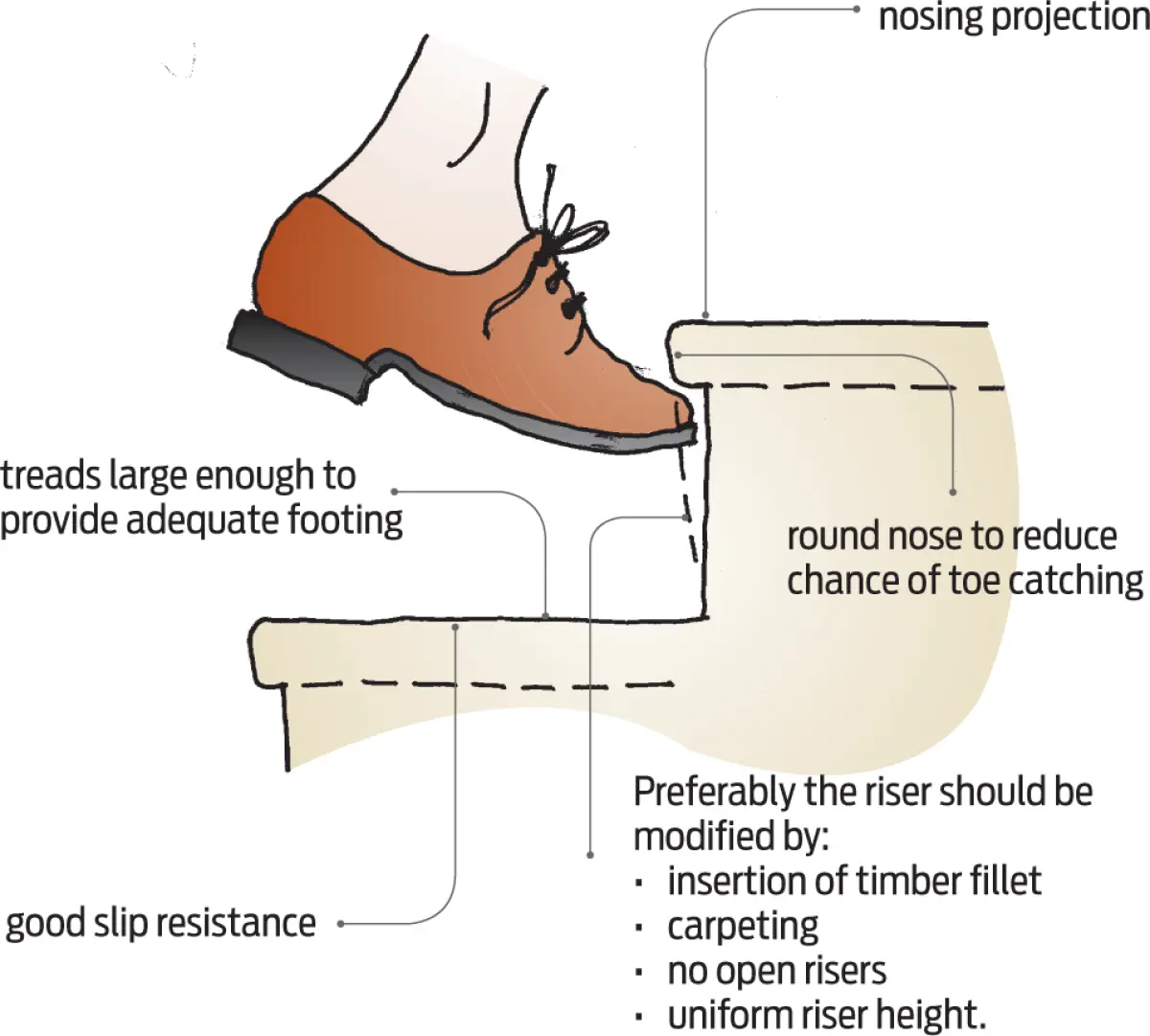
• treads deep enough to provide secure footing more than the minimum depth required by D1/AS1
• good slip resistance
• either no tread nosings or minimal projections (see Figure 6)
• good lighting
• enough space at the top and bottom of stairs so users can steady themselves before changing direction
• sufficient width for a future stairlift installation if required.
Install two-way light switches at both the top and bottom of any flight of stairs.
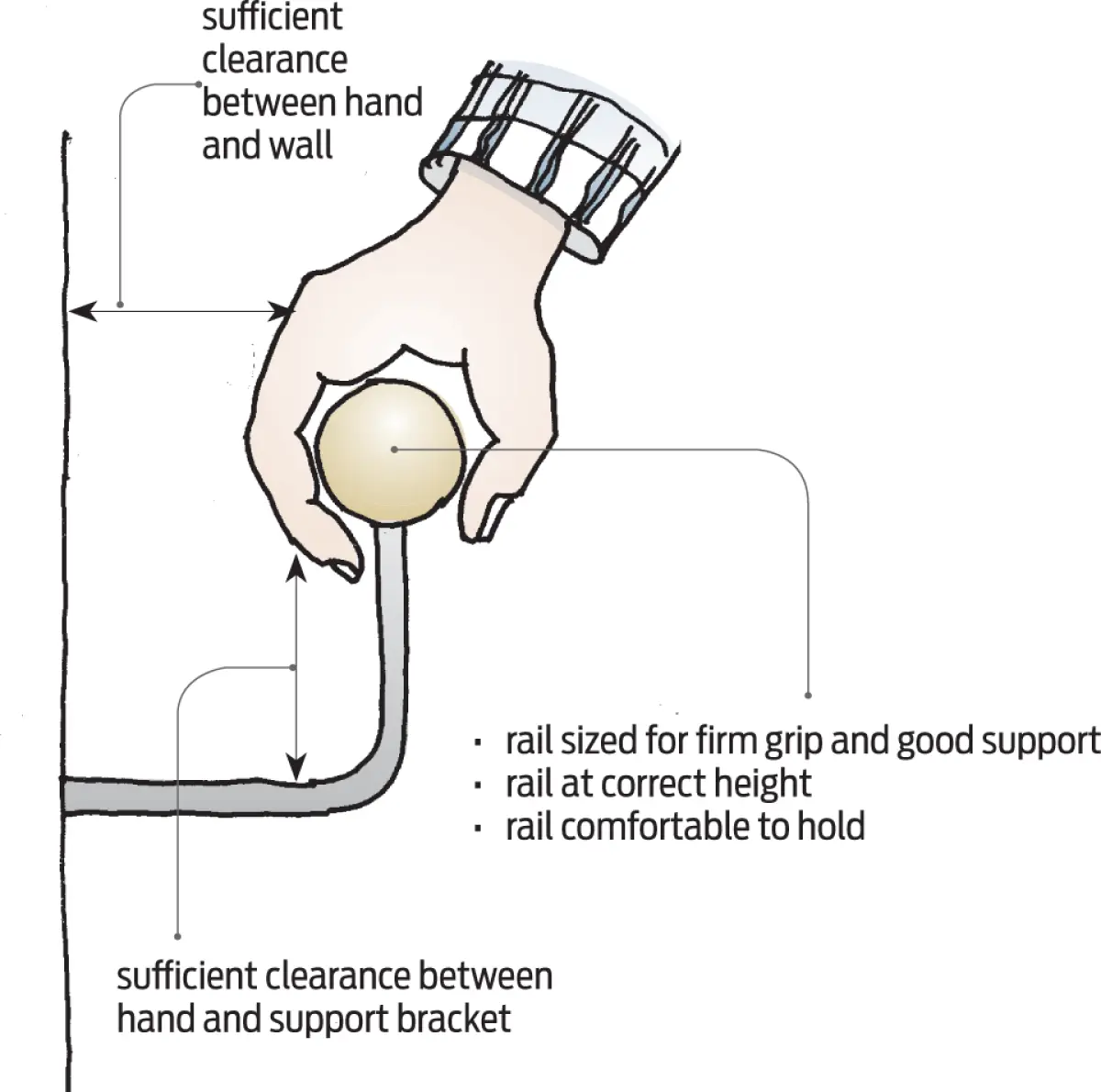
Handrails should be in accordance with D1/AS1. Size them to allow a firm grip, provide good support and allow enough clearance between hand and support bracket and between hand and wall (see Figure 7).
The handrail height must be 900–1000 mm as specified in D1/AS1. If possible, have handrails on both sides of stairs so people an use left, right or both hands for support. The width between handrails must be at least 850 mm.
Lifts and elevators
Where a person living in a two-storey house is unable to negotiate stairs, either:
• arrange the house so the person does not need to use the stairs
• install a mechanical lift – either a stairlift or a domestic elevator.
Stairlift
A stairlift fitted to the side of the stairs moves people on a fixed or fold-down seat or on a wheelchair platform and is simple to retrofit onto a stair. It is also likely to be the less costly option.
To fit a stairlift, the stair must be wide enough to allow access for an ambulant person to pass the stairlift. Some models of stairlift are available for straight flights only, while some models can cope with a 90° or 180° turn in the stair.
Obtain advice before installing a stairlift. Think about the transfer on and off the stairlift. Is it possible to install a wheelchair platform stairlift? If not, a fixed or folding seat stairlift will be needed.
Ensure the seat height is adjustable in a seat stairlift. Consider the transfer from wheelchair or walking frame – both wheelchair and walking frame users will probably need a second chair or frame at the other level.
Domestic elevator
Domestic elevators are available but expensive and may require more space. However, if it is possible to install a residential lift, it may be more cost-effective than either extending the existing home or moving to another, more suitable home.
For information on indoors accessibility, look at NZS 4121:2001 Design for access and mobility: Buildings and associated facilities available at www.standards.co.nz