




Artisan
A digital tool aims to lift build quality and take the pain out of the compliance process.
Artisan is a digital quality assurance tool developed by BRANZ to support building consent authorities (BCAs), builders and trades in delivering better residential build outcomes.
Construction compliance has always been difficult. Builders say inspections take too long, government says they’re too inconsistent and inspectors say they’re asked to do too many. They’re all right – the process is a prime target for new thinking.
Four eyes better than two
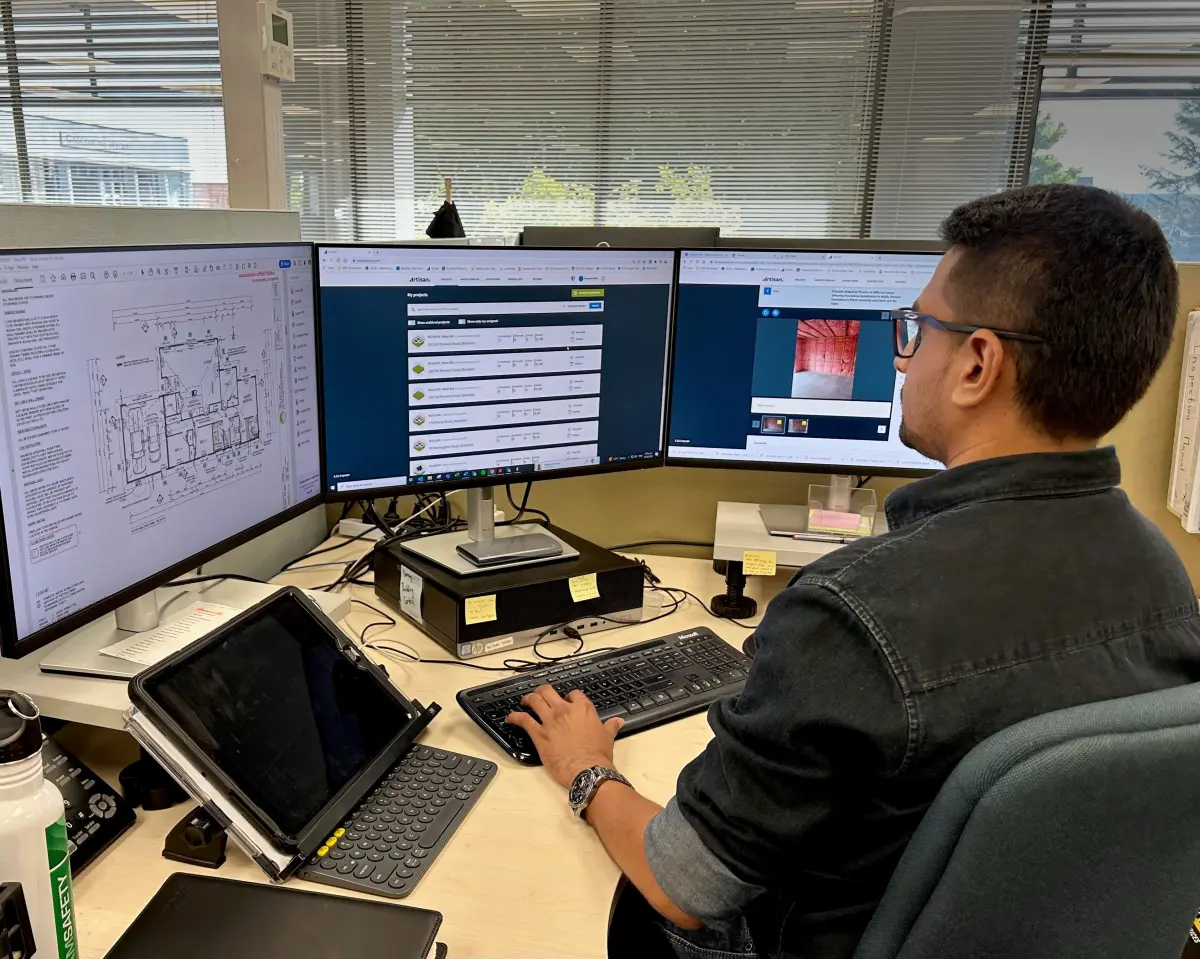
It sounds complex, but the underlying concept is a familiar quality assurance process. The build team installs the Artisan app on their smart device and uses it to photograph building work as it progresses. The app guides them through what to photograph and when.
Once the build team submits the photos for inspection, the BCA downloads the photos through the Artisan web portal and uses them to inspect the work. It then uses Artisan to either approve the work or send advice back to the build team on how to reach the required standard.
Enduring body of evidence
It’s a simple idea that tracks the traditional compliance process but with new benefits for both the BCA and the build team.
The usual pen and paper process contains a record of whether an inspection passed or failed but is not focused on providing evidence to support the decision. Some inspections include photographs, but the practice isn’t consistent and there’s no universal mechanism to store them.
With Artisan, a consistent set of photos are required from the build team at every inspection. That record is kept in perpetuity and can be accessed at any time.
Boost to productivity
There are significant productivity gains too. A typical building inspector might complete five or six inspections on a busy day, depending on the distance and time it takes to travel to each site.
Artisan eliminates the travel component, which can more than double the inspections completed in a day. From the council’s perspective, it also lowers costs and reduces its carbon footprint by getting vehicles off the road.
Low barrier to entry
Artisan doesn’t require the BCA to install any infrastructure – inspectors interact with the information through the portal in their web browser.
Every BCA has to check the same elements of a build for compliance. They may differ in what they do to check the elements but Artisan is paving the way for all BCAs to check the same elements in the same way.
Uptake and growth
Artisan represents a conscious effort to bring about transformational improvements to residential build outcomes after BRANZ and related industry groups began thinking about how to make significant system-level changes to the construction sector.
BCAs using the tool represent a significant percentage of the total building activity, including Auckland Council and Kāinga Ora nationally.
The tool has also been picked up by volume builders as a quality assurance tool, and Kāinga Ora has chosen Artisan as part of its strategy to obtain New Zealand Green Building Council Homestar certification for its new homes.
‘It’s a very promising start,’ says Sunil Surujpal, General Manager of Digital Technology at BRANZ.
‘It’s not about achieving 100% uptake by the BCAs. There is a critical mass for effecting systemic change, and that might be possible with key BCAs and volume builders.’
Visit www.branzartisan.nz
Unitec-Te Pūkenga Environmental Solutions Research Centre
An innovative project is showing the country’s most wasteful sector how to mend its ways.
The construction sector has a waste problem. Building and demolition work sends the same amount of waste to landfill as all other activity in the country combined. More than agriculture, manufacturing, retail, transport and healthcare together. We’re drowning in the stuff.
‘It’s a very big number and an enormous issue,’ admits Professor Terri-Ann Berry at Unitec-Te Pūkenga. As well as heading Unitec’s Environmental Engineering programme, Dr Berry is founder and Director of the Environmental Solutions Research Centre (ESRC), which tackles waste and pollution challenges to improve environmental outcomes in Aotearoa.
Science and industry
The ESRC partners scientists with industry experts in construction, waste management and minimisation, air quality, wastewater treatment and civil engineering.
Some of its work involves specialising in waste and pollution-reduction projects.
Vision for a wasteful industry
Dr Berry doesn’t believe the construction sector can ever reach 100% recycling – the holy grail of a truly circular waste economy – but says there are plenty of ways to improve.
‘Imagine if every construction site no longer used skips and instead separated waste into different streams that were reused or recycled,’ she says. ‘Or construction businesses proactively pushed back against some of their suppliers’ and manufacturers’ most wasteful practices, saying, “No we don’t want packaging, don’t send it to us”.’
The ESRC supports builders to do better in practical ways and by encouraging conversations about waste management so it becomes ingrained into construction culture.
Setting up a site
Typically, a construction business approaches the ESRC asking for help with on-site waste management. A team visits and assesses the site, determines the size of the project and what kind of construction work is being done, then discusses ways to divert waste away from the skip.
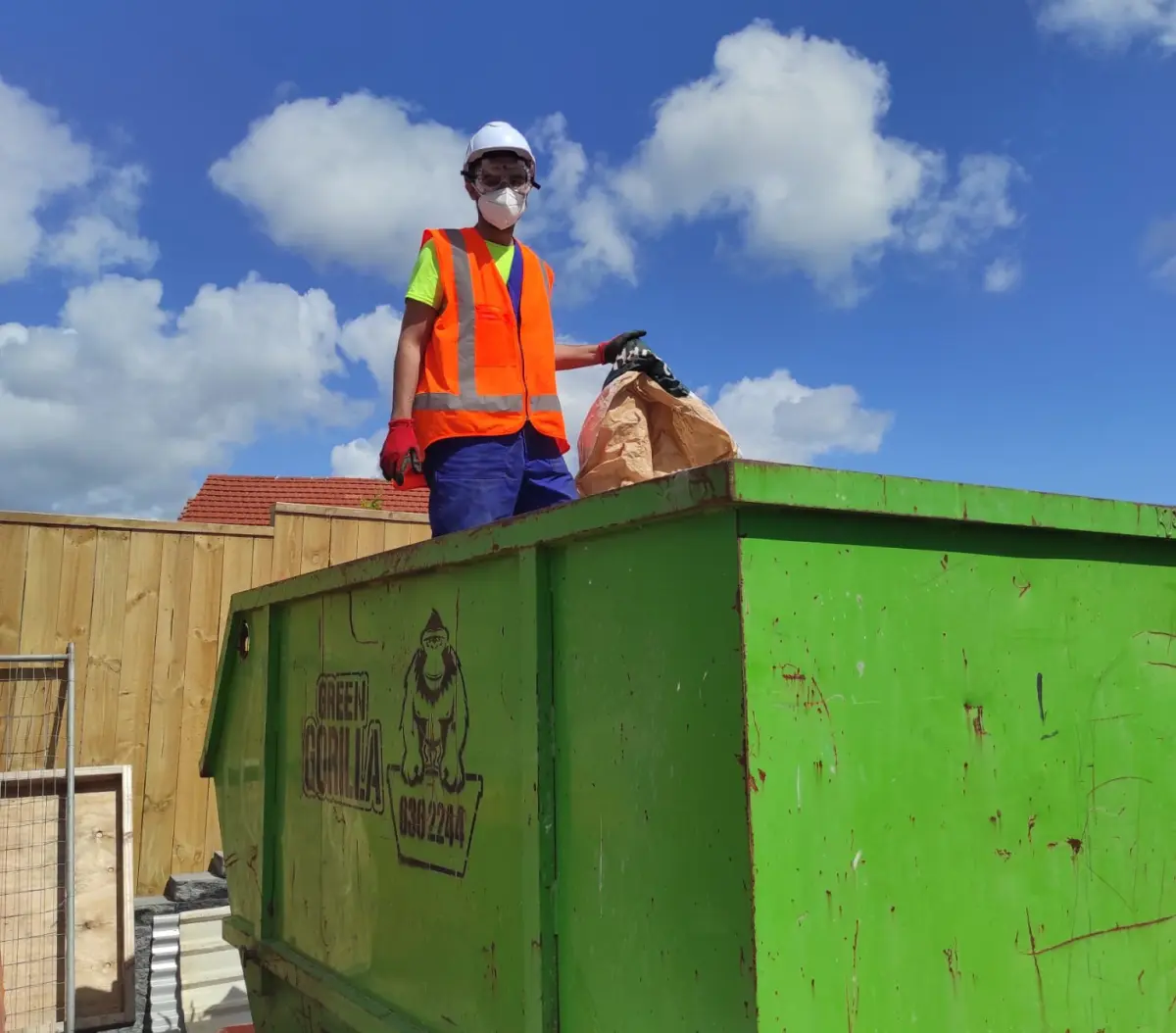
If the primary type of waste is plastics, for example, the team sets up a site separation process. They photograph every plastic item, weigh it, analyse its chemical composition and record it in a catalogue. Bins are placed on the site and labelled with signage and photos of each type of plastic beside the bin where it should be placed.
For sites that want to do their own, the ESRC has toolbox kits that can be downloaded and printed, with signage in several languages, plastic catalogues to help identify waste, lists of providers that will receive waste from the site and other guidance to help them get set up.
The idea is to provide businesses with a simple starting point and prompt ideas for practical things they can do that will make a difference.
Finally, the ESRC takes the large collections of separated waste and finds providers that will take it for recycling. It checks how the recycler intends to use it, what transport costs are involved and whether the material will remain in Aotearoa.
Transport costs are a common sticking point, but the team has innovative solutions like reverse logistics where otherwise empty trucks returning from deliveries can transport waste at a much lower cost.
Cradle-to-grave issue
Effective waste management is acknowledged as an end-to-end issue – to work, it needs to begin with the architects and designers, continue through the manufacturers, suppliers and builders and then on to the recyclers after the building’s end of life.
‘Waste management is a big thing for any construction business to take on. They need help, and up until recently, it just wasn’t there. It’s an enormous undertaking, and it won’t happen unless they get the support they need,’ says Dr Berry.
Despite the challenges, there’s significant demand. Over the last 4 years, the ESRC has grown from an initial group of three to a team of eight. It has also begun to branch out into other industries, taking the lessons learned in construction and applying them to waste streams in other sectors.
Visit www.unitec.ac.nz/research-and-enterprise/environmental-solutions-research-centre
Scafit
A new focus on people, personal development and wellbeing is transforming the outlook for a local scaffolding company.
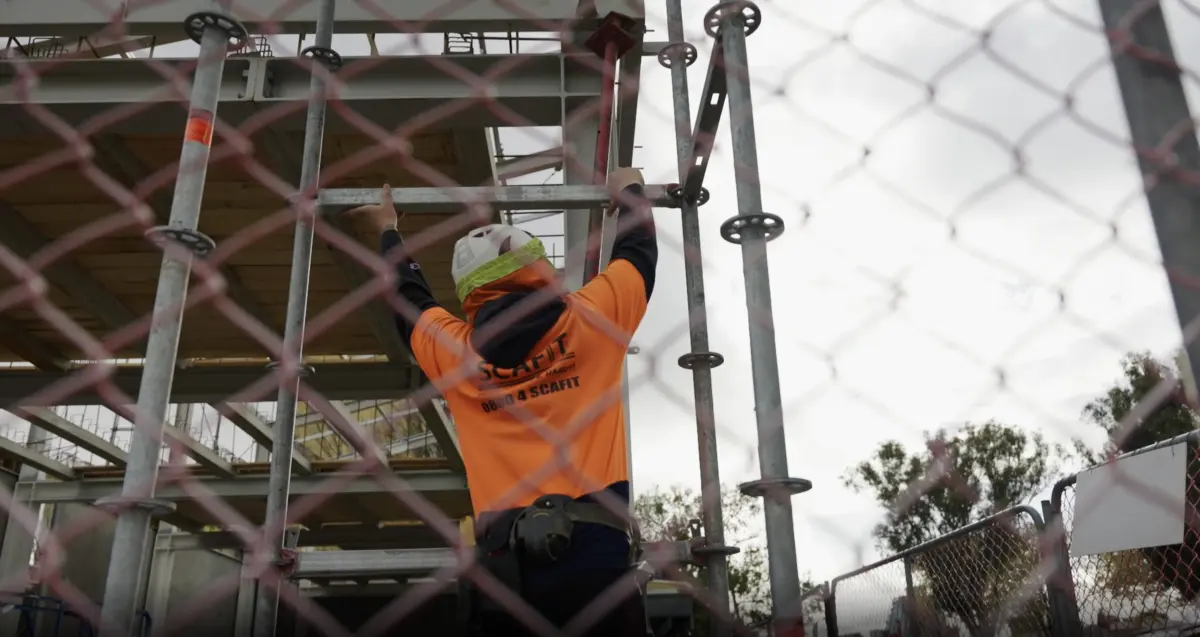
Scafit is a thriving, medium-sized scaffolding business operating in Palmerston North and Whanganui. With a team of 60, it designs, engineers and installs scaffolding solutions and platforms for a range of construction applications.
Scafit and its team are accredited with some of the most prestigious international standards for health and safety and have won several national awards for excellence in staff wellbeing, training and development and for contributions to business and the community. But it hasn’t always been this way.
Problem years
Nicki and David Crowley founded Scafit in 2006. Business went well, so they hired staff, purchased new equipment and took on bigger jobs. But when the global financial crisis hit and a personal tragedy forced the Crowleys away from the business for a time, it took a significant toll. In a very short time, they found their company on the brink.
They knew they had to make a change if Scafit was to survive and decided to refocus on developing a high-performing, well-trained, loyal and happy team that could contribute to the growth and longevity of the company.
People first, profit second
Initially, they weren’t sure where to begin. Scafit already had a strong set of company values, but they weren’t being put into practice in day-to-day operations.
The answer was to begin investing in the business and its people – starting by ensuring the right people were in the right roles.
The Crowleys brought in a leadership development expert to run leadership courses for key managers and those identified as potential leaders.
This was a success, so an in-house training programme was developed for employees wanting to grow within the organisation. This covers topics like company tikanga, soft skills, technical skills and leadership.
As many employees have difficulty learning in a classroom-like environment, it was important that the programme was accessible and engaging for everybody.
Employee benefits
Over the next 6 years, Scafit continued its focus on people, developing a comprehensive employee wellbeing programme that provides a range of benefits, including physiotherapy and sessions with a clinical psychologist for employees dealing with mental health issues.
There is a free, all-day kitchen for employees where they can have a sit-down breakfast together before heading off to their worksites.
Formal health and safety play a big part at Scafit now too. The owners knew it was crucial that everybody using the scaffolding could do so in a safe way. They gained several national and international health and safety accreditations, including ISO 45001.
Business benefits
As well as reducing incidents and injuries, the focus on health and safety has helped with recruitment – potential employees can see the high priority that the company places on their safety and protection.
Over time, Scafit has became a happier, more productive and loyal team. Staff retention has increased significantly, while absenteeism and sick leave have decreased. Most company leaders are promoted from within, upskilled and developed from lesssenior roles within the business.
While the transformation was a significant investment in time, money and effort, the Crowleys estimate the benefits outweigh the costs by 8–10 times. That doesn’t account for the intangible benefits like improved company culture and better leadership style making Scafit a more enjoyable place to work.
David Crowley, Scafit’s Managing Director, says, ‘The biggest benefit our staff have got out of this is really that they’re part of something that’s bigger than just themselves. They’re affecting their families, their in-laws, their communities, their sports teams. It’s a bigger picture than just a take-home pay cheque at the end of the week.’
Visit www.scafit.co.nz