

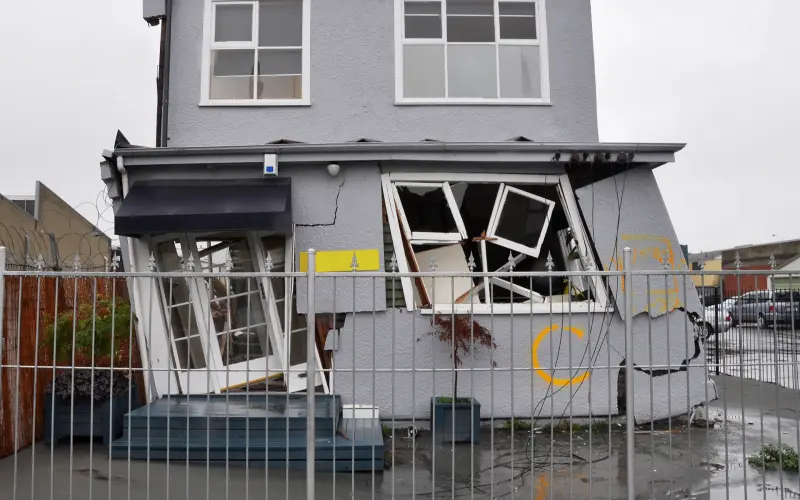


New Zealand spends 97% of hazard-related costs on response and recovery, and only 3% on reducing risk and building resilience. That is one of the key findings from a recently released briefing paper prepared by the Ministry for the Environment and the Department of the Prime Minister and Cabinet.
Other findings from the report:
- New Zealand spending on responding to natural hazards is on average nearly twice as much as the OECD country average.
- Scientists estimate there is a 75% chance of New Zealand’s Alpine Fault rupturing in the next 50 years. There is an 80% probability that the magnitude of the earthquake would be greater than 8.0. [The last magnitude 8.0+ earthquake to hit the main islands was the 8.2 magnitude Wairarapa earthquake in 1855, when the earth moved over 18 metres horizontally and 6 metres vertically.]
- Mount Taranaki has a 30–50% chance of erupting in the next 50 years.
- Until recently, the National Risk and Resilience Framework (a cross-government
- strategic approach to risk management) had the equivalent of just 3 people working on it fulltime. This has now been increased to 13.
- Even minor sea-level rise could result in partial or complete insurance retreat for 99% of homes in high-risk coastal zones by 2034.
- Datasets used to inform decisions, such as landslide susceptibility, stormwater capacity, soil stability, and flood extents, are fragmented and ageing. Information is inconsistently maintained and funded.
The paper says that New Zealand’s historical approach to managing hazards has often been reactive, with a reliance on insurance payouts and government funding to rebuild. “This reactive model is not only expensive, it can perpetuate a dangerous cycle: when asset owners expect to be bailed out, they have less incentive to reduce their own risks. This results in more New Zealanders remaining, building and investing in harm’s way.”
The paper points out that “Taking a proactive approach is more cost-effective, saves lives and better protects homes, businesses and public assets. It also unlocks long-term benefits – from stronger communities and healthier ecosystems to a more resilient and adaptable economy.”
To find out more read Long-term Insights Briefing Building New Zealand’s Long-term Resilience to Hazards.