



The move towards a circular economy in the construction and infrastructure sectors is a step change from traditional ways of producing and consuming. It dramatically reduces waste, makes the most of resources, extends the life of products and recovers more materials.
While the transition is vital to cut carbon emissions, it also offers significant economic benefits in construction, real estate and urban development.
Circular economy essential for sustainable growth
Embracing the principles of a circular economy is essential for sustainable growth. The construction and infrastructure sectors contribute significantly to global carbon emissions due to their high need for energy and materials. The sectors can reduce carbon emissions by:
- extending the life of materials with durable and adaptable designs that can be disassembled
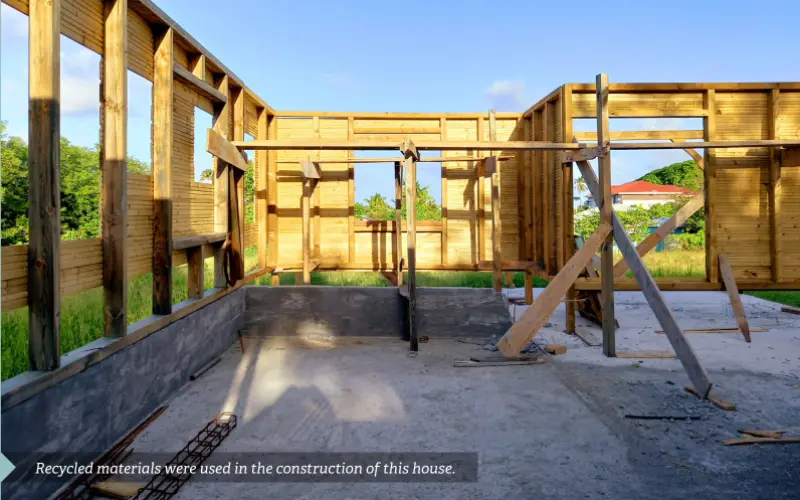
- using recycled materials
- reusing, renovating or repurposing buildings and infrastructure.
These methods lessen the demand for new raw materials and decrease the carbon footprint during construction and while an asset is in use.
Demand-led vs supply-led strategies
There are two main approaches for making circular economy principles core to the construction and infrastructure sectors.
Demand-led strategies
Demand-led strategies focus on reducing the need for new raw materials by maintaining, repairing and adapting existing assets to extend their lifespan. This not only helps to conserve resources but also creates jobs and develops new skills in the maintenance and refurbishment sectors. By relying on what we already have for longer, we are less dependent on external supplies and the uncertainties of market prices.
Supply-led strategies
Supply-led strategies recognise the need for materials and aim to make them more sustainable. They aim to achieve this by opting for materials that are ethically sourced and have a minimal ecological footprint from the outset.
The goal is to ensure that consuming materials inflicts the least possible environmental damage, incorporating recycling and other waste-minimising practices during production and across the product’s life cycle.
These complementary strategies balance using existing resources efficiently with choosing new materials mindfully.
Strategies for a sustainable transition
The white paper Circularity in the Built Environment: Maximizing CO₂ Abatement and Business Opportunities, released by the World Economic Forum and McKinsey & Company earlier this year, highlights that circular economy approaches could cut emissions from producing and using building materials by up to 75% while generating significant economic value.
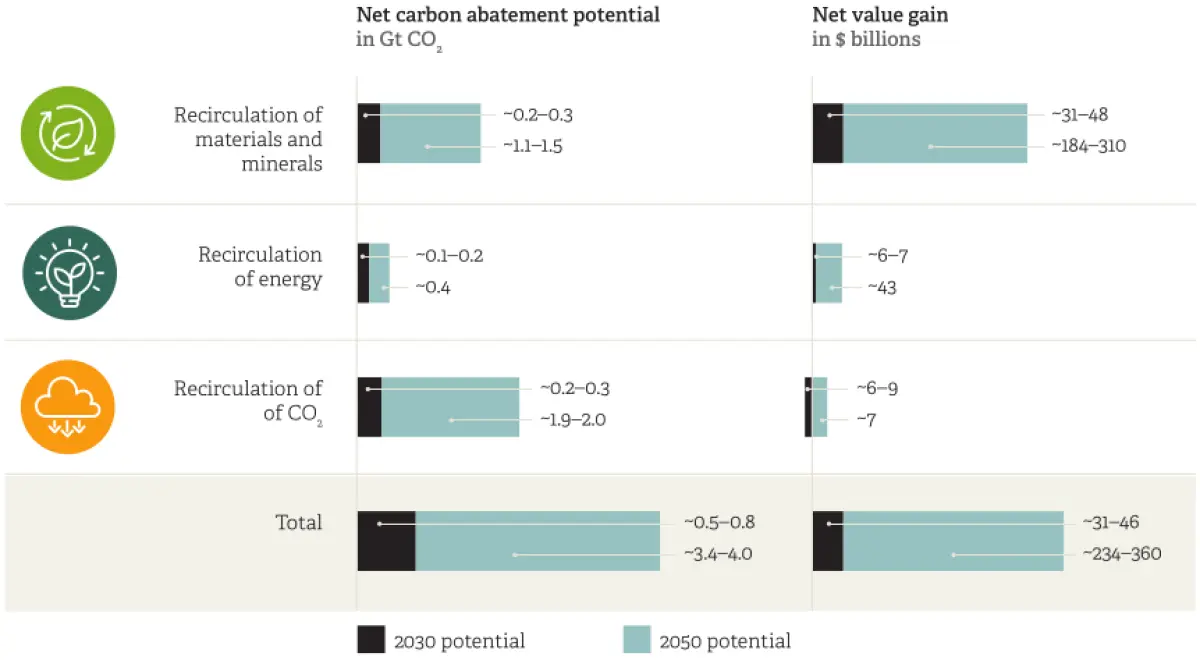
By 2030, these strategies could reduce carbon dioxide equivalent (CO₂e) emissions by 0.5–0.8 gigatonnes (Gt), a 13% reduction, with the potential to decrease emissions by 3.4–4.0 Gt CO₂e, a 75% reduction, by 2050. Moreover, adopting circular practices could lead globally to an annual net profit of US$31–46 billion by 2030, growing to $234–360 billion by 2050 (see Figure 1).
Strategies by material
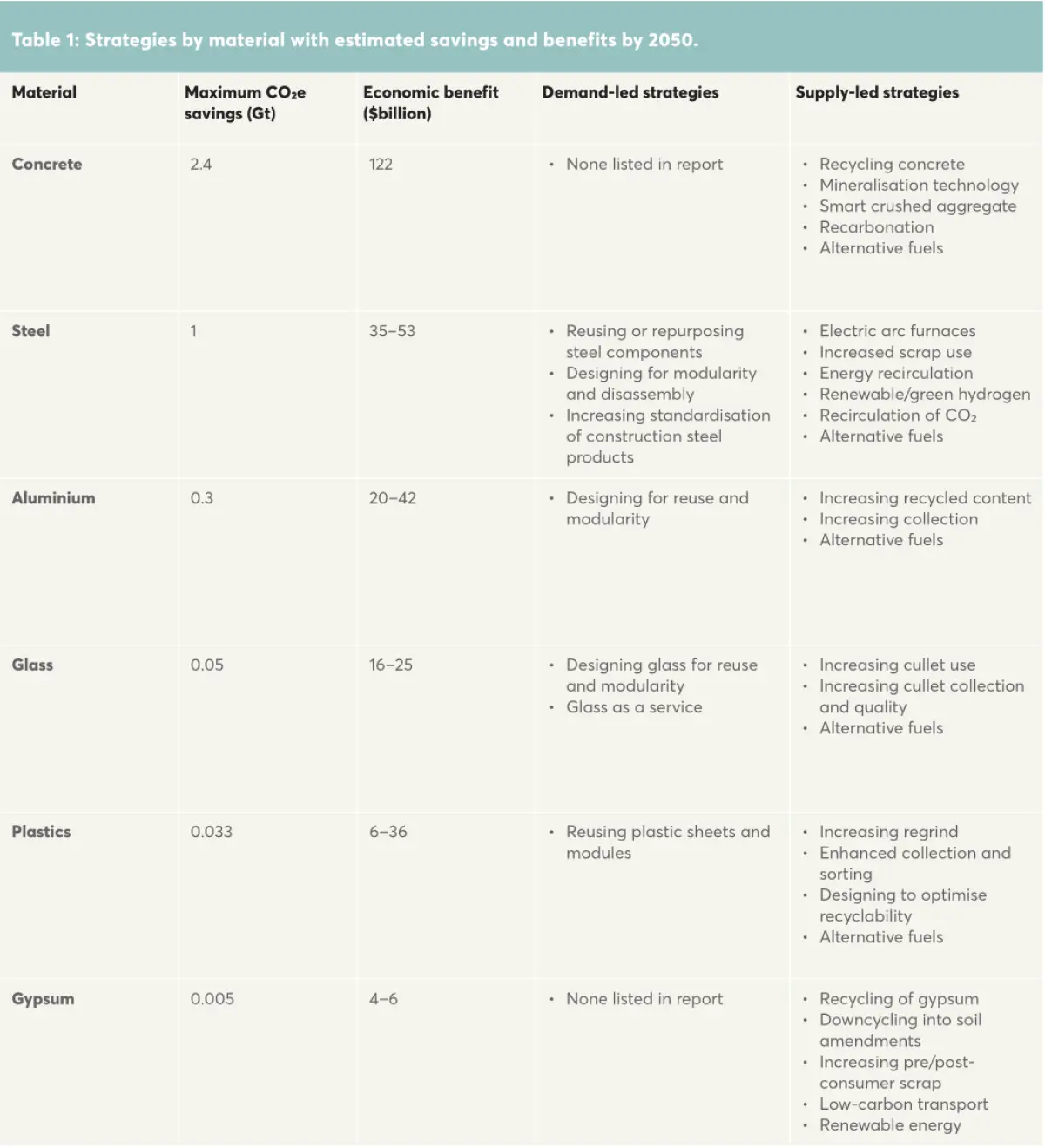
For specific materials, the report identifies potential impacts and strategies (see Table 1).
The report also points out the importance of carbon capture and storage (CCS) in reducing CO₂ emissions across construction materials, although CCS technology needs more development and scaling.
Strategies by material
For specific materials, the report identifies potential impacts and strategies (see Table 1).
The report also points out the importance of carbon capture and storage (CCS) in reducing CO₂ emissions across construction materials, although CCS technology needs more development and scaling.
Strategies at a company level
To implement circular economy concepts, companies need to focus on:
- developing business cases for circular projects
- training
- embedding circular principles into operations
- adapting to regulatory changes
- managing risks
- linking circular metrics to compliance requirements.
Short-term gains vs long-term solutions
The industry debate between prioritising reducing emissions now and minimising whole-life emissions reflects the broader challenge of balancing short-term environmental priorities with long-term sustainability goals.
Achieving this balance requires a nuanced understanding and strategic planning. The best approach may vary across projects and technologies. What we do know is this – embedding circular economy principles now will contribute to immediate and sustained environmental resilience.