

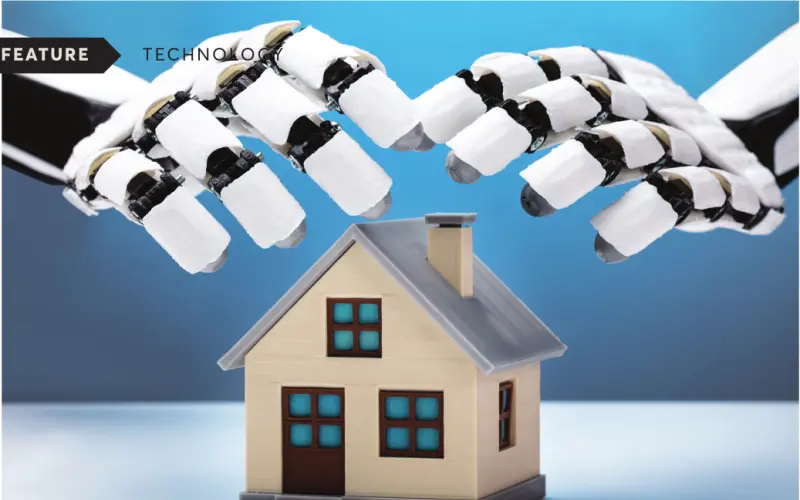


Meet HRP-5P. He is 182 cm high, weighs 101 kg and can slide a sheet of plasterboard or plywood off a stacked pile, carry it to a wall, pick up a tool and fix the board to the wall framing. But don’t worry about your job just yet – this humanoid robot in Japan is still just a prototype. For more on robotics, see page 56 of this issue.
Cited standards
Humanoid robots such as HRP-5P are being developed to carry out heavy labour.
Other new technologies offer improved support to human workers:
- Smart hardhats that keep an eye on temperature and location and even measure levels of fatigue, enhancing safety.
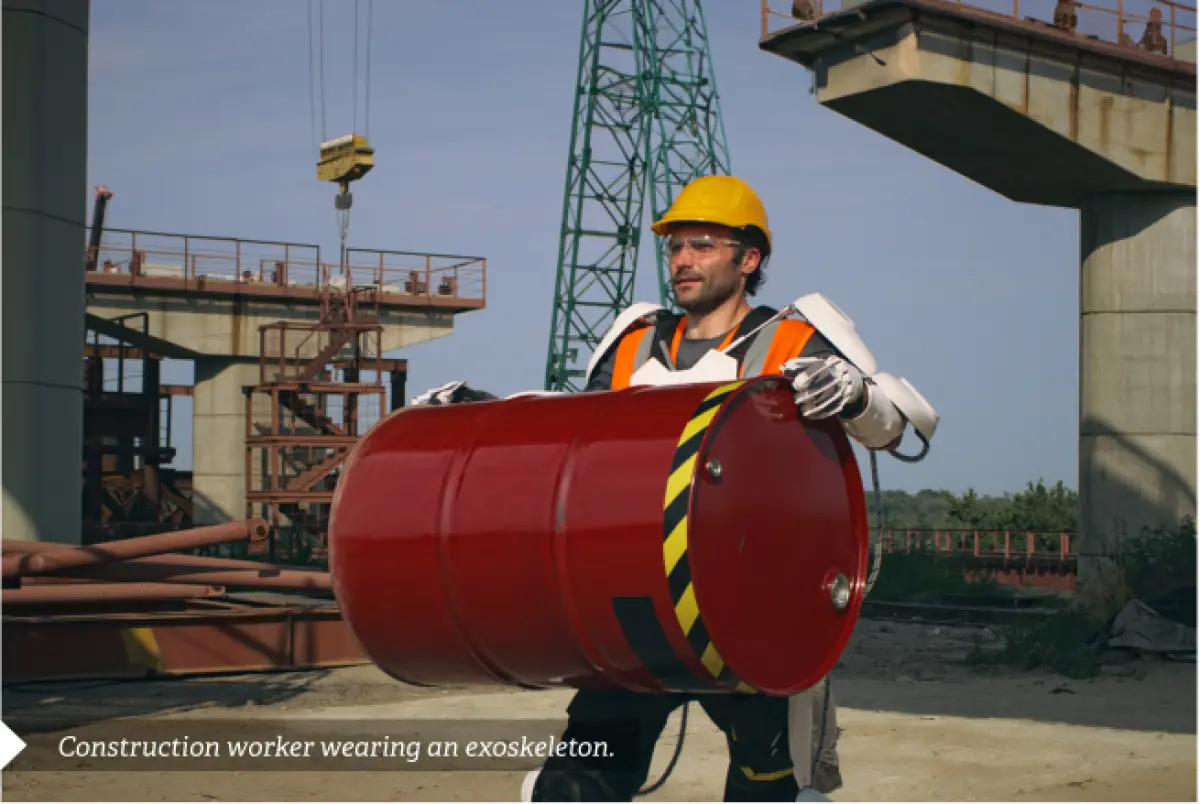
- Wearable exoskeletons that give physical strength, reducing strain and enhancing safety.
- AR (augmented reality) goggles or glasses that allow construction site staff to see information about specific building elements.
Some technologies are materials based. These are some new or relatively new technologies to Aotearoa:
- Wood-based thermal insulation – a BRANZ project has investigated its potential.
- Variations of concrete, such as hempcrete, which includes hemp stalks and binding materials. Some homes have already been constructed with this.
- Insulation panels and other construction materials made from a type of fungus called mycelium, which is already being used in packaging products in this country. Researchers are looking into making mycelium-based products with 3D printing.
Buildings go off to the printers
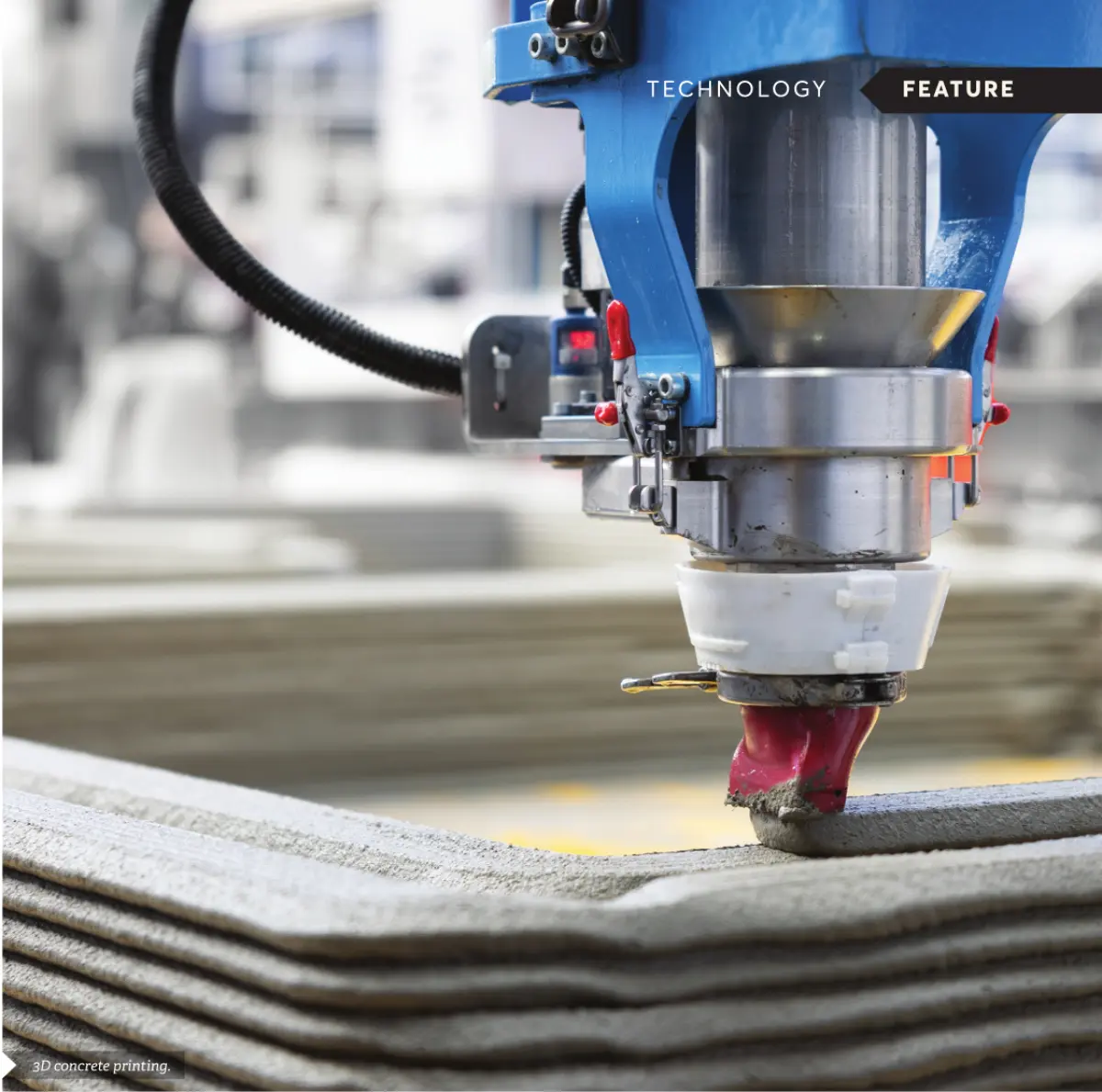
In 2023, one of the first homes using 3D printed concrete was built in Auckland. The company QOROX says the walls were printed in 20 hours.
From leaving the factory to completing the installation, the process took 5 days. The company says that its 252 m² Pāremoremo home is the largest fully 3D printed building in the southern hemisphere.
Today, there are several companies offering 3D printed buildings here.
AMCRETE says it can print a whole house in a single pass. Its 3D printer has a working area of up to 17 m x 11 m x 7 m high, allowing it to print a 1-storey house of approximately 180 m² or a 2-storey house of approximately 360 m².
Digitalisation – BIM moves forward
Digital technology is probably having the biggest impact of all on building sites today, from design software to sensors and drones.
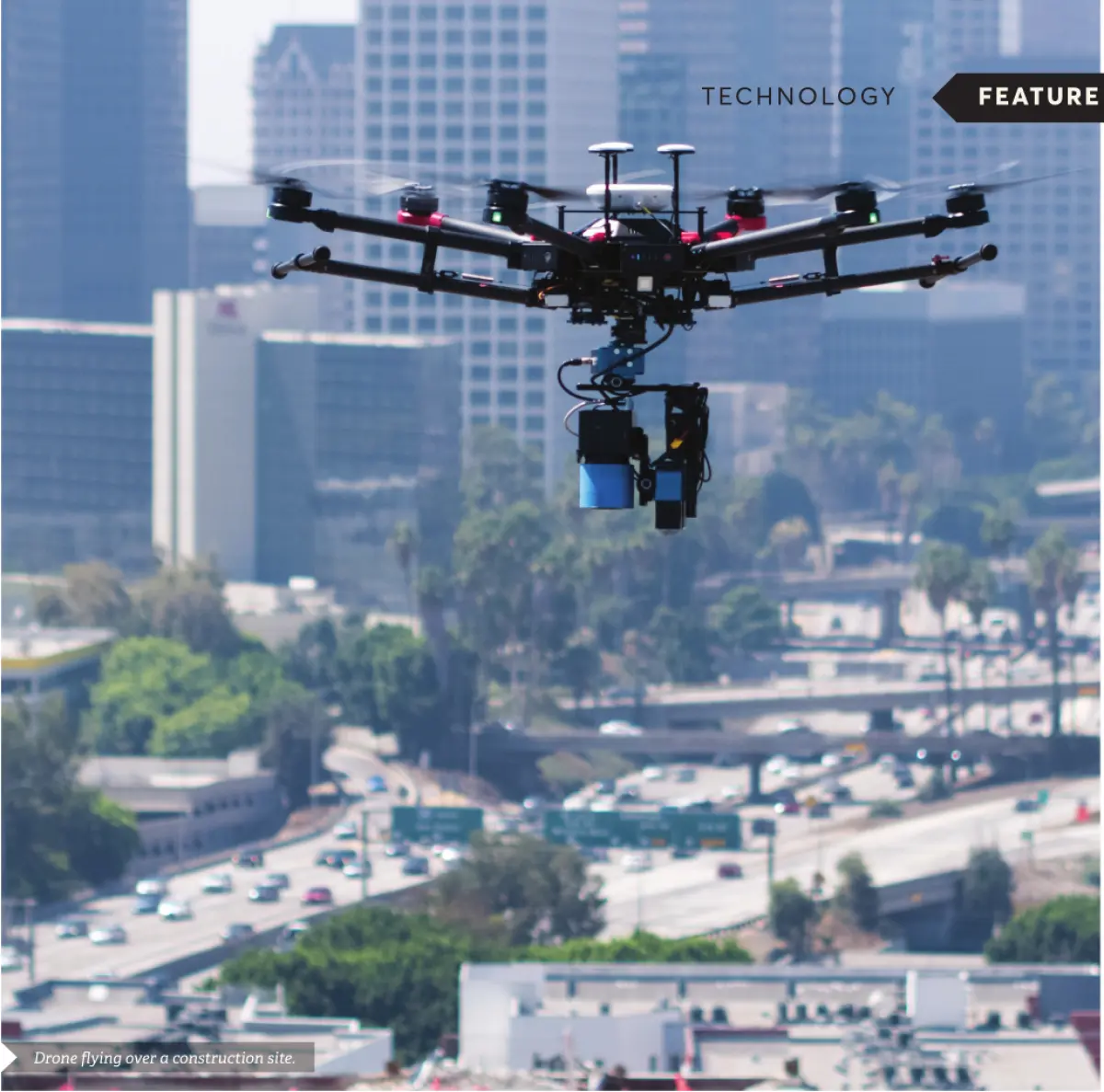
Drones can scan a building site before construction begins, assess fill content for earthworks and identify problems on a building that would be difficult to spot from ground level. For more on drones, see the article on page xx of this issue.
(Under New Zealand Civil Aviation rules, drones cannot fly more than 120 m above the ground and must stay 4 km away from anywhere aircraft are landing or taking off, which includes hospital helipads.)
Building information modelling (BIM) is not new – at Build, we have been reporting its progress for over a decade. The NZ BIM Handbook, a crucial part of BIM adoption in Aotearoa since 2014, was significantly updated in 2023.
In very simple terms, BIM is a digital version of a building or planned building. This can be shared between designers/engineers/suppliers and others and potentially used to help guide maintenance over a building’s lifetime.
The big advantages of digitalising and sharing plans include the potential to spot errors early, reducing the changes required during construction, shortening the construction time and saving money. A detailed digital model also helps with estimating material requirements.
A role in disaster resilience
Once a home is built, the technology that is part of operating it is more likely to include a solar photovoltaic (PV) system on the roof and/or an electric vehicle in the garage. There are around 60,000 PV systems installed today, with around 53,000 of those on homes.
There is an opportunity for these technologies to play a key role in disaster resilience. If you lose grid electricity, for example, a rooftop PV system or an EV in the garage could power your freezer, preventing the food from going bad.
While the technology exists for that to happen now, it hasn’t yet been implemented. ‘We know people think it’s sensible to be able to use the power from their rooftop PV after a natural disaster,’ WorkSafe NZ - Energy Safety, Technical Officer David McLaughlan told Build. ‘There’s work going on to make sure people who do that can do it safely. We don’t want to have people harmed.’
The range of smart appliances and the development of the smart home concept have captured a lot of imaginations (see BRANZ Bulletin 687 Introduction to smart homes).
While many people are buying individual smart appliances, the uptake of the wider smart home concept appears to be slow, although there are no clear statistics around this.
Standards support crucial
One of the biggest issues is not the technology itself but the management of it. For example, while artificial intelligence (AI) is being added to all sorts of electrical appliances and switchboards, the key standard in this area – AS/NZS 3000:2018 Electrical installations (the Wiring Rules) – doesn’t currently cover AI.
‘It is important to have standards backing up the introduction of new technology,’ David McLaughlan says, and this is particularly true for higher-risk products. Exactly how that happens is a challenge for international standard development.
For example, while some countries are happy for AI to control just about everything, Australia and Aotearoa argue that, for safety reasons, some products such as portable heaters must be attended – because of the risks involved, they should require human input in their operation.
The integration of AI into home appliances and systems with machine learning capabilities and better predictive functionality means that devices can see a household’s pattern of use and preferences and potentially provide more tailored service. But what are the limits?
WorkSafe NZ’s Lucy Salt points out that there may be risks of ‘undesirable decisions’ if AI is given free rein. ‘How far will AI be able to go in modifying safety barriers in an electrical system or appliance? How do you make sure the specifications are not changed?’
David McLaughlan says that another issue is how new technology is implemented in older homes such as a 1920s bungalow. ‘It is easier bringing new technology to new construction, but with an existing home, you have to work out how to get the old technology to work safely with the new.’
Three steps forward, two steps back
The introduction of new technology doesn’t always run smoothly even when very large sums of money are available. Professor Robert Amor of the University of Auckland recently visited the US off-site construction factory that formerly housed the Katerra company. This ambitious company had a disruptive vision of industrial construction, building housing components with robots on an assembly line similar to how cars are built.
You can see the vision on YouTube (www.youtube.com/watch?v=d_SOa4Nr-tw).
Despite US$2 billion of funding support, Katerra found it difficult to convince the industry that this type of vertically integrated industrial construction was the way ahead and struggled to meet some of its commitments. In June 2021, the company filed for bankruptcy.
‘The off-site construction company that took over from Katerra has a lot bigger human workforce and many of the robots have been moved aside,’ Robert Amor told Build. ‘It is disappointing to see so much being done manually, but while the progress is slow, at least the company is profitable.’
Robert Amor’s US study tour – made with people who are part of the Australian Building 4.0 CRC (an Australian Government-funded research initiative) – allowed him to make an assessment of where Aotearoa stands, and the news is good. ‘We are really not very far behind what the top companies are doing in the US.’
BRANZ research
BRANZ research has underpinned several local technology innovations in recent years, some in its own name – the very successful website BRANZ Maps is a good example – and others launched by other industry players. You can find more details about BRANZ’s full portfolio of Levy-funded research projects at www.branz.co.nz/research-portfolio.