



Most New Zealanders don’t spend much time thinking about building science.
Yet it shapes our daily lives. It’s there when paint holds its colour through salt laden winds, when a home stays warm without eye watering power bills, and when renovations don’t uncover nasty surprises years later.
When buildings quietly do what they’re meant to do, it’s usually because someone asked the hard questions early.
That quiet work matters more now than ever, as New Zealand undertakes the biggest building reforms in decades.
Among changes to consenting, liability and consumer protection sits a less visible proposal: a shift in how building research is funded. Its unintended consequences could reach right into the homes we design, build and live in.
The work and capability behind the BRANZ name
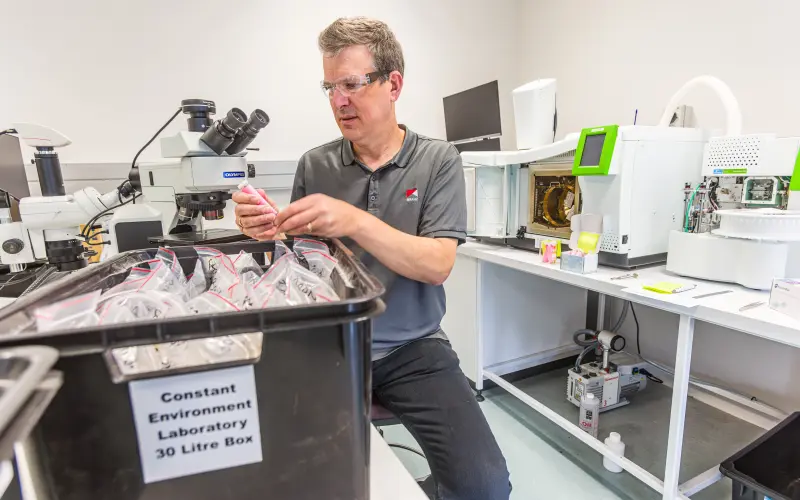
For almost 60 years, BRANZ has been building and maintaining New Zealand’s independent building research capability. At our campus in Porirua sits a collection of specialist labs and testing facilities that together form critical national infrastructure for the building sector.
Here, we bend building elements until they fail, shake structures to simulate earthquakes, expose materials to harsh weather, and burn buildings to understand how fire really spreads.
This capability has been built slowly and deliberately over decades. It includes highly specialised equipment, long running experiments, and teams of scientists, engineers and technicians whose expertise is not easily replaced.
The tools people interact with
Many architects and designers interact with BRANZ not through laboratories, but through practical tools that make everyday decision making easier. They are freely available and guide decisions on insulation performance, wind and corrosion zones, weathertightness risk, and the embodied carbon of materials.
What’s less visible is what sits underneath them. These tools are built on decades of longitudinal data.
In the future, tools that are currently free may need to be scaled back, charged for, or discontinued altogether – not because they lack value, but because the certainty required to maintain them has gone.
The proposed changes to funding
At present, there are two levies on building work: one funds regulation, the other funds independent building research. The research levy flows directly to BRANZ to support long term capability on behalf of the whole sector.
The Government has announced plans to remove this dedicated research levy and instead manage building research funding through a contestable process administered by central government.
Achieving this change will require amendments to legislation, with the Government signalling its ambition to introduce and pass these changes ahead of the general election in November.
The objectives are understandable. Simplification matters. Competition can drive innovation. A more open research system is, in principle, a good thing — and one BRANZ supports.
The risk lies not in the objectives, but in how they play out in practice.
Why long term research needs certainty
Building research relies on specialist laboratories, highly skilled technicians and infrastructure built up over decades. You can’t switch that capability on and off year by year. Nor can it be easily rebuilt once lost — especially in a small market like New Zealand.
Some of the most valuable work happens quietly over long periods: understanding how fire spreads in real buildings, how timber performs in earthquakes, or how moisture moves through complex wall systems. A purely contestable funding model struggles to sustain this kind of work.
What it could mean for designers and homeowners
Less independent research and testing means more professional risk. Guidance becomes harder to keep current. Decisions rely more on assumptions, rather than evidence grounded in local conditions.
For homeowners, the impacts show up later — and more painfully. Problems aren’t prevented; they’re deferred with even higher insurance premiums and more costly consequences later down the track.
What could happen when research is privatised
International experience offers a warning. Following the privatisation of the UK’s building research capability, the Grenfell Tower inquiry found serious weaknesses in the independence and integrity of product testing and certification. Commercial pressure displaced public interest science, with tragic consequences.
A constructive path forward
The Government has been clear that funding for building research will continue and will be ring fenced. That commitment is important.
The real question is how much certainty exists for maintaining the long term capability that underpins safe, durable and high performing buildings.
BRANZ believes these objectives could be met by modernising the existing framework rather than removing it outright.
But if funding for BRANZ is removed as planned, safeguards will be essential: clear baseline funding for core research, multi year transition arrangements, and explicit support for long term programmes and national tools.
As legislation is debated, it is critical that we consider that good buildings don’t happen by chance: they rely on evidence, independence and continuity, which together safeguard the quality, resilience and affordability of New Zealand homes for decades to come.