

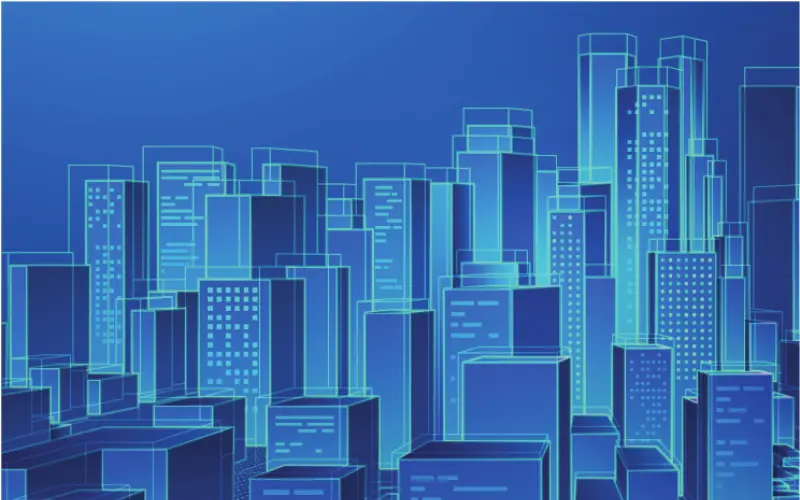


Big cities can have big problems – rapidly growing populations, ageing infrastructure, extreme weather events and increasingly complex urban environments, to name a few. It’s a lot to manage – and to do it in a coordinated and efficient manner. There’s no room or budget for trial and error.
Duplicates of the real world
In the face of these challenges, local authorities around the world are investing in digital twins – duplicates of the real world inside a virtual space where planners, engineers, developers and even the public can rapidly test ideas and evaluate their effects on the real world.
The possibilities are only limited by the sophistication of the twin, but some cities now routinely use them to evaluate infrastructure investments, new transport routes and housing developments long before development begins.
Planners can investigate solutions to urban issues, engineers can tackle complex issues like climate resilience and officials can better engage with the public to explain what’s going on. It has the potential to improve everything from infrastructure planning to asset management. Some cities now even require interaction with a digital twin as part of their planning processes.
The origins of twin technology
The concept of a virtual counterpart originates in the manufacturing industry where designers use CAD tools to create a model of a product and how its components fit together. In the early days, these models were no more than digital representations of old-school paper plans, but it wasn’t long before complex, high-resolution 3D models had become standard in several industries.
Today, most definitions agree that a digital twin is a model of a physical system that mirrors it in real time, or as close to real time as possible, and makes it possible to analyse the physical system and predict its future behaviour.
In building and construction, building information modelling (BIM) is perhaps the closest to digital twin technology. BIM deals with a digital representation of a physical space, often a building or other spatial development, and how it’s constructed, operated and maintained.
In cities with a digital twin, officials can bring a BIM model into the twin’s virtual environment, provided it’s compatible, and simulate the effects the project will have on the surrounding city before, during and after construction.
With sufficiently detailed models and access to city-wide data feeds, digital twins can become real-time representations of their physical counterparts, able to simulate and predict a wide variety of parameters. Technologies like augmented and virtual reality make this even more immersive.
That’s not to say the technology is without problems. There are significant questions around data quality and ownership, and the industry lacks clear digitisation standards – meaning that different models from different sources do not always interact well together, at least without significant development effort.
Local twins
Fortunately, a large-scale or city-wide digital twin project that draws data from numerous sources necessitates at least some degree of standardisation. Several international examples show what’s possible.
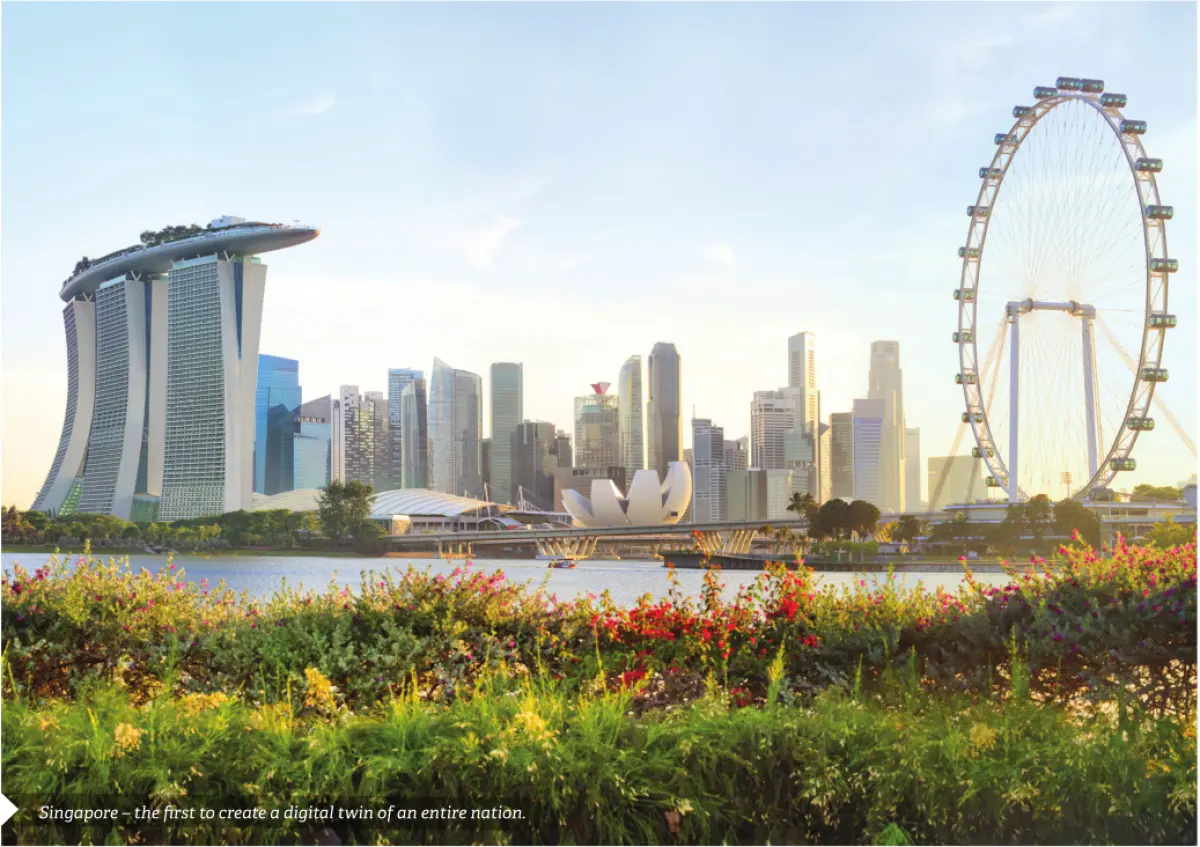
In 2022, Singapore became the first to create a digital twin of an entire nation. It was a significant investment driven by the country’s response to climate change, water and resource management and increasingly damaging floods from severe weather events.
Here in Aotearoa, several larger cities are beginning to get serious about implementing a digital twin or something similar to aid their planning processes.
In Christchurch
Christchurch began developing its digital twin in 2016 in the wake of the earthquakes. It brings together models of several city assets and draws realtime data from a network of seismic sensors scattered throughout the city.
In Wellington
Wellington recently announced its intention to create a digital twin to improve decision making and planning around transport and climate adaptation. Officials say the effort will take at least 3 years.
In Auckland
Auckland, which would arguably see the most benefit, has piloted a digital twin and has plans to implement something more permanent, but there is no clear timeframe for when it might be ready.
There are others but they are the exception – most digital models currently created in Aotearoa are associated with a particular project or built asset. Without universal standards guiding development, they’re often custom-made and difficult to link to other models or join into a larger twinning effort.
Linking digital New Zealand
However, all that may be about to change. In late 2022, the government set some ambitious goals for the future of digital technology, including creating a digital twin that interlinks and connects the entire country in a similar scale to that seen in Singapore.
The 2022/23 Action Plan for the Digital Strategy for Aotearoa proposes to ‘support a future national-level conversation on the potential of digital twins [and] the role of government policies in enabling uptake, where a wide range of possible interventions could be explored, including industry networking, research and ski l l s development, through to government procurement processes’.
For its part, the New Zealand Infrastructure Commission also recommended that investigations into city, region and nationwide digital twins be accelerated so the technology can be embedded as a tool of choice for spatial planning development.
Such an amalgamated national model isn’t slated to even begin until 2025 at the earliest, and it would likely take several years to design, develop and implement. Nevertheless, if it works as well as the experts predict – and overseas experience in places like Singapore suggest it would – a national digital twin could offer much of the efficiency and innovation gains the country is looking for.