




After the recent challenges of finding skilled staff, it’s more important than ever to set a clear vision, engage and develop staff, and build a culture that retains high performers.
Increased levels of tension
However, a flipside can be the need to carefully navigate workplace relationship challenges that have emerged over the past couple of years.
It’s fair to say that employers and employees alike have experienced an overarching sense of wariness during and after our journey through the pandemic. Tolerance levels have been frayed, and various tensions and conflicts have surfaced.
It is important for employers, frontline supervisors and team leaders to be acutely aware of the required processes around conversations that need to occur if this is still an issue.
Changing behaviour
Neuroscience has found that the adage that you can’t teach an old dog new tricks is incorrect. Neural plasticity means people can change their thinking and approach. Set clear expectations – clarity is king – and give appropriate feedback to create awareness around your concerns.
Great feedback has five components – the context, the behaviour, its impact and what needs to be different, and input from the receiver.
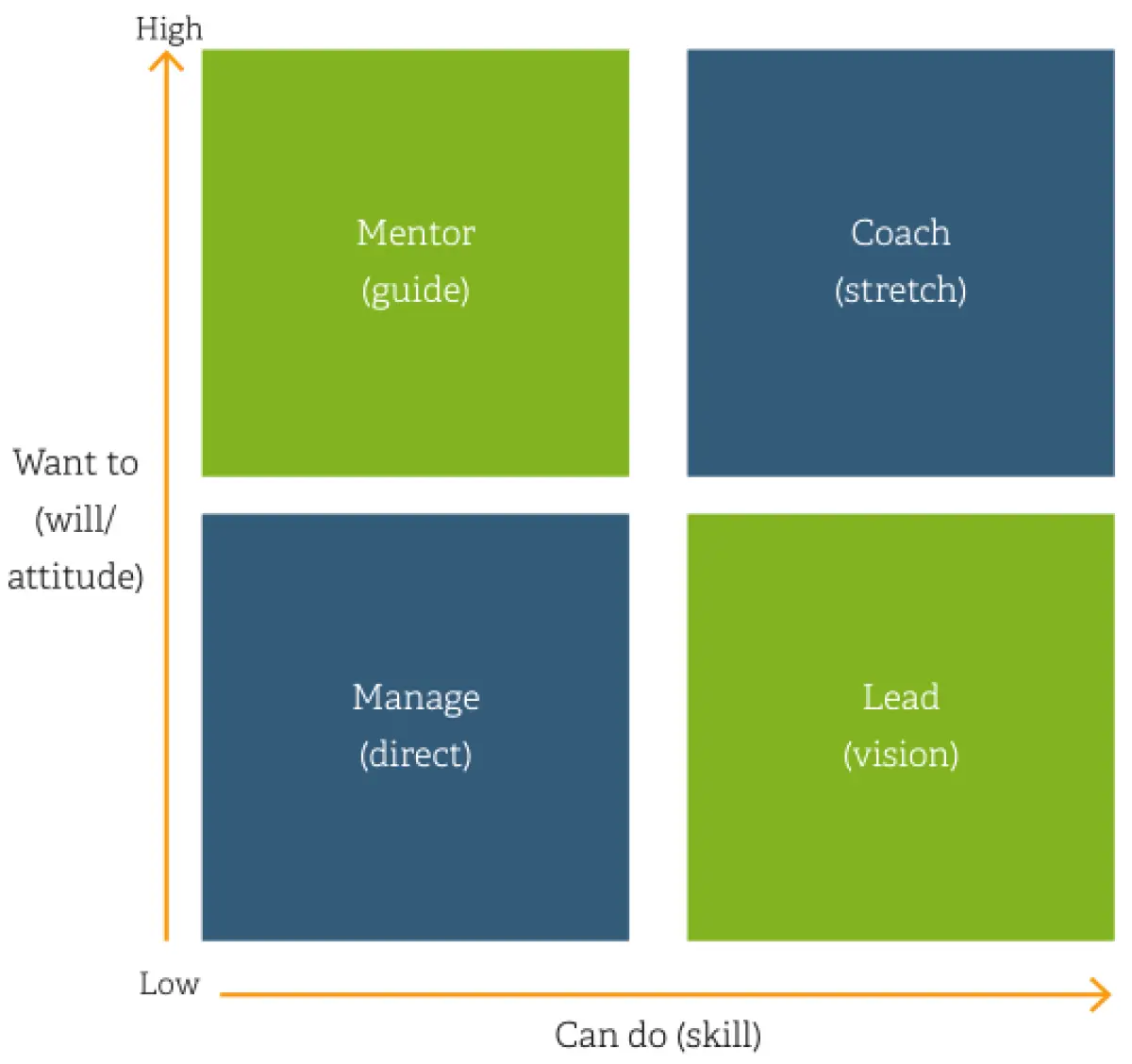
Today’s managers and leaders almost need to be psychologists to read people and situations and then adapt their approach to suit. It requires a level of curiosity to consider if you need to provide management, mentoring, coaching or inspiration.
The answer will be a combination of two things. These are the employee’s skill (ability) and will (attitude). We call this the skill/will matrix (see Figure 1), an adaption of Hersey and Blanchard’s original situational leadership model. Hersey and Blanchard were educators who studied the management of organisational leadership.
Careful management required
Managing scenarios directly can be tricky. We have seen plenty of employee-manager and employee-employee conflict in workplaces. This can be difficult to journey through and needs careful management. The conflict is often due to misunderstanding or miscommunication that needs to be tabled and unpacked.
Using an independent facilitator is a great way to steer discussions towards resolution – it’s always better to not let these scenarios fester to the point where they need an ambulance at the bottom of the cliff response.
It’s important that your frontline people understand the overarching principles of employment law – what can and can’t be said – and which processes need to be followed.
A more formal course of action may be needed. It is useful to be aware that the processes differ for disciplinary issues, which involve behaviour and therefore misconduct, and issues around performance, which involve capability. Be wary of confusing the two.
Dealing with misconduct
Misconduct and serious misconduct cover many aspects from absenteeism or not following instructions through to bullying and harassment. These can be extremely sensitive subjects.
A workplace investigation may require a licensed private investigator to ensure full understanding of the required legal processes, mitigate accusations of internal bias and assist employers in making their next decisions.
For performance issues, give employees opportunity to improve by developing a performance improvement plan with specific actions and timeframes. Without this in place, employers should not proceed to disciplinary sanctions or exit conversations.
Upskilling staff
Upskilling your leaders and frontline staff will help them provide the right intervention, whether in leadership, coaching or mentoring. Having effective conversations as a manager – even when it’s tricky – will work towards a culture of accountability and clarity.