




The first stage of a BRANZ project on zero-carbon construction looked at international evidence on the topic while the second stage developed an understanding of present knowledge and experience of zero-carbon construction in the industry in Aotearoa New Zealand.
A nationwide survey explored:
- awareness of climate change
- knowledge and practical experience of skills in relation to zero-carbon construction
- preparation for the transition to zero-carbon construction – education and learning method preferences.
In collaboration with ConCOVE, the Construction Sector Accord and Waihanga Ara Rau, 308 people representing a diverse range of occupations and experience levels were surveyed – 41% had been in the industry for over 20 years, 31% for 10–20 years and 28% for less than 10 years.
Occupation-wise, 45% were in a construction trade primarily working on residential stand-alone buildings, 28% were architects, designers and engineers and 20% identified as educators, sustainability managers, government officials or infrastructure-based trades.
Awareness of climate change and policies
One aim of the survey was to understand the level of climate change literacy in the sector. BRANZ refers to climate change literacy as the sector’s understanding of how construction activity contributes to greenhouse gas (GHG) emissions. Research and initiatives from construction sectors internationally have shown the importance of climate change literacy in driving positive change.
| Ranking by BRANZ’s life cycle assessment | Ranking by survey participants | |
|---|---|---|
| 1 (highest emissions) | Operational carbon | Embodied carbon |
| 2 | Embodied carbon | Construction |
| 3 | Maintenance | Waste |
| 4 | Operational water use | Operational carbon |
| 5 | Waste | Maintenance |
| 6 (lowest emissions) | Construction | Operational water use |
Table 1: Ranking impact of emissions during the life cycle of a building.
Survey participants were asked to rank emissions during the life cycle of a building from the highest impact (1) to the lowest (6). These rankings are shown in Table 1 alongside how BRANZ ranks life cycle stages in order of their carbon emissions based on life cycle assessment reference buildings.
Participants were most likely to rank embodied carbon – the carbon released during the life cycle of building materials, including extraction, manufacturing, transport, construction and materials – as the highest impact followed by carbon released during the construction process. Emissions related to building operation tended to be ranked lower.
These rankings suggest a gap in understanding of building-related emissions as BRANZ research has shown that operational carbon tends to have the highest impact and construction carbon the lowest.
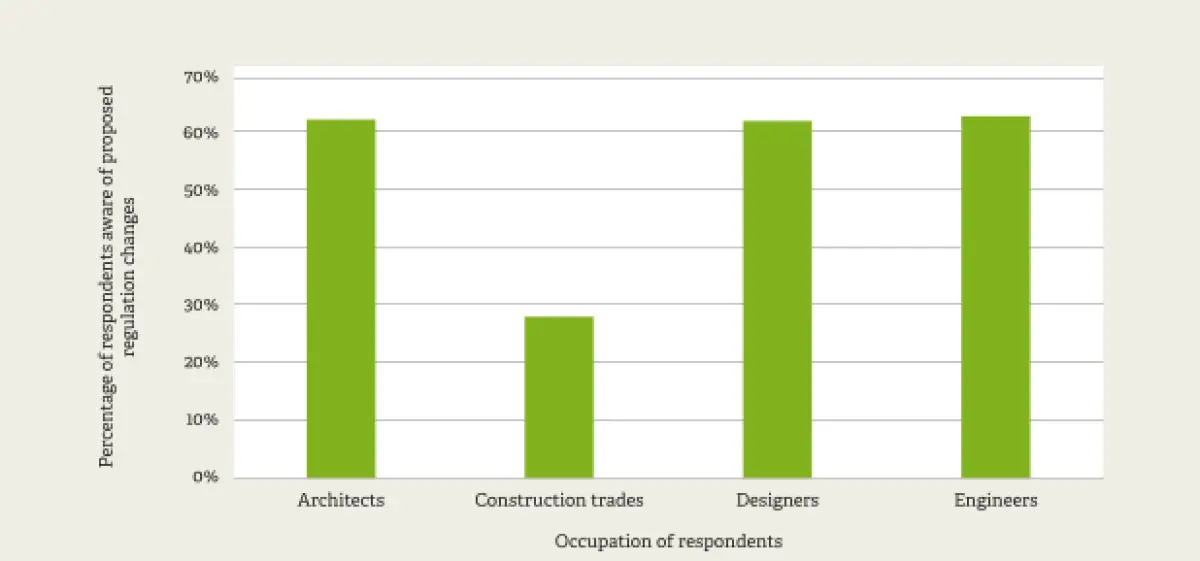
When asked if they were aware of policy changes to address climate change proposed by MBIE’s Building for climate change programme, the majority of participants were not aware of some or all proposed changes. As shown in Figure 1, survey participants who worked in a construction trade were twice as likely as other occupational groups to have not heard of some/all policies. Despite being unaware of proposed policy changes, 86% of participants were supportive of MBIE making changes to address climate change.
Skills and experience of zero-carbon construction
The survey also sought to understand the sector’s current skills and knowledge and future needs regarding zero-carbon construction. Most of the sample recognised the importance of developing new skills and knowledge to address climate change such as:
- knowledge of how your work connects with the work of other trades (96%)
- knowledge of general building, architectural and engineering principles (93%)
- understanding the environmental impact of GHG emissions and climate change (83%).
When asked about the sector’s current skills, participants considered the industry was either very competent or competent around the installation (58%) and maintenance (41%) of the building envelope. Conversely, 41% of the sample rated the building and construction industry as not at all competent when it came to understanding embodied carbon.
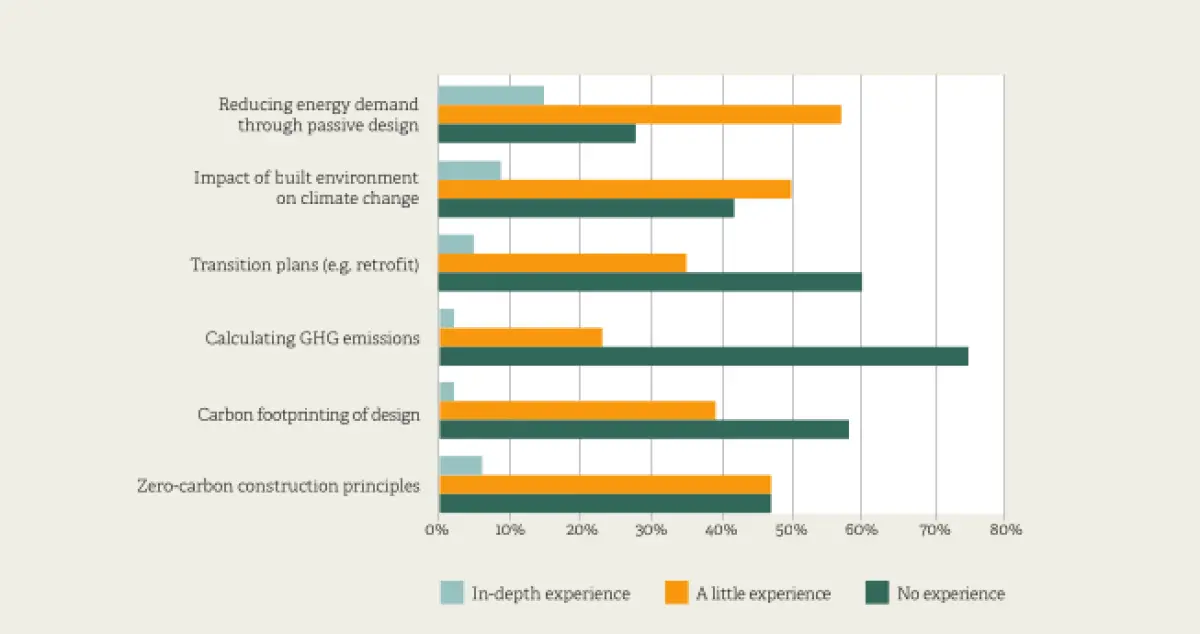
Participants were asked to self-rate their practical experience with some technical skills required for zero-carbon construction – see Figure 2.
Overall, the sample did not see themselves as experts in any area. There were some major experience gaps, with over half of the sample having no experience in calculating GHG emissions (75%), transition plans (60%) and carbon footprinting of design (58%).
Training for zero-carbon construction
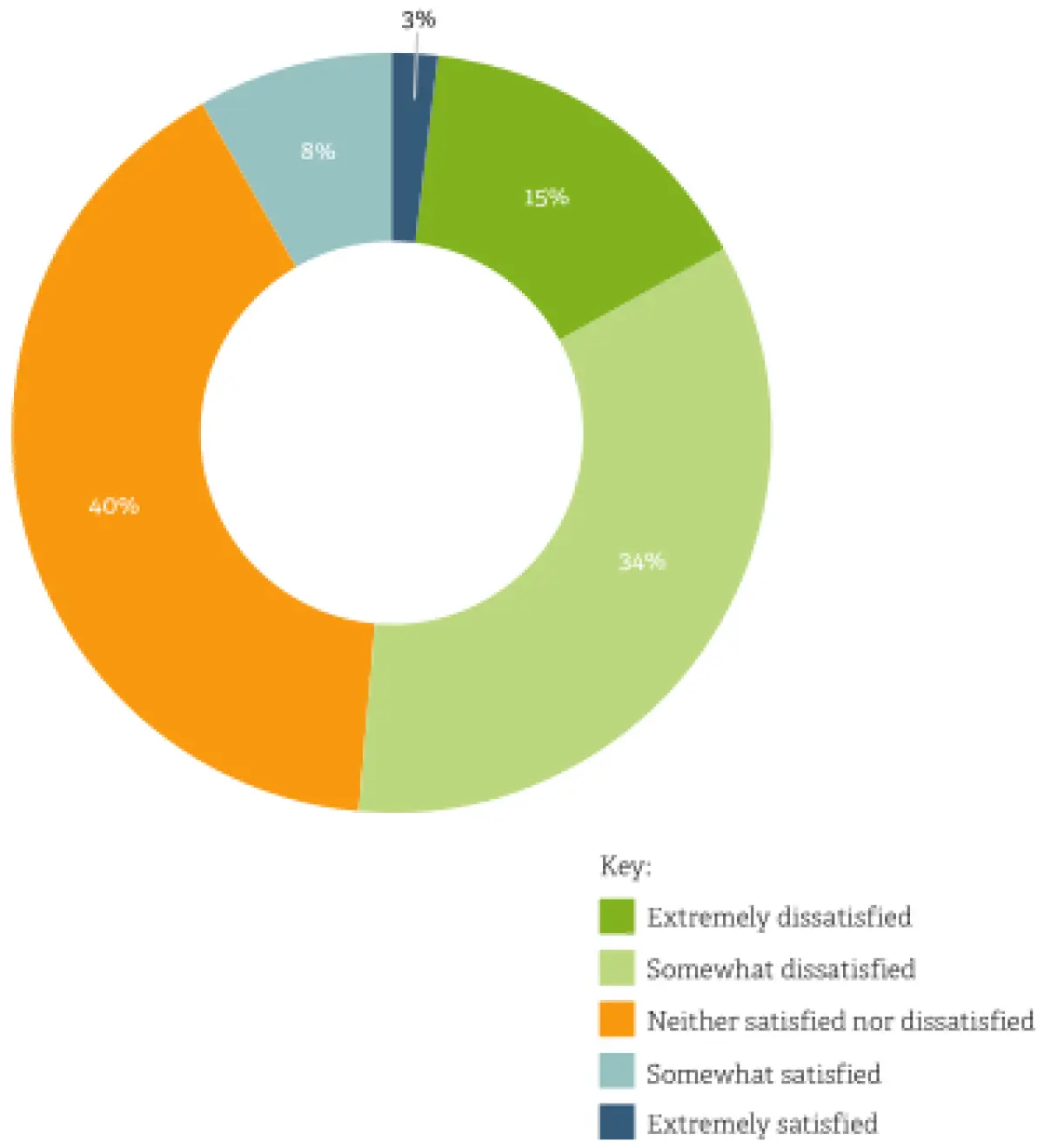
The survey also explored the respondents’ levels of satisfaction with current industry education and training on zero-carbon and sustainable construction – see Figure 3.
Participants were largely neutral (40%), somewhat dissatisfied (34%) or extremely dissatisfied (15%) with what is available.
They said they would like more information and training in the form of professional development workshops, seminars and trade talks to assist them on their zero-carbon journey.
Where we are now on zero-carbon construction
Findings from our nationwide survey indicate that the construction system is ready for change and sector practitioners are largely supportive of acting to address climate change. Respondents also conveyed an interest and eagerness to become a workforce with the knowledge and ability to transition to zero-carbon construction.
While survey responses identified that there is a desire for change, they also indicated there is little knowledge or experience across industry about zero-carbon skills and competencies.
The education and training currently available to industry in this space is limited. Any upskilling will require a significant push from the education sector to provide resources in the channels that suit each of the various professions across the sector.
The next article in this series will outline the development of zero-carbon skills and competency profiles for the construction sector. These profiles illustrate what skills are needed for the implementation of zero-carbon construction.