

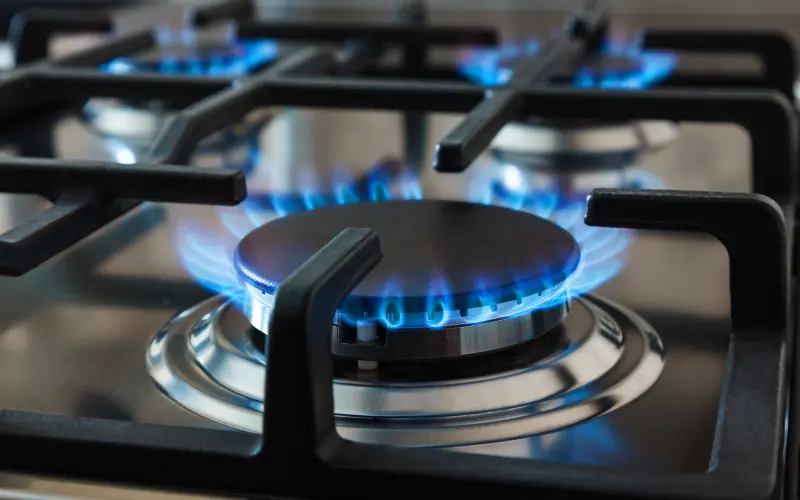


There are still around 287,000 homes using natural gas. By some estimates an additional 300,000 households are using LPG bottles for cooking or heating.
There are huge questions that the building industry needs to consider when deciding whether new homes should be set up for gas or be all-electric. They are around future availability and price, health, the environment and energy efficiency.
Natural gas production falling fast
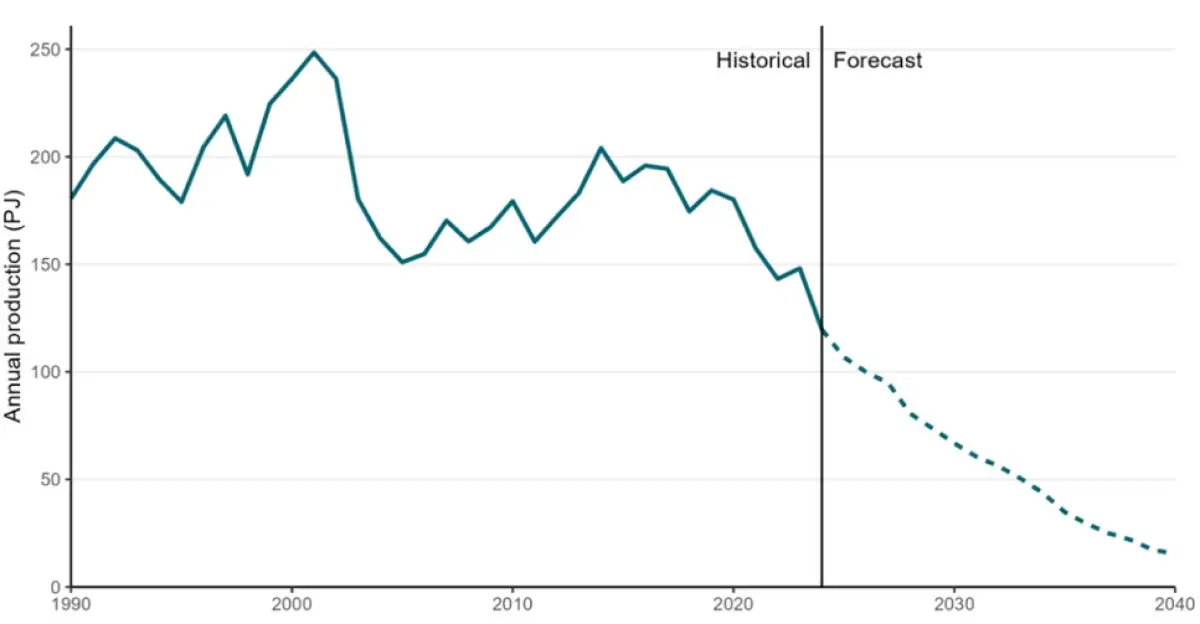
Natural gas production in New Zealand has dropped by 35% in the last two years alone and is expected to be cut by half again by 2035 (Figure 1). Over $1 billion has already been spent on looking for new gas fields, with no substantial finds.
Production at the Maui gas field is expected to finish at the end of this year, removing approximately 20% of natural gas supply and increasing the risk of an energy shortage. A further seven gas fields are expected to close in the years to 2036.
While gas will remain part of the country’s energy system for years to come, costs will increase as gas networks adapt to changing use. Gas pipeline costs are largely fixed and won’t fall as customer numbers fall. Companies are open about the fact that prices will rise.
The gas industry has been working on natural gas blends with up to 20% biomethane (from organic waste) or hydrogen added to natural gas. Pilot projects have shown promise although there is still uncertainty over how this would work in the longer term. Research is also being conducted into long-term 100% replacement of natural gas with biomethane. At the moment, biomethane enters the North Island natural gas network at a single facility in Reporoa.
(Biogas is the unrefined gas produced from the breakdown of organic waste at sites such as landfills and wastewater treatment plants. It contains methane, carbon dioxide and impurities. Biogas is refined into biomethane by removing the CO2 and contaminants.)
GasNZ, representing the gas industry, has a Biomethane Strategy and Action Plan that sets a 2050 target of generating enough biogas to ensure the ongoing operation of the natural gas network, and producing enough biogas to supply over half of New Zealand’s total expected natural gas demand by 2050. The target is described as “aspirational”. GasNZ says that New Zealand has significant biogas and biomethane potential. For example, it says Watercare Mangere produces and burns around 0.5 PJ/year of biogas a year, the equivalent of about 28% of the gas that Glenbrook steel mill used in 2025. However, prospective developers of new biomethane production facilities face many hurdles.
As well as reticulated gas, bottled LPG is also available but its cost as a fuel for heating or cooking is generally higher than natural gas. LPG is easy to import, so while its cost may rise its long-term availability is not at risk.
Burning gas releases harmful air pollutants
Availability of gas is only one issue: health is another. Late last year EECA released a report it had commissioned, Indoor Combustion in New Zealand Homes: Health Effects and Costs. This assessed the impacts of harmful air pollutants from gas stoves, wood burners and unflued gas heaters in homes. The report found that gas stoves in particular contribute to premature deaths, asthma cases in children, cardiovascular hospitalisations and respiratory hospitalisations each year. The New Zealand findings that gas stoves contribute to indoor air pollution that damages our health are very similar to the findings of recent research into gas stoves in Europe.
Burning fossil fuels contributes to climate change
Natural gas is a fossil fuel, and the emissions created when fossil fuels are burnt contribute to climate change. The Climate Change Commission has recommended a ban on new gas connections but the government has not accepted the advice.
There is some good news to consider here: production of biomethane, which is likely in larger volumes in the future, has environmental benefits over natural gas or LPG because it prevents methane, a potent greenhouse gas, from entering the atmosphere at landfills and the like.
Energy efficiency and operating costs
Heat pump space heaters and water heaters are up to four times more energy efficient than gas appliances.
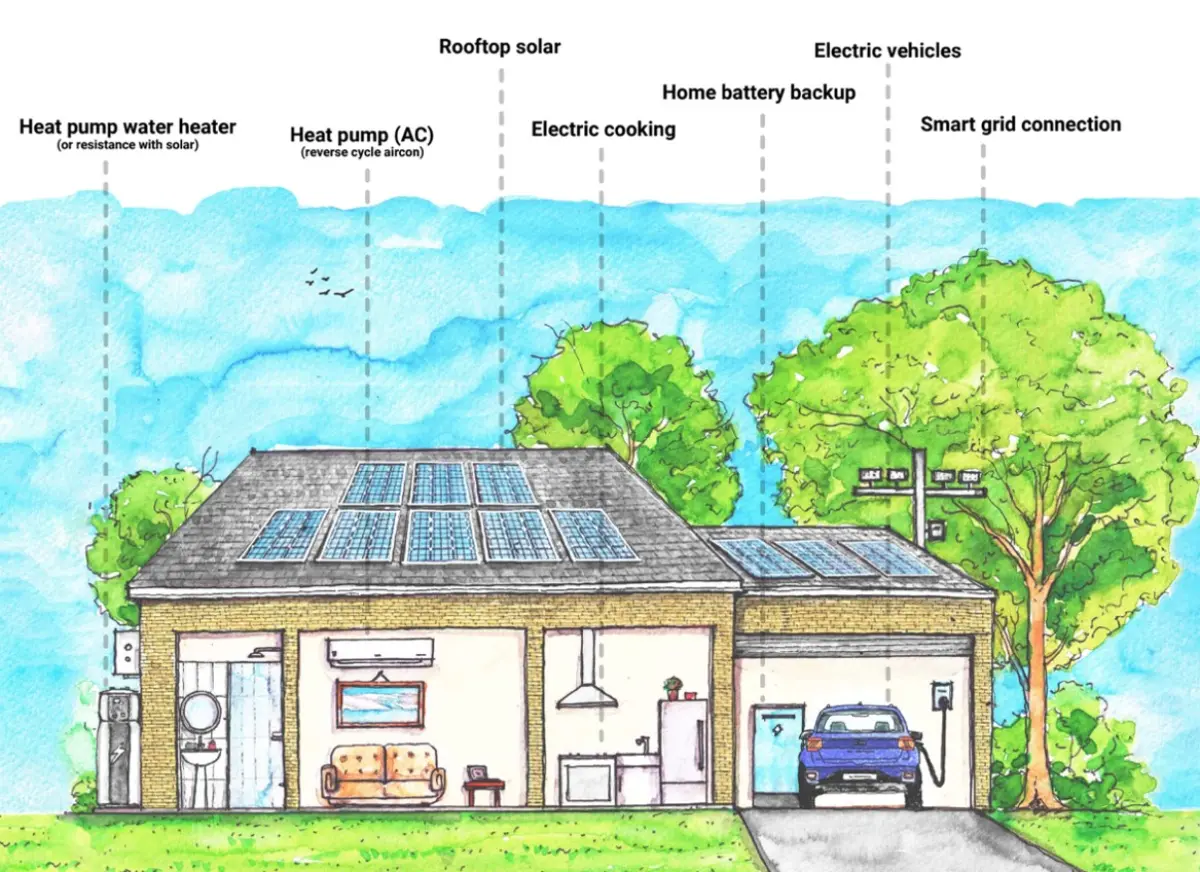
Calculations in the 2024 report Electric homes by the non-profit body Rewiring Aotearoa suggest that all-electric homes (Figure 2) have significant annual cost savings over homes with gas appliances.
Consumer New Zealand says the fixed daily charge for gas can add up to $800 to $1000 per year. Where there are limited gas appliances in a home – for example, just a cooktop – the daily charge for gas may end up being higher than the cost of the gas the household actually consumes.
Specifying all-electric houses also helps support big gas users. As the New Zealand Green Building Council points out, “Moving homes and buildings away from gas makes this critical resource available for gas-dependent industries.” While households use around 12% of natural gas, industry uses around 72%.
Is all-electric the way to go?
Considerations around long-term availability, ongoing cost increases, energy efficiency, environmental and health issues all suggest the most prudent approach is to avoid gas appliances altogether and design and build homes that are all-electric.
While some construction companies opt for the lower up-front price of installing gas water heating systems over heat pump water heaters in new homes, that decision just passes a significantly higher ongoing economic burden to households living in the homes.
For space heating and water heating especially, BRANZ recommends heat pumps for their high levels of energy efficiency, reduced operating costs and the fact that over 80% of New Zealand’s grid electricity (and for some periods of time, over 90%) comes from renewable sources such as hydro, geothermal, wind and solar.