


Featured project
| Project | Te Wānanga O Raukawa - Pā Reo |
| Location | Ōtaki, Aotearoa New Zealand |
Design and Construction Team
| Client | Te Wānanga o Raukawa |
| Architect | Tennent Brown Architects |
| Structural Engineering | Dunning Thorton Consultants |
| Builder | McMillan & Lockwood Central Ltd |
| Quantity Surveyor | Rider Levett Bucknall |
| Product | LVL & Glulam |
Overview
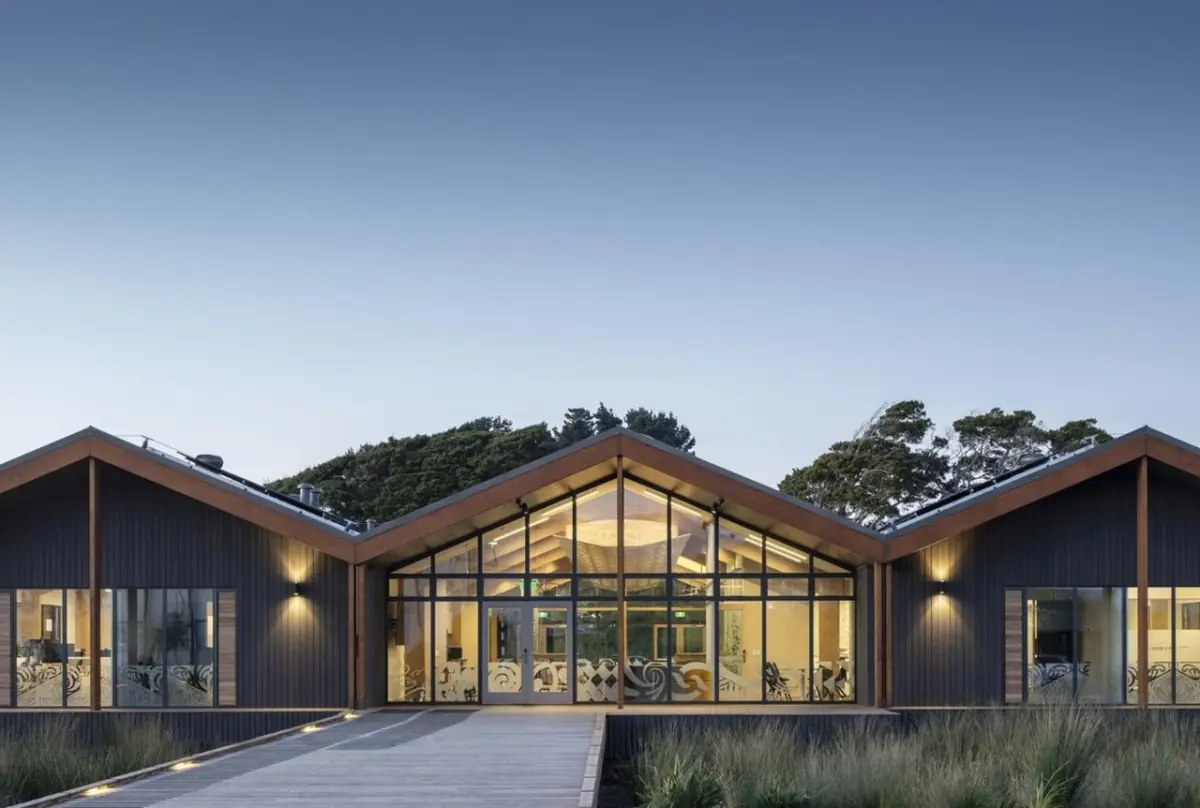
The Pā Reo Campus project is a set of four buildings, one administrative (Te Moana o Raukawa) and three research and educational facilities (Waitapu, Rangataua, Mīria te Kakara) that were commissioned by Te Wānanga o Raukawa, a Māori tertiary education provider in Ōtaki. The project was designed and built to become a fully certified Living Building Challenge construction. The Living Building Challenge is one of the most advanced accreditation programs for sustainable buildings in the world, with only thirty-two buildings currently meeting this standard worldwide and only two in Aotearoa.
The reason for using the Living Building Challenge accreditation was because of how it aligned with the whanonga pono of Te Wānanga o Raukawa. The kaupapa of Te Wānanga o Raukawa Kaupapa was guided by kaitiakitanga & rangatiratanga, and the Living Building Challenge gave Te Wānanga the platform for how they could use te ao Māori in the construction of their new educational facilities.
Key Features
Part of the requirements for Living Building Challenge accreditation is to meet minimum material specific thresholds for diverting waste during the construction process. The table below shows the targets for diversion required for Living Building Challenge accreditation, and how much waste the project team was able to divert from landfill. Based on the project waste diversion results, the project was a massive success, with nearly all of its construction waste, a total of 3,060,400 (kg) of waste, diverted from landfill.
| Category | Diverted (kg) of Material | Total (kg) of Material | Percent Diversion Required | Actual Percent of Category Diverted |
|---|---|---|---|---|
| Metal | 403 | 403 | 99% | 100% |
| Paper and Cardboard | 30,554 | 30,554 | 99% | 100% |
| Soil and Biomass | 2,253,646 | 100% | 100% | |
| Rigid Foam, Carpet, and Insulation | 3,237 | 2,253,646 | 95% | 100% |
| All others – combined weighted average | 772,560 | 776,375 | 90% | 99.5% |
| Total | 3,060,400 | 3,064,215 | 99.9% |
Lessons learnt:
The single biggest hurdles for the project team were finding who could take their construction waste and how they were going to get it there. Waste like cardboard or aluminium already had places where this waste could be recycled. However, a lot of waste generated on-site did not have an easy route for its diversion from landfill. For example, soft plastics from packaging was difficult for the team to divert from landfill. The team found suppliers like ‘saveBOARD’ who could take their soft plastics and turned them into panels which were then bought and used as construction materials on site. The team also sent most of their other LDPE type 4, (e.g. pallet wrap, scaffold wrap, timber wrap, etc) soft PVC and polypropylene to organisations like Second Life Plastics in Levin who turned that waste into things like garden edging to protect lawn edges, or keep mulch contained in gardens.
Challenges:
One of the biggest challenges on-site was keeping waste free of contamination. The team found that as they were cleaning up the site and taking waste up to the sorting area, there is always some combination of different dusts, sawdust, food, and other debris that would get mixed in recyclable materials. While building products might have been specified as being recyclable, in the project team’s experience, these products could only be recycled if they were close to pristine, which was a challenge on site, and required a lot of extra effort cleaning recyclable materials at the waste sorting station.
Updated: 18 February 2026